THE ADVENTURE COLLECTIVE® · Independent discovery and booking for outdoor travel

Zip through Sintra’s steep lanes by Tuktuk and catch headline sights—Pena Palace, Moorish Castle and Quinta da Regaleira—on a one-hour driving tour that prioritizes views and local storytelling. No monument entry is included, but the route gives quick access and context for a longer visit afterward.
Zip through Sintra’s steep lanes by Tuktuk and catch headline sights—Pena Palace, Moorish Castle and Quinta da Regaleira—on a one-hour driving tour that prioritizes views and local storytelling. No monument entry is included, but the route gives quick access and context for a longer visit afterward.
A bright Tuktuk hums up the narrow lanes of Sintra, wind skimming over transparent covers as tile roofs and umbrella pines blur into steep greens. In an hour the vehicle skirts fountains and palaces, climbing the granite ribs of the Sintra hills so riders can glimpse the painted battlements of Pena and the crumbling loop of the Moorish Castle without long walks.
Verified experiences and guided adventures in the surrounding area.
Operated by My Tour in Sintra · Sintra, Lisbon District
A bright Tuktuk hums up the narrow lanes of Sintra, wind skimming over transparent covers as tile roofs and umbrella pines blur into steep greens. In an hour the vehicle skirts fountains and palaces, climbing the granite ribs of the Sintra hills so riders can glimpse the painted battlements of Pena and the crumbling loop of the Moorish Castle without long walks.
Sintra’s story is visible in stone: a medieval Moorish fortification dating to the 10th century, a 19th-century Romantic palace built by King Ferdinand II, and the esoteric wells and gardens of Quinta da Regaleira commissioned by António Monteiro. Geologically, the Sintra massif is granite and schist, producing abrupt ridgelines, rocky outcrops and microclimates that feed dense laurel forests.
Culturally the town has been a royal retreat and, more recently, a UNESCO cultural landscape prized for its architecture and gardens. Local guides point out lesser-known features—Sabuga’s spring that once fed the town, and Biester Palace’s ornate facades—while explaining why many monuments require separate entry tickets.
Practical guidance: this is a driving tour that stops briefly at viewpoints; it does not include monument admissions and is best early or late to avoid crowds. Expect narrow, steep roads—secure loose items and hold cameras steady. The Tuktuks carry up to six people, have transparent covers and offer infant seats; they are not suitable for guests with spinal concerns or late-stage pregnancy. Bring a light jacket, sun protection and comfortable shoes; plan extra time if you intend to enter Pena, the Moorish Castle or Quinta da Regaleira after the ride.
easy.
1 hour.
Minimal fitness required—this is a seated driving tour with short stops; guests should be able to step in and out of the vehicle
No. The tour provides exterior stops and viewpoints only; entrance fees and timed tickets for Pena Palace, Moorish Castle or Quinta da Regaleira must be purchased separately.
Each Tuktuk carries up to six people (average 80 kg per person); larger groups may be split into multiple vehicles if available.
Infants and small children can ride; infant seats and stroller access are available but confirm at booking and be aware of short steps to board.
Transfers can be arranged for an extra fee depending on location—request this when booking and confirm pickup details with the operator.
Sintra was a Moorish stronghold from the 10th century and later became a 19th-century Romantic royal retreat—Pena Palace is a notable result of that era.
The Sintra-Cascais landscape is a UNESCO cultural landscape; visitors should stay on roads and marked paths and avoid disturbing fragile vegetation.
My Tour in Sintra operates guided outdoor trips and adventures with an emphasis on safety, stewardship, and memorable experiences.
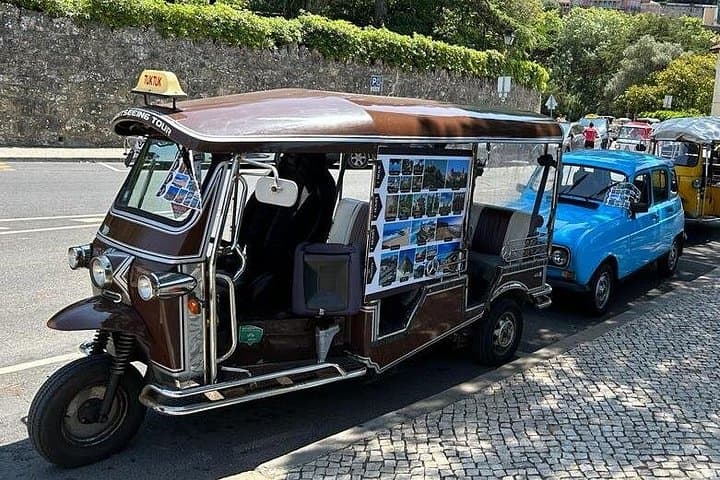
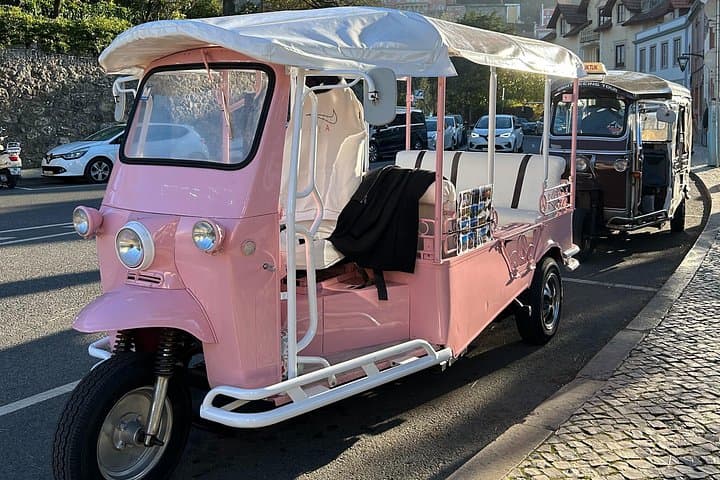
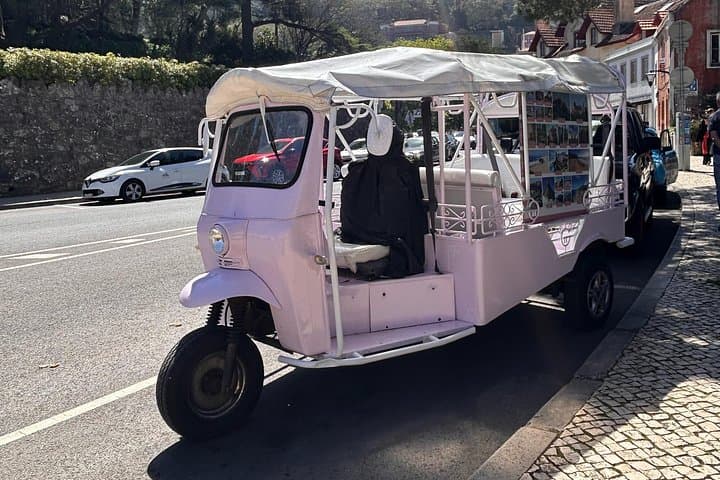

A bright Tuktuk hums up the narrow lanes of Sintra, wind skimming over transparent covers as tile roofs and umbrella pines blur into steep greens. In an hour the vehicle skirts fountains and palaces, climbing the granite ribs of the Sintra hills so riders can glimpse the painted battlements of Pena and the crumbling loop of the Moorish Castle without long walks.
A bright Tuktuk hums up the narrow lanes of Sintra, wind skimming over transparent covers as tile roofs and umbrella pines blur into steep greens. In an hour the vehicle skirts fountains and palaces, climbing the granite ribs of the Sintra hills so riders can glimpse the painted battlements of Pena and the crumbling loop of the Moorish Castle without long walks.
Sintra’s story is visible in stone: a medieval Moorish fortification dating to the 10th century, a 19th-century Romantic palace built by King Ferdinand II, and the esoteric wells and gardens of Quinta da Regaleira commissioned by António Monteiro. Geologically, the Sintra massif is granite and schist, producing abrupt ridgelines, rocky outcrops and microclimates that feed dense laurel forests.
Culturally the town has been a royal retreat and, more recently, a UNESCO cultural landscape prized for its architecture and gardens. Local guides point out lesser-known features—Sabuga’s spring that once fed the town, and Biester Palace’s ornate facades—while explaining why many monuments require separate entry tickets.
Practical guidance: this is a driving tour that stops briefly at viewpoints; it does not include monument admissions and is best early or late to avoid crowds. Expect narrow, steep roads—secure loose items and hold cameras steady. The Tuktuks carry up to six people, have transparent covers and offer infant seats; they are not suitable for guests with spinal concerns or late-stage pregnancy. Bring a light jacket, sun protection and comfortable shoes; plan extra time if you intend to enter Pena, the Moorish Castle or Quinta da Regaleira after the ride.