THE ADVENTURE COLLECTIVE® · Independent discovery and booking for outdoor travel

A single-day private loop from Sintra through Pena Palace and Quinta da Regaleira to the windswept cliffs of Cabo da Roca and the seaside towns of Cascais and Estoril. Expect palace terraces, granite ridges and dramatic Atlantic viewpoints—perfect for travelers who want history, geology and coast in one efficient day.
A single-day private loop from Sintra through Pena Palace and Quinta da Regaleira to the windswept cliffs of Cabo da Roca and the seaside towns of Cascais and Estoril. Expect palace terraces, granite ridges and dramatic Atlantic viewpoints—perfect for travelers who want history, geology and coast in one efficient day.
You step off the van at Portela de Sintra and the air feels different—cooler, scented with eucalyptus and salt. The climb to Pena Palace begins through a forest that leans and listens, pines and cork oaks parting to reveal towers painted in crimson and butter. For a few heartbeats the 19th-century Romanticism of Sintra takes hold: a palace that seems to have been painted by an artist with a map of the world in one hand and a child’s toy chest in the other.
Verified experiences and guided adventures in the surrounding area.
Operated by CF TOURS · Sintra, Lisbon
You step off the van at Portela de Sintra and the air feels different—cooler, scented with eucalyptus and salt. The climb to Pena Palace begins through a forest that leans and listens, pines and cork oaks parting to reveal towers painted in crimson and butter. For a few heartbeats the 19th-century Romanticism of Sintra takes hold: a palace that seems to have been painted by an artist with a map of the world in one hand and a child’s toy chest in the other.
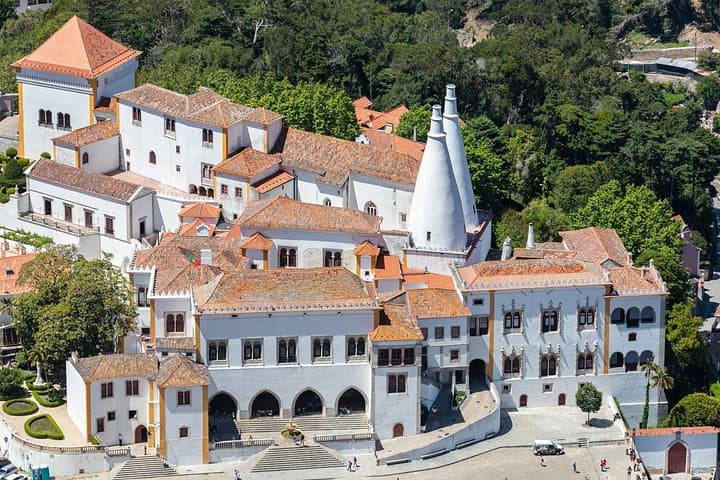
From Pena, the tour slides through history and geology. The Castelo dos Mouros perches on an older granite ridge, its stones telling a tale of medieval frontier life. Quinta da Regaleira follows—a private estate with a palace and gardens punctuated by the Well of Initiation, where spiraling steps pull your gaze into shadow and myth crafted by José Monteiro in the early 1900s.
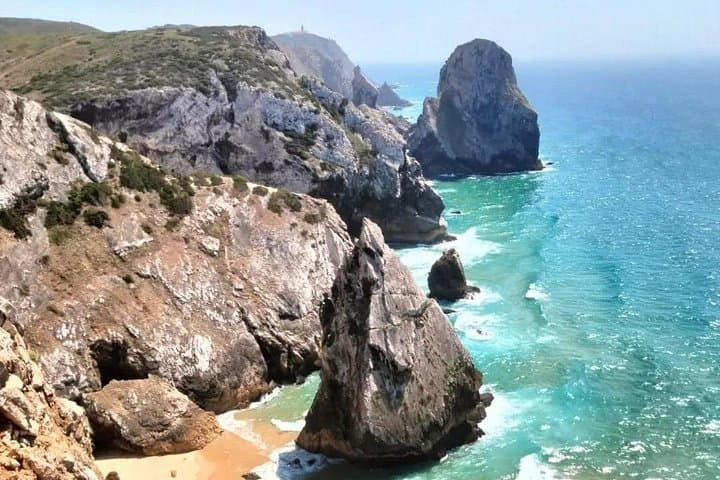
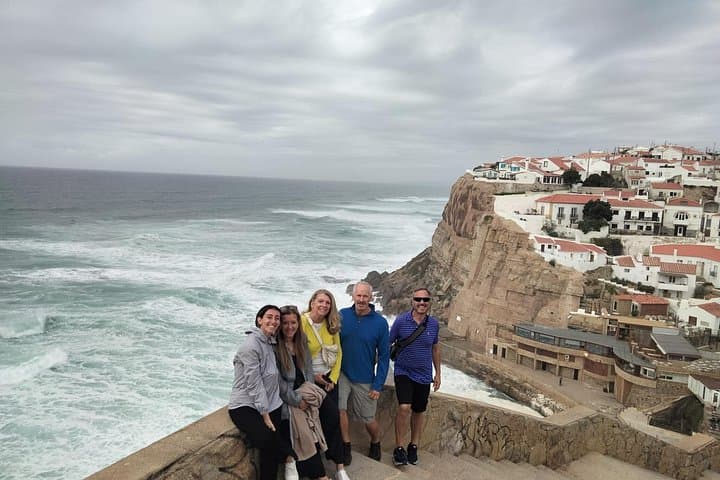
The route then pushes west, the trees thinning as the land leans toward the Atlantic. Azenhas do Mar clings to the cliff with whitewashed houses and a natural pool where fishermen used to dry nets. At Cabo da Roca—the westernmost point of continental Europe—wind is the active host and the sea speaks in surf and spray; a bronze plaque quotes Camões and the horizon seems to dare you to name anything farther west.
Geology is visible at every turn: ancient granite that resisted glaciation, coastal schists scoured by wind and waves, and dune systems near Guincho that shift with each season. The tour finishes with the breezy promenade of Cascais and the seaside cafés of Estoril—places where 20th-century aristocrats rubbed shoulders with surfers and where a long afternoon can dissolve into seafood and late light.
Practical edge: this is a day of short walks and viewpoints rather than long hikes. Expect several uphill sections with uneven stone steps at palaces and garden paths that can be slick when wet. Comfortable footwear and a light layer for wind are essential. Timing matters—arrive at Pena early to avoid coach crowds; afternoons are best for dramatic coastal light at Cabo da Roca.
Local culture is as layered as the landscape: Sintra grew as a royal retreat in the 19th century and retains an intimacy that rewards curiosity—ask about local pastries like travesseiros or the small, family-run Colares wineries near Azenhas. Respect protected trails and cliff edges: the coastline recedes in places and local conservation efforts prioritize dune and seabird habitats.
For first-time visitors, this private, six-hour loop gives both palace pomp and raw Atlantic drama. It’s an efficient, sensory-packed way to understand why Lisbon’s hills spill west into a coast that shaped Portugal’s history and imagination.
moderate.
6 hours.
Suitable for travelers with average fitness who can manage short uphill walks and stone steps.
This tour offers guided visits and time at both sites but admissions are not included; buy tickets in advance to save time at Pena.
Yes—infants are welcome but must sit on laps; stroller access is limited due to stairs at many sites.
Yes, there are cafés and restroom facilities at major stops like Sintra center, near Quinta da Regaleira and in Cascais.
As a private tour it can be paced slower with longer breaks—inform the operator about mobility needs when booking.
The meeting point is Portela de Sintra near the train station, easily accessible by public transit and with nearby parking options.
Sintra became a 19th-century Romantic refuge for Portuguese royalty and artists, its eclectic palaces reflecting a mix of Gothic, Moorish and Manueline styles.
Coastal cliffs and dune systems are fragile; stay on marked paths, avoid trampling vegetation and follow local guidance to protect seabird nesting and dune restoration projects.
CF TOURS operates guided outdoor trips and adventures with an emphasis on safety, stewardship, and memorable experiences.
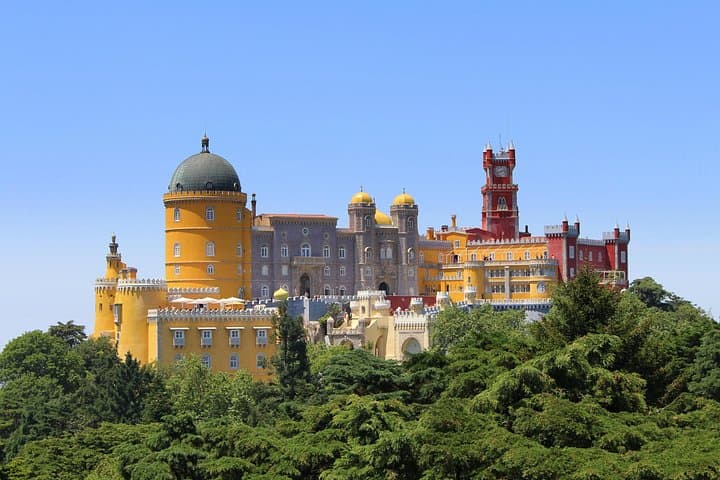
You step off the van at Portela de Sintra and the air feels different—cooler, scented with eucalyptus and salt. The climb to Pena Palace begins through a forest that leans and listens, pines and cork oaks parting to reveal towers painted in crimson and butter. For a few heartbeats the 19th-century Romanticism of Sintra takes hold: a palace that seems to have been painted by an artist with a map of the world in one hand and a child’s toy chest in the other.
You step off the van at Portela de Sintra and the air feels different—cooler, scented with eucalyptus and salt. The climb to Pena Palace begins through a forest that leans and listens, pines and cork oaks parting to reveal towers painted in crimson and butter. For a few heartbeats the 19th-century Romanticism of Sintra takes hold: a palace that seems to have been painted by an artist with a map of the world in one hand and a child’s toy chest in the other.
From Pena, the tour slides through history and geology. The Castelo dos Mouros perches on an older granite ridge, its stones telling a tale of medieval frontier life. Quinta da Regaleira follows—a private estate with a palace and gardens punctuated by the Well of Initiation, where spiraling steps pull your gaze into shadow and myth crafted by José Monteiro in the early 1900s.
The route then pushes west, the trees thinning as the land leans toward the Atlantic. Azenhas do Mar clings to the cliff with whitewashed houses and a natural pool where fishermen used to dry nets. At Cabo da Roca—the westernmost point of continental Europe—wind is the active host and the sea speaks in surf and spray; a bronze plaque quotes Camões and the horizon seems to dare you to name anything farther west.
Geology is visible at every turn: ancient granite that resisted glaciation, coastal schists scoured by wind and waves, and dune systems near Guincho that shift with each season. The tour finishes with the breezy promenade of Cascais and the seaside cafés of Estoril—places where 20th-century aristocrats rubbed shoulders with surfers and where a long afternoon can dissolve into seafood and late light.
Practical edge: this is a day of short walks and viewpoints rather than long hikes. Expect several uphill sections with uneven stone steps at palaces and garden paths that can be slick when wet. Comfortable footwear and a light layer for wind are essential. Timing matters—arrive at Pena early to avoid coach crowds; afternoons are best for dramatic coastal light at Cabo da Roca.
Local culture is as layered as the landscape: Sintra grew as a royal retreat in the 19th century and retains an intimacy that rewards curiosity—ask about local pastries like travesseiros or the small, family-run Colares wineries near Azenhas. Respect protected trails and cliff edges: the coastline recedes in places and local conservation efforts prioritize dune and seabird habitats.
For first-time visitors, this private, six-hour loop gives both palace pomp and raw Atlantic drama. It’s an efficient, sensory-packed way to understand why Lisbon’s hills spill west into a coast that shaped Portugal’s history and imagination.