THE ADVENTURE COLLECTIVE® · Independent discovery and booking for outdoor travel

Spend a private day moving from royal salons to Atlantic cliffs: the tour pairs Queluz’s rococo fountains and Sintra’s mountain gardens with Cascais’ seaside panoramas. It’s a compact, scenic introduction to Portugal’s cultural landscape with practical, on‑the‑ground guidance.
Spend a private day moving from royal salons to Atlantic cliffs: the tour pairs Queluz’s rococo fountains and Sintra’s mountain gardens with Cascais’ seaside panoramas. It’s a compact, scenic introduction to Portugal’s cultural landscape with practical, on‑the‑ground guidance.
The day begins with a hush—the air off Lisbon still cool as the van threads past suburbia toward Queluz, where water and stone perform their own theatre. At the Palace of Queluz, fountains punctuate manicured terraces and gilt rooms glint where sunlight finds them. By mid-morning the road climbs into the Sintra hills: mists cling to chestnut and cork oaks, and the town’s slate roofs appear as if the landscape is slowly exhaling.
Verified experiences and guided adventures in the surrounding area.
Operated by BLUELANE® · Sintra, Lisbon
The day begins with a hush—the air off Lisbon still cool as the van threads past suburbia toward Queluz, where water and stone perform their own theatre. At the Palace of Queluz, fountains punctuate manicured terraces and gilt rooms glint where sunlight finds them. By mid-morning the road climbs into the Sintra hills: mists cling to chestnut and cork oaks, and the town’s slate roofs appear as if the landscape is slowly exhaling.
Sintra’s charm is not only architectural; it’s geological. The Serra de Sintra is a compact massif of granite and schist that forced builders to adapt—winding footpaths, terraces, and stairways that feel inevitable. UNESCO recognized Sintra as a cultural landscape because town, palace and mountain are inseparable: 18th- and 19th-century romanticism sought drama from topography and plants, and places like Monserrate repurpose ruins and exotic species into theatrical gardens.
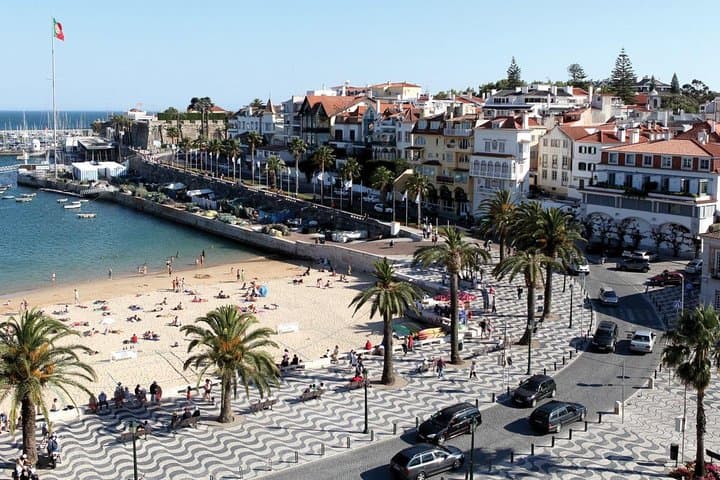
Monserrate’s park shifts between damp shaded gullies and sunlit clearings where palms and tree ferns look as if they were imported for a tropical set. Its palace rooms—an Indian salon, a music room—hint at the era’s appetite for travel and collecting. Descend from the gardens and the mood changes: Cascais opens onto bright Atlantic blue. Once a fishing port, it later became a royal summer retreat; now its marina and seaside promenades hum with cafés and the occasional windsurfer testing the bay.
The coastline’s character is direct and elemental. At Boca do Inferno, sea and rock converse aggressively—the surf hurls itself into a natural amphitheater where spray and echo make conversation with the cliff. That contrast—refined palaces upcountry, raw sea on the coast—defines the day.
Practical guidance keeps the magic manageable. The tour runs about eight hours and includes multiple short walks: expect cobbles, steep steps and uneven paths. Start early to beat the crowds at Queluz and Sintra’s village center. Bring layered clothing—the microclimates shift quickly between sunlit Cascais and shaded Sintra ravines. If you plan to enter monuments, check opening times and have small‑value euros for quick ticketing where skip‑the‑line isn’t included.
Transport is private and air‑conditioned on this itinerary, which compresses travel time and lets you focus on place rather than logistics. Keep water handy and comfortable shoes on; a good camera will repay attention at the terraces of Monserrate and the cliffs of Boca do Inferno. For travelers who want context with convenience, this is a day that pairs Portugal’s cultivated history with its coastal, wind‑shaped edge—accessible, varied and quietly insistent that you pay attention.
moderate.
8 hours.
Suitable for most travelers who can handle several short walks, stairs and uneven cobbles; minimal sustained climbing.
Yes—private pickup from Lisbon hotels or ports is typically included; confirm pickup address when booking.
Not always; some sites are listed as admission not included—have cash or card ready for palace or park tickets.
Expect several short walks (15–45 minutes) on uneven or stepped terrain—good mobility is helpful but not extreme fitness.
This operator offers a private, customizable day so you can request adjustments to start time or emphasis when booking.
Many areas are stroller‑accessible, but cobbled streets and staircases can be restrictive—infant seats are available for vehicle transport.
English is commonly available; confirm specific language needs in advance to ensure a guide who meets them.
Sintra’s cultural landscape was shaped in the 18th–19th centuries by romantic ideals and royal patronage; Cascais later evolved from a fishing port into a fashionable royal summer resort in the late 19th century.
Sintra‑Cascais is a protected natural park—stay on paths, avoid picking plants, and support local guides and cafés to help fund conservation.
BLUELANE® operates guided outdoor trips and adventures with an emphasis on safety, stewardship, and memorable experiences.
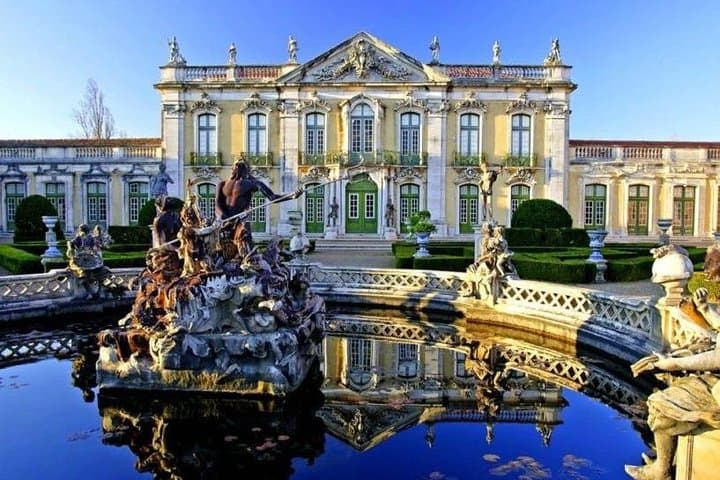
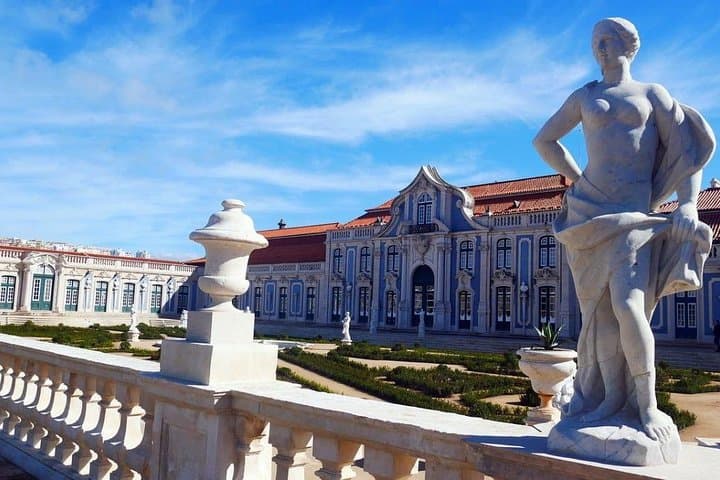
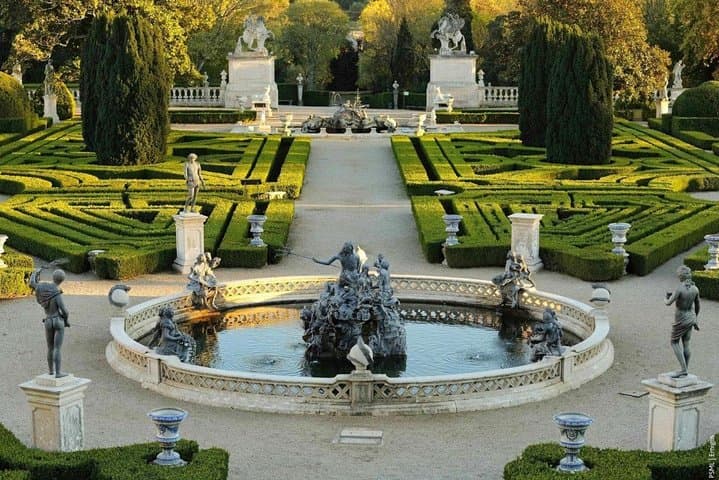
The day begins with a hush—the air off Lisbon still cool as the van threads past suburbia toward Queluz, where water and stone perform their own theatre. At the Palace of Queluz, fountains punctuate manicured terraces and gilt rooms glint where sunlight finds them. By mid-morning the road climbs into the Sintra hills: mists cling to chestnut and cork oaks, and the town’s slate roofs appear as if the landscape is slowly exhaling.
The day begins with a hush—the air off Lisbon still cool as the van threads past suburbia toward Queluz, where water and stone perform their own theatre. At the Palace of Queluz, fountains punctuate manicured terraces and gilt rooms glint where sunlight finds them. By mid-morning the road climbs into the Sintra hills: mists cling to chestnut and cork oaks, and the town’s slate roofs appear as if the landscape is slowly exhaling.
Sintra’s charm is not only architectural; it’s geological. The Serra de Sintra is a compact massif of granite and schist that forced builders to adapt—winding footpaths, terraces, and stairways that feel inevitable. UNESCO recognized Sintra as a cultural landscape because town, palace and mountain are inseparable: 18th- and 19th-century romanticism sought drama from topography and plants, and places like Monserrate repurpose ruins and exotic species into theatrical gardens.
Monserrate’s park shifts between damp shaded gullies and sunlit clearings where palms and tree ferns look as if they were imported for a tropical set. Its palace rooms—an Indian salon, a music room—hint at the era’s appetite for travel and collecting. Descend from the gardens and the mood changes: Cascais opens onto bright Atlantic blue. Once a fishing port, it later became a royal summer retreat; now its marina and seaside promenades hum with cafés and the occasional windsurfer testing the bay.
The coastline’s character is direct and elemental. At Boca do Inferno, sea and rock converse aggressively—the surf hurls itself into a natural amphitheater where spray and echo make conversation with the cliff. That contrast—refined palaces upcountry, raw sea on the coast—defines the day.
Practical guidance keeps the magic manageable. The tour runs about eight hours and includes multiple short walks: expect cobbles, steep steps and uneven paths. Start early to beat the crowds at Queluz and Sintra’s village center. Bring layered clothing—the microclimates shift quickly between sunlit Cascais and shaded Sintra ravines. If you plan to enter monuments, check opening times and have small‑value euros for quick ticketing where skip‑the‑line isn’t included.
Transport is private and air‑conditioned on this itinerary, which compresses travel time and lets you focus on place rather than logistics. Keep water handy and comfortable shoes on; a good camera will repay attention at the terraces of Monserrate and the cliffs of Boca do Inferno. For travelers who want context with convenience, this is a day that pairs Portugal’s cultivated history with its coastal, wind‑shaped edge—accessible, varied and quietly insistent that you pay attention.