THE ADVENTURE COLLECTIVE® · Independent discovery and booking for outdoor travel

This private full-day from Lisbon stitches together Sintra’s royal palaces, the dizzy cliffs of Cabo da Roca and the windswept beaches of Cascais into an eight-hour coastal circuit. Expect guided time at Pena Palace, village exploration, dramatic ocean viewpoints and a relaxed finish along the Estoril coast.
This private full-day from Lisbon stitches together Sintra’s royal palaces, the dizzy cliffs of Cabo da Roca and the windswept beaches of Cascais into an eight-hour coastal circuit. Expect guided time at Pena Palace, village exploration, dramatic ocean viewpoints and a relaxed finish along the Estoril coast.
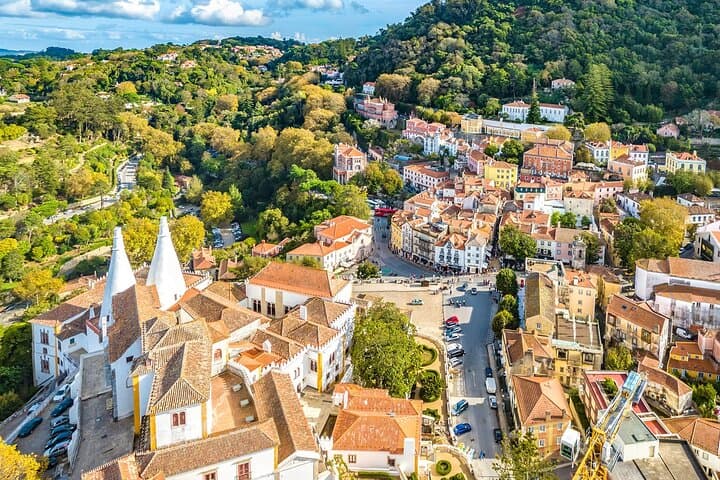
A morning in Lisbon begins with the soft hum of an air-conditioned van pulling away from Avenida da Liberdade. Within 40 minutes the city’s tiled facades give way to the green, mist-pricked slopes of the Serra de Sintra; the guide points upward and the palace that appears above the trees—Pena—already dominates the skyline with painted towers and crenellated terraces.
Verified experiences and guided adventures in the surrounding area.
Operated by LusoXperience · Sintra, Lisbon District
A morning in Lisbon begins with the soft hum of an air-conditioned van pulling away from Avenida da Liberdade. Within 40 minutes the city’s tiled facades give way to the green, mist-pricked slopes of the Serra de Sintra; the guide points upward and the palace that appears above the trees—Pena—already dominates the skyline with painted towers and crenellated terraces.
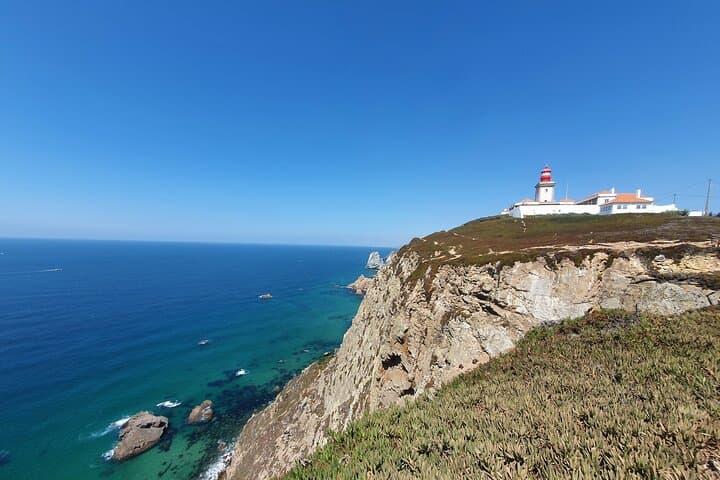
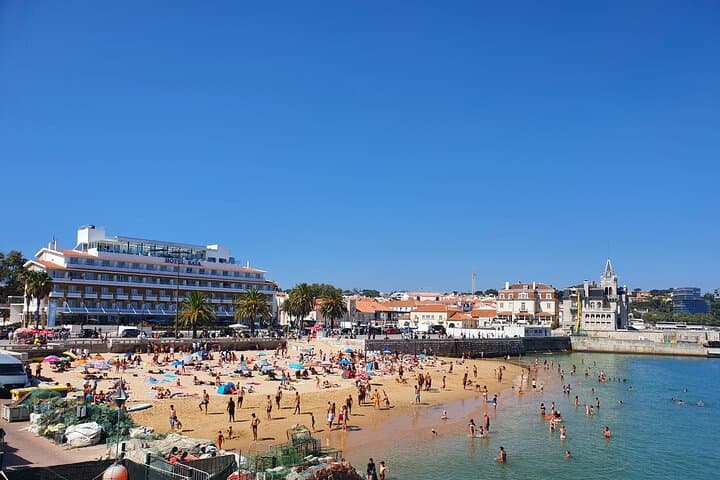
The day is paced like a short chaptered novel: two hours at Pena Palace with a guided loop through its color-washed rooms and the terrace that looks over the Atlantic; an hour wandering Sintra’s cobbled historic center with time to sample travesseiros at Piriquita; a drive out to Cabo da Roca where the cliffs end Europe and the ocean dares you to edge closer; a stop at Guincho’s wind-scoured dunes; then an hour to roam Cascais’ waterfront before a calm return along the Estoril Coast.
Sintra’s history reads like a layering of eras—Moorish lookout posts, medieval royal hunting grounds, and 19th-century Romanticism that turned the hilltops into a playground for Portuguese monarchs and European aesthetes. Geologically, the massif is older granite and schist, weathered into steep valleys that create microclimates of laurel and cork oak; that vegetation feeds the mossy, shaded trails around Monserrate and Quinta da Regaleira. Locals still fish the Cascais bay, and the town’s transformation from fishing village to seaside resort in the 20th century is visible in the mix of pastel villas and sailor-worn harbors.
Practicalities matter on a full-day route: the tour is 8 hours with private transport and onboard Wi‑Fi, and most monuments require separate entrance fees if you choose to go inside more than one. Expect short, steep walks—approaches to Pena involve roughly 150–250 meters of ascent on cobbles and forest paths—so bring layers and sturdy shoes. Timing is everything; arrive at Pena early to avoid the mid-morning tour groups, and allow at least 45–60 minutes in Cascais to stroll the marina and grab a seafood lunch.
The tour suits travelers who want a curated, efficient look at the area without driving themselves. For photographers, bring a wide lens for cliff panoramas and a tele for seabirds at Cabo da Roca. Be mindful of the protected status of the Sintra-Cascais Natural Park—stick to paths, carry out waste, and respect restricted zones. End the day with the glint of the Tagus estuary on the horizon as the van eases back into Lisbon—an eight-hour loop that compresses landscape, history, and coastline into a single, memorable Portuguese day.
moderate.
8 hours.
Comfortable walking required—brief steep climbs and stairs at palace sites; suitable for most active travelers.
Admission to monuments is not included; the guide will suggest the best single monument to visit inside given the full-day schedule.
The private tour is approximately 8 hours and typically departs from Lisbon with hotel pickup available.
Yes—infant seats and stroller accessibility are available, but expect cobbled streets and some stairs at sites.
This is a private tour so the guide can adjust stops within timing limits; the operator suggests visiting only one major monument to see everything comfortably.
Layers work best—light base layers for warm coastlines and a warm, windproof layer for cliff-top stops; comfortable walking shoes are recommended.
Photography rules vary by monument; exterior photography is always allowed, but check on-site for interior restrictions and no-flash policies.
Sintra rose to prominence in the 19th century when Portugal’s monarchy and European aristocrats embraced Romantic architecture, transforming hilltop estates into showpiece palaces.
Much of the route lies within the Sintra‑Cascais Natural Park; respect marked trails, avoid drones in protected zones and limit visits to interior monuments to reduce wear.
LusoXperience operates guided outdoor trips and adventures with an emphasis on safety, stewardship, and memorable experiences.

A morning in Lisbon begins with the soft hum of an air-conditioned van pulling away from Avenida da Liberdade. Within 40 minutes the city’s tiled facades give way to the green, mist-pricked slopes of the Serra de Sintra; the guide points upward and the palace that appears above the trees—Pena—already dominates the skyline with painted towers and crenellated terraces.
A morning in Lisbon begins with the soft hum of an air-conditioned van pulling away from Avenida da Liberdade. Within 40 minutes the city’s tiled facades give way to the green, mist-pricked slopes of the Serra de Sintra; the guide points upward and the palace that appears above the trees—Pena—already dominates the skyline with painted towers and crenellated terraces.
The day is paced like a short chaptered novel: two hours at Pena Palace with a guided loop through its color-washed rooms and the terrace that looks over the Atlantic; an hour wandering Sintra’s cobbled historic center with time to sample travesseiros at Piriquita; a drive out to Cabo da Roca where the cliffs end Europe and the ocean dares you to edge closer; a stop at Guincho’s wind-scoured dunes; then an hour to roam Cascais’ waterfront before a calm return along the Estoril Coast.
Sintra’s history reads like a layering of eras—Moorish lookout posts, medieval royal hunting grounds, and 19th-century Romanticism that turned the hilltops into a playground for Portuguese monarchs and European aesthetes. Geologically, the massif is older granite and schist, weathered into steep valleys that create microclimates of laurel and cork oak; that vegetation feeds the mossy, shaded trails around Monserrate and Quinta da Regaleira. Locals still fish the Cascais bay, and the town’s transformation from fishing village to seaside resort in the 20th century is visible in the mix of pastel villas and sailor-worn harbors.
Practicalities matter on a full-day route: the tour is 8 hours with private transport and onboard Wi‑Fi, and most monuments require separate entrance fees if you choose to go inside more than one. Expect short, steep walks—approaches to Pena involve roughly 150–250 meters of ascent on cobbles and forest paths—so bring layers and sturdy shoes. Timing is everything; arrive at Pena early to avoid the mid-morning tour groups, and allow at least 45–60 minutes in Cascais to stroll the marina and grab a seafood lunch.
The tour suits travelers who want a curated, efficient look at the area without driving themselves. For photographers, bring a wide lens for cliff panoramas and a tele for seabirds at Cabo da Roca. Be mindful of the protected status of the Sintra-Cascais Natural Park—stick to paths, carry out waste, and respect restricted zones. End the day with the glint of the Tagus estuary on the horizon as the van eases back into Lisbon—an eight-hour loop that compresses landscape, history, and coastline into a single, memorable Portuguese day.