THE ADVENTURE COLLECTIVE® · Independent discovery and booking for outdoor travel

Explore Singapore Zoo’s open-concept habitats, from swinging orangutans to Komodo dragons. This guide covers what to expect in a full day—timing, accessibility, and smart tips to make the most of your visit.
Explore Singapore Zoo’s open-concept habitats, from swinging orangutans to Komodo dragons. This guide covers what to expect in a full day—timing, accessibility, and smart tips to make the most of your visit.
You step through the gate and humidity greets you like a living thing—warm, green, and insistently present. The paths curve through rainforest galleries where orangutans swing overhead and the rumble of an elephant’s chew punctuates the chatter of visitors. A low tram hums along the route, offering a slow panorama of open enclosures that favor sightlines over bars.
Verified experiences and guided adventures in the surrounding area.
Operated by My Singapore · Singapore, Singapore
You step through the gate and humidity greets you like a living thing—warm, green, and insistently present. The paths curve through rainforest galleries where orangutans swing overhead and the rumble of an elephant’s chew punctuates the chatter of visitors. A low tram hums along the route, offering a slow panorama of open enclosures that favor sightlines over bars.
Opened in 1973 and sited in Mandai’s secondary rainforest, the Singapore Zoo helped redefine modern zoological design in Southeast Asia by emphasizing naturalistic habitats and behavioral displays. Geology here is gentle—rolling hillocks and drained riverbeds repurposed to mimic the animals’ native terrain—while cultural ties to local conservation are visible in education exhibits and native-species breeding programs.
Practical rhythm: arrive early when animals are most active, follow keeper-talk times for live demonstrations, and use the tram to rest legs between sectors. The park operates on a full-day cadence (most guests spend 4–6 hours exploring), with last admission and tram departures in the late afternoon—check the official site for exact times. Bring a refillable bottle, sunscreen, and lightweight rain protection; Singapore’s tropical weather can shift from blazing sun to a sudden downpour.
Accessibility is straightforward—paved routes, ramps, and stroller-friendly sections—but expect uneven ground near some viewing platforms. Food outlets and shaded seating are spaced across the park; respect signage and never feed animals. Whether you’re watching a tiger laze in the shade or studying a Komodo dragon at eye level, the zoo blends close encounters with practical flow—an organized, education-first wildlife day in the tropics.
easy.
4–6 hours (typical visit).
Suitable for all fitness levels; expect several kilometers of mostly flat walking with occasional steps and viewing platforms
Hours vary seasonally—most days the park opens in the morning with last admission in the late afternoon; verify current times on the official Singapore Zoo website before visiting.
Ticket terms are set by the park and many sales are final; skip-the-line options are available via select vendors—check ticket type for refund and access details.
Yes—pathways, viewing areas, and tram services are wheelchair and stroller accessible, and staff can advise on the easiest routes between exhibits.
Food outlets and picnic-friendly spaces exist across the park, but feeding animals is prohibited; bringing a small snack is fine—avoid glass containers and pack out trash.
The Singapore Zoo opened in 1973 in Mandai and was an early adopter of open, landscaped exhibits that prioritized natural sightlines and animal welfare.
Operated by Mandai Wildlife Group, the park runs breeding and rehabilitation programs and emphasizes visitor education—please follow signage and park rules to minimize impact.
My Singapore operates guided outdoor trips and adventures with an emphasis on safety, stewardship, and memorable experiences.
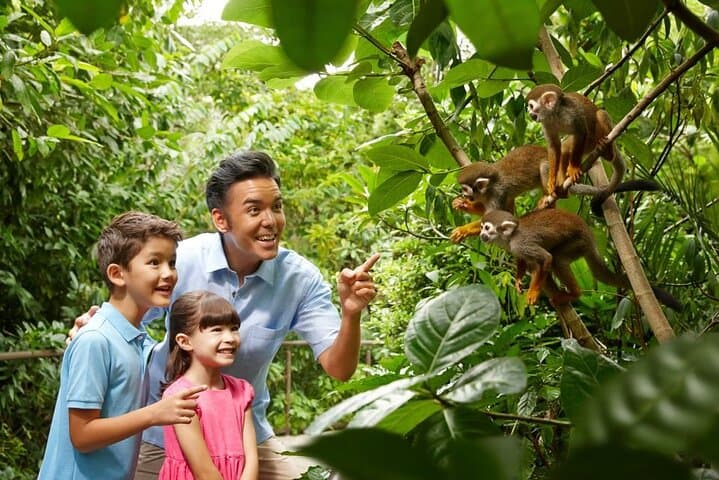
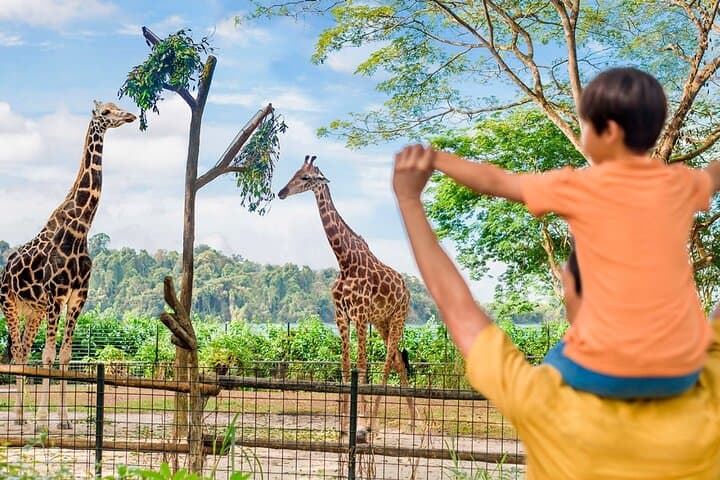
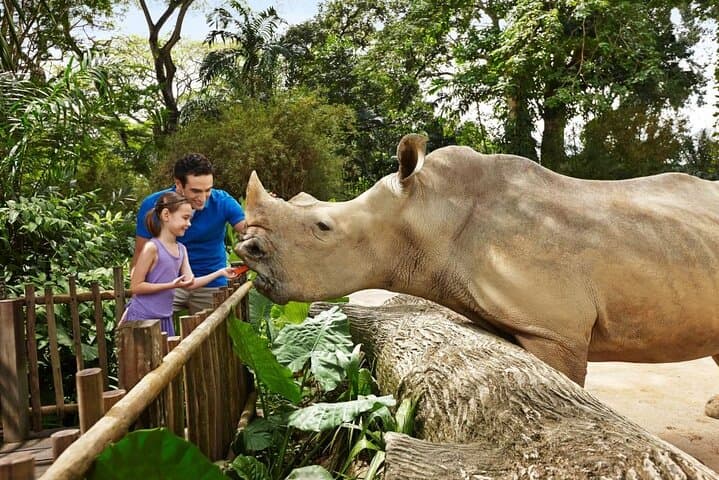
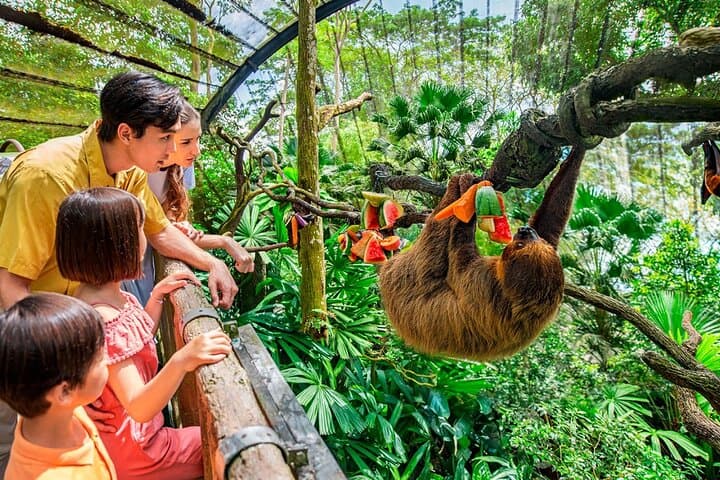
You step through the gate and humidity greets you like a living thing—warm, green, and insistently present. The paths curve through rainforest galleries where orangutans swing overhead and the rumble of an elephant’s chew punctuates the chatter of visitors. A low tram hums along the route, offering a slow panorama of open enclosures that favor sightlines over bars.
You step through the gate and humidity greets you like a living thing—warm, green, and insistently present. The paths curve through rainforest galleries where orangutans swing overhead and the rumble of an elephant’s chew punctuates the chatter of visitors. A low tram hums along the route, offering a slow panorama of open enclosures that favor sightlines over bars.
Opened in 1973 and sited in Mandai’s secondary rainforest, the Singapore Zoo helped redefine modern zoological design in Southeast Asia by emphasizing naturalistic habitats and behavioral displays. Geology here is gentle—rolling hillocks and drained riverbeds repurposed to mimic the animals’ native terrain—while cultural ties to local conservation are visible in education exhibits and native-species breeding programs.
Practical rhythm: arrive early when animals are most active, follow keeper-talk times for live demonstrations, and use the tram to rest legs between sectors. The park operates on a full-day cadence (most guests spend 4–6 hours exploring), with last admission and tram departures in the late afternoon—check the official site for exact times. Bring a refillable bottle, sunscreen, and lightweight rain protection; Singapore’s tropical weather can shift from blazing sun to a sudden downpour.
Accessibility is straightforward—paved routes, ramps, and stroller-friendly sections—but expect uneven ground near some viewing platforms. Food outlets and shaded seating are spaced across the park; respect signage and never feed animals. Whether you’re watching a tiger laze in the shade or studying a Komodo dragon at eye level, the zoo blends close encounters with practical flow—an organized, education-first wildlife day in the tropics.