THE ADVENTURE COLLECTIVE® · Independent discovery and booking for outdoor travel

Explore Singapore Zoo’s open-concept habitats where animals roam in naturalistic settings and interactive keeper talks bring you closer to wildlife. This concise guide covers history, terrain, what to expect and practical tips to make the most of a 2–4 hour visit.
Explore Singapore Zoo’s open-concept habitats where animals roam in naturalistic settings and interactive keeper talks bring you closer to wildlife. This concise guide covers history, terrain, what to expect and practical tips to make the most of a 2–4 hour visit.
You step off the tram into a humid Mandai morning and the air changes—green deepens, bird calls thread through the canopy, and a distant rustle suggests something larger is watching. The Singapore Zoo’s open-concept enclosures trade bars for moats and concealed barriers, letting animals move in settings that mimic river bends, rainforest floor and open grassland. It feels less like a traditional zoo and more like a curated wild corridor that invites you to move quietly and look closely.
Verified experiences and guided adventures in the surrounding area.
Operated by GlobalTix Pte Ltd · Singapore, Singapore
You step off the tram into a humid Mandai morning and the air changes—green deepens, bird calls thread through the canopy, and a distant rustle suggests something larger is watching. The Singapore Zoo’s open-concept enclosures trade bars for moats and concealed barriers, letting animals move in settings that mimic river bends, rainforest floor and open grassland. It feels less like a traditional zoo and more like a curated wild corridor that invites you to move quietly and look closely.
Opened in 1973 on reclaimed rainforest terrain, the park pioneered naturalistic exhibits in Southeast Asia and sits on landscape shaped by ancient sandstone and coastal alluvium. Local cultural ties show in conservation-minded education programs and family-focused attractions like the Jungle Breakfast with Orangutans—an encounter rooted in long-running public engagement rather than spectacle.
Expect a mix of paved paths, boardwalks and slight inclines across roughly 28 hectares; sights include free-ranging primates, Southeast Asian mammals and aviaries that often put birds at eye level. Tram rides reduce walking time and are included with admission, offering a practical way to see broader zones before concentrating on keeper talks and feeding sessions.
Practical guidance: arrive early to avoid midday heat and queueing, book timed experiences in advance, and plan 2–4 hours for a solid visit (half-day if you linger at shows). Bring a lightweight rain layer, refillable water, sturdy walking shoes and insect repellent. Be prepared for crowds on weekends and keep to viewing distances—feedings are controlled and supervised.
This is a place where rivers seem to edge closer, birds challenge the canopy, and responsible wildlife viewing is the main act.
easy.
2–4 hours.
Suitable for most fitness levels; requires moderate walking on paved paths and occasional gentle slopes.
Yes—standard admission includes a tram ride that loops the main zones and is useful for reducing walking time.
Visitors should arrive within the selected time window; if park capacity is reached you may need to wait for availability—arriving earlier reduces this risk.
Children below 3 years may enter free subject to verification by Wildlife Reserves Singapore policies—bring ID if requested.
Special encounters like the Jungle Breakfast are extra and require advance booking; general feeding demonstrations and keeper talks are included in the daily program.
Singapore Zoo opened in 1973 as part of a move to create open, naturalistic exhibits; it helped popularize modern zoo design in Southeast Asia.
The park runs education and breeding programs focused on regional species and emphasizes reducing single-use plastics—visitors are encouraged to follow the park’s waste guidelines.
GlobalTix Pte Ltd operates guided outdoor trips and adventures with an emphasis on safety, stewardship, and memorable experiences.
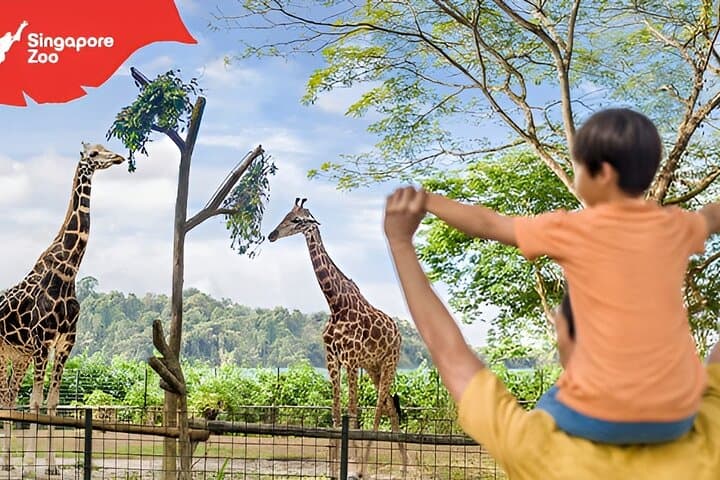
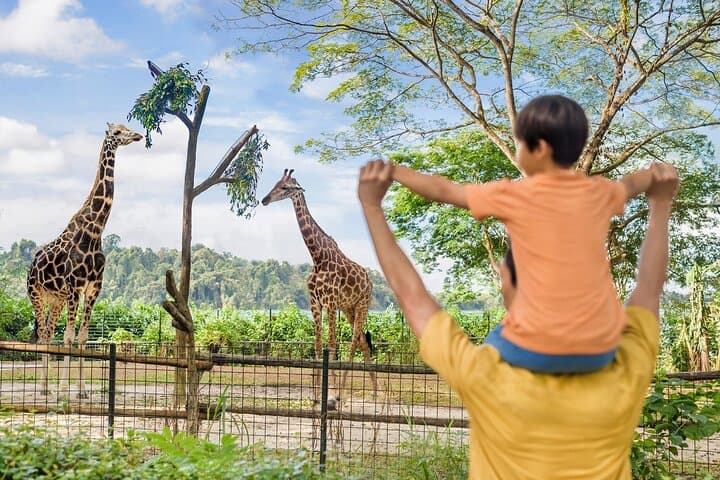
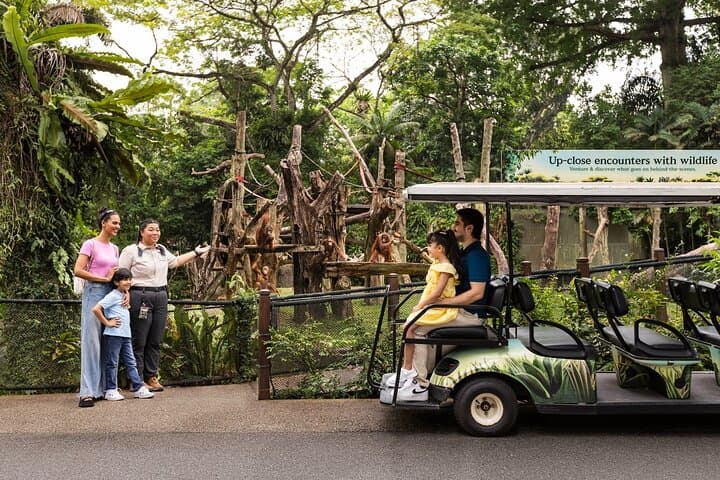
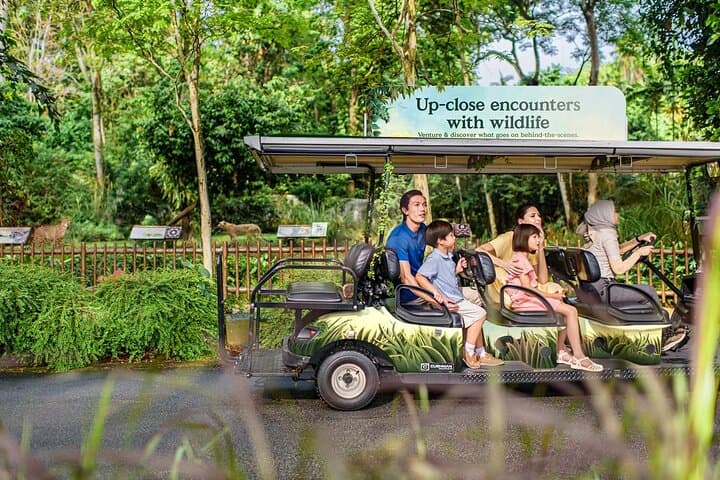
You step off the tram into a humid Mandai morning and the air changes—green deepens, bird calls thread through the canopy, and a distant rustle suggests something larger is watching. The Singapore Zoo’s open-concept enclosures trade bars for moats and concealed barriers, letting animals move in settings that mimic river bends, rainforest floor and open grassland. It feels less like a traditional zoo and more like a curated wild corridor that invites you to move quietly and look closely.
You step off the tram into a humid Mandai morning and the air changes—green deepens, bird calls thread through the canopy, and a distant rustle suggests something larger is watching. The Singapore Zoo’s open-concept enclosures trade bars for moats and concealed barriers, letting animals move in settings that mimic river bends, rainforest floor and open grassland. It feels less like a traditional zoo and more like a curated wild corridor that invites you to move quietly and look closely.
Opened in 1973 on reclaimed rainforest terrain, the park pioneered naturalistic exhibits in Southeast Asia and sits on landscape shaped by ancient sandstone and coastal alluvium. Local cultural ties show in conservation-minded education programs and family-focused attractions like the Jungle Breakfast with Orangutans—an encounter rooted in long-running public engagement rather than spectacle.
Expect a mix of paved paths, boardwalks and slight inclines across roughly 28 hectares; sights include free-ranging primates, Southeast Asian mammals and aviaries that often put birds at eye level. Tram rides reduce walking time and are included with admission, offering a practical way to see broader zones before concentrating on keeper talks and feeding sessions.
Practical guidance: arrive early to avoid midday heat and queueing, book timed experiences in advance, and plan 2–4 hours for a solid visit (half-day if you linger at shows). Bring a lightweight rain layer, refillable water, sturdy walking shoes and insect repellent. Be prepared for crowds on weekends and keep to viewing distances—feedings are controlled and supervised.
This is a place where rivers seem to edge closer, birds challenge the canopy, and responsible wildlife viewing is the main act.