THE ADVENTURE COLLECTIVE® · Independent discovery and booking for outdoor travel

Ascend Jabal Musa before dawn for a sunrise that paints Sinai’s crags, then explore the ancient St. Catherine’s Monastery and its manuscripts. This full‑day archaeological and physical journey pairs cultural depth with a steady mountain climb.
Ascend Jabal Musa before dawn for a sunrise that paints Sinai’s crags, then explore the ancient St. Catherine’s Monastery and its manuscripts. This full‑day archaeological and physical journey pairs cultural depth with a steady mountain climb.
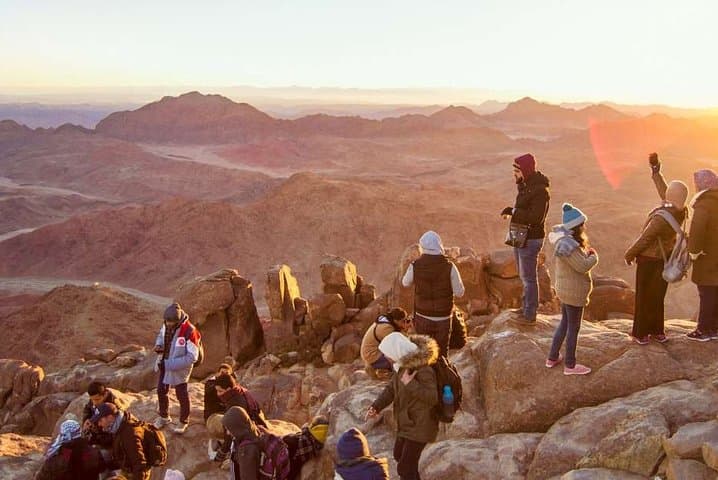
Night dissolves over Sinai as buses leave Cairo and the desert horizon widens into cold, granite silhouettes. Climbers arrive at the base of Jabal Musa (Mount Moses) under a vault of stars, shoulders tight, headlamps cutting corridors through an ancient stair carved into stone. The climb is a steady claim—about 750 stone steps to 2,285 m—each pause rewarded by the mountains peeling back in layered silhouettes until the sun pries color from the ridges.
Verified experiences and guided adventures in the surrounding area.
Operated by travel to church · Saint Catherine, South Sinai
Night dissolves over Sinai as buses leave Cairo and the desert horizon widens into cold, granite silhouettes. Climbers arrive at the base of Jabal Musa (Mount Moses) under a vault of stars, shoulders tight, headlamps cutting corridors through an ancient stair carved into stone. The climb is a steady claim—about 750 stone steps to 2,285 m—each pause rewarded by the mountains peeling back in layered silhouettes until the sun pries color from the ridges.
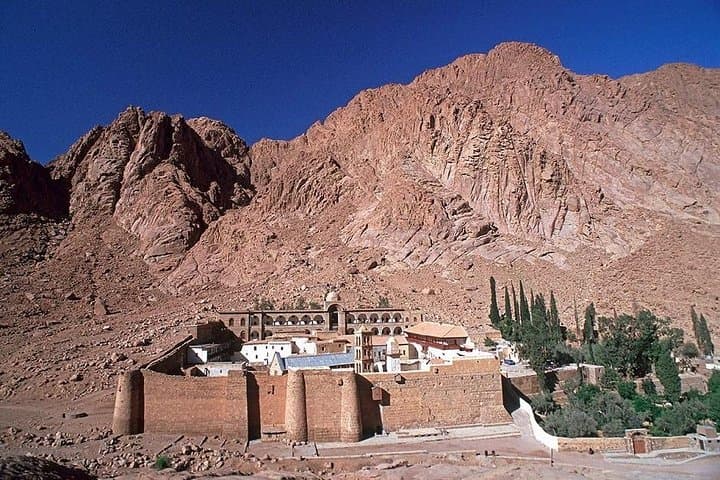
The route threads together visible history: Byzantine masonry at the monastery, the reportedly burning bush site marked by the “Moses tree,” and a library of Coptic and Greek manuscripts that speak to Christianity’s survival on the peninsula. Geologically, Sinai is a block of uplifted Precambrian granites and gneiss; the peaks are weathered, sharp, and honest, with loose scree on some approaches.
Expect a spiritual, cultural, and physical day—pre‑dawn ascent (2–3 hours), sunrise at the summit, a 2‑hour descent, and a guided visit to St. Catherine’s Monastery’s churches, icons, and library, then lunch and return to Cairo. Practicalities matter: temperatures swing dramatically between night and sunrise, stone steps can be slick with sand, and facilities are basic.
Bring durable footwear, layered clothing for a cold summit, and a headlamp for the night climb. Move at a steady pace; hydrate before you start and carry cash for modest purchases. The experience is as much about patience and quiet as it is about the view—a desert that demands your attention and returns it with place and history.
moderate.
12–15 hours.
Good walking fitness; able to sustain a steady uphill pace for 2–3 hours and handle a long day with short breaks.
From the commonly used starting point it’s roughly 750 stone steps and typically takes 2–3 hours to reach the summit depending on pace and fitness.
Yes; St. Catherine’s Monastery opens to visitors during the day—your guided visit usually follows the descent and includes the library and churches.
No special permits are required for tourists; modest dress is expected within the monastery (shoulders and knees covered) and respectful behavior is required inside religious spaces.
The tour can accommodate many fitness levels but the pre‑dawn climb demands stamina; consider the private transfer and the option to ascend at a slower pace or remain at a lower viewpoint.
St. Catherine’s Monastery was built in the 6th century under Byzantine patronage and preserves one of the oldest continuously operating Christian monastic communities and a rich manuscript collection.
The Sinai environment is fragile; stick to defined paths, carry out all waste, and respect restricted or religiously sensitive zones to limit erosion and cultural impact.
travel to church operates guided outdoor trips and adventures with an emphasis on safety, stewardship, and memorable experiences.
Night dissolves over Sinai as buses leave Cairo and the desert horizon widens into cold, granite silhouettes. Climbers arrive at the base of Jabal Musa (Mount Moses) under a vault of stars, shoulders tight, headlamps cutting corridors through an ancient stair carved into stone. The climb is a steady claim—about 750 stone steps to 2,285 m—each pause rewarded by the mountains peeling back in layered silhouettes until the sun pries color from the ridges.
Night dissolves over Sinai as buses leave Cairo and the desert horizon widens into cold, granite silhouettes. Climbers arrive at the base of Jabal Musa (Mount Moses) under a vault of stars, shoulders tight, headlamps cutting corridors through an ancient stair carved into stone. The climb is a steady claim—about 750 stone steps to 2,285 m—each pause rewarded by the mountains peeling back in layered silhouettes until the sun pries color from the ridges.
The route threads together visible history: Byzantine masonry at the monastery, the reportedly burning bush site marked by the “Moses tree,” and a library of Coptic and Greek manuscripts that speak to Christianity’s survival on the peninsula. Geologically, Sinai is a block of uplifted Precambrian granites and gneiss; the peaks are weathered, sharp, and honest, with loose scree on some approaches.
Expect a spiritual, cultural, and physical day—pre‑dawn ascent (2–3 hours), sunrise at the summit, a 2‑hour descent, and a guided visit to St. Catherine’s Monastery’s churches, icons, and library, then lunch and return to Cairo. Practicalities matter: temperatures swing dramatically between night and sunrise, stone steps can be slick with sand, and facilities are basic.
Bring durable footwear, layered clothing for a cold summit, and a headlamp for the night climb. Move at a steady pace; hydrate before you start and carry cash for modest purchases. The experience is as much about patience and quiet as it is about the view—a desert that demands your attention and returns it with place and history.