THE ADVENTURE COLLECTIVE® · Independent discovery and booking for outdoor travel

Ride along the Gulf of Aqaba from Dahab to the Blue Lagoon or Blue Hole on well-trained horses. These 1–3 hour outings pair easy coastal canters and desert tracks with optional snorkeling at world-class reefs.
Ride along the Gulf of Aqaba from Dahab to the Blue Lagoon or Blue Hole on well-trained horses. These 1–3 hour outings pair easy coastal canters and desert tracks with optional snorkeling at world-class reefs.
The first thing a rider notices in Dahab is how the light sorts the landscape: a cool, hard blue over the Gulf of Aqaba, and a sunlit ochre spreading inland where the desert meets sea. Mounting a sure-footed Arabian or local bay at a small stable on the edge of town, you push off along a tidal fringe of sand that quickly gives way to compact tracks and the stubbled slopes of Wadi el Bida.
Verified experiences and guided adventures in the surrounding area.
Operated by Dahab Safari Day Tours · Dahab, South Sinai Governorate
The first thing a rider notices in Dahab is how the light sorts the landscape: a cool, hard blue over the Gulf of Aqaba, and a sunlit ochre spreading inland where the desert meets sea. Mounting a sure-footed Arabian or local bay at a small stable on the edge of town, you push off along a tidal fringe of sand that quickly gives way to compact tracks and the stubbled slopes of Wadi el Bida.
Riding in Sinai is as much about movement through layered history as it is about scenery. The coast has been a trading frontier for millennia — Bedouin routes crisscross these sands, and the very trails riders follow were carved by pack animals long before tourism. Geologically, the cliffs and wadis are part of the northern Sinai uplift: granite and sedimentary shelves that drop steeply to the coral-rich waters of the Gulf of Aqaba, where the Blue Lagoon and the infamous Blue Hole form marine sinkholes and reef corridors favored by divers.
Culturally, Dahab keeps a slower tempo than nearby Sharm el-Sheikh. Informal Bedouin cafés and small dive shops line the waterfront, and guides often grew up as fishermen or shepherds who learned to read wind and tide the way others read maps. Many horse tours end at the Blue Lagoon — a shallow, sheltered crescent of water — or at the Blue Hole for a short snorkel, folding a water activity into a land-based ride.
Practically, tours run from 1–3 hours and cover flat to gently rolling terrain; expect sandy beach stretches, packed gravel trails, and short rocky sections in wadis. Elevation changes are modest, generally under 100 meters, but loose sand and sun exposure make pacing and hydration critical. Guides provide helmets on request and basic instruction for first-time riders; snorkeling equipment is commonly included when the itinerary reaches Blue Hole.
Plan to ride early morning or late afternoon to avoid peak heat and to catch the best light for photos. Wear closed shoes with a low heel, long pants to prevent chafing, and a sun shirt. Bring at least 1–2 liters of water, reef-safe sunscreen, and a compact dry bag for phone and camera. If you intend to snorkel at Blue Hole, consider reef shoes and a mask fitted for your face; boat or vehicle return options are often available for longer combined trips.
For travelers, a ride in Dahab is immediate and elemental: the horse keeps its own steady rhythm while the coastline dares you to look up and follow the curve of the water. It’s an efficient, tactile way to move through Sinai’s shifting edges — equal parts natural history, local color, and practical adventure.
easy.
1–3 hours.
Suitable for most fitness levels; basic balance and the ability to mount a horse required.
No—most tours welcome beginners and provide brief instructions and gentle mounts; let the operator know your comfort level.
Helmets are often available on request but confirm with the supplier before riding if you require one.
Yes—several itineraries include a stop at Blue Lagoon or Blue Hole for snorkeling; equipment is usually provided.
Dahab is hot from late spring through early fall; ride early morning or late afternoon to avoid peak heat and strong sun.
Yes—many operators offer pickup from hotels in Dahab; confirm exact time and meeting point when booking.
Children can usually join; age and weight limits vary—contact the operator with ages to confirm safety arrangements.
The shoreline around Dahab has served as a Bedouin transit route and small fishing community for centuries, later becoming a low-key dive hub after the 20th century.
Stick to marked trails and avoid trampling fragile wadis; use reef-safe sunscreen and respect local coral by not touching or standing on it.
Dahab Safari Day Tours operates guided outdoor trips and adventures with an emphasis on safety, stewardship, and memorable experiences.


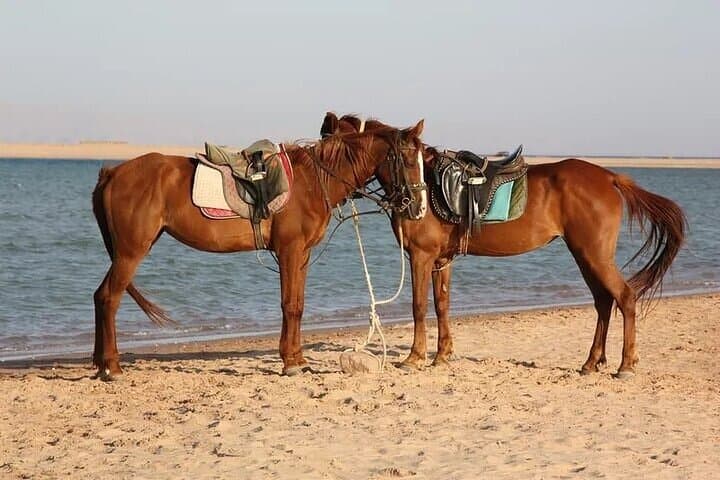

The first thing a rider notices in Dahab is how the light sorts the landscape: a cool, hard blue over the Gulf of Aqaba, and a sunlit ochre spreading inland where the desert meets sea. Mounting a sure-footed Arabian or local bay at a small stable on the edge of town, you push off along a tidal fringe of sand that quickly gives way to compact tracks and the stubbled slopes of Wadi el Bida.
The first thing a rider notices in Dahab is how the light sorts the landscape: a cool, hard blue over the Gulf of Aqaba, and a sunlit ochre spreading inland where the desert meets sea. Mounting a sure-footed Arabian or local bay at a small stable on the edge of town, you push off along a tidal fringe of sand that quickly gives way to compact tracks and the stubbled slopes of Wadi el Bida.
Riding in Sinai is as much about movement through layered history as it is about scenery. The coast has been a trading frontier for millennia — Bedouin routes crisscross these sands, and the very trails riders follow were carved by pack animals long before tourism. Geologically, the cliffs and wadis are part of the northern Sinai uplift: granite and sedimentary shelves that drop steeply to the coral-rich waters of the Gulf of Aqaba, where the Blue Lagoon and the infamous Blue Hole form marine sinkholes and reef corridors favored by divers.
Culturally, Dahab keeps a slower tempo than nearby Sharm el-Sheikh. Informal Bedouin cafés and small dive shops line the waterfront, and guides often grew up as fishermen or shepherds who learned to read wind and tide the way others read maps. Many horse tours end at the Blue Lagoon — a shallow, sheltered crescent of water — or at the Blue Hole for a short snorkel, folding a water activity into a land-based ride.
Practically, tours run from 1–3 hours and cover flat to gently rolling terrain; expect sandy beach stretches, packed gravel trails, and short rocky sections in wadis. Elevation changes are modest, generally under 100 meters, but loose sand and sun exposure make pacing and hydration critical. Guides provide helmets on request and basic instruction for first-time riders; snorkeling equipment is commonly included when the itinerary reaches Blue Hole.
Plan to ride early morning or late afternoon to avoid peak heat and to catch the best light for photos. Wear closed shoes with a low heel, long pants to prevent chafing, and a sun shirt. Bring at least 1–2 liters of water, reef-safe sunscreen, and a compact dry bag for phone and camera. If you intend to snorkel at Blue Hole, consider reef shoes and a mask fitted for your face; boat or vehicle return options are often available for longer combined trips.
For travelers, a ride in Dahab is immediate and elemental: the horse keeps its own steady rhythm while the coastline dares you to look up and follow the curve of the water. It’s an efficient, tactile way to move through Sinai’s shifting edges — equal parts natural history, local color, and practical adventure.