THE ADVENTURE COLLECTIVE® · Independent discovery and booking for outdoor travel

Walk between restored and unrestored Great Wall sections from Simatai West to Jinshanling on a full-day, small-group hike. Expect three hours on the wall, dramatic watchtowers, and a taste of local village life on a moderate, photogenic route.
Walk between restored and unrestored Great Wall sections from Simatai West to Jinshanling on a full-day, small-group hike. Expect three hours on the wall, dramatic watchtowers, and a taste of local village life on a moderate, photogenic route.
The morning air is thin and cool as the van climbs out of Beijing toward jagged ridgelines. At Kylin Tower on Simatai West the stone underfoot changes from manicured steps to a raw, uneven spine of Ming-era masonry. Hikers set off west along crenellated parapets and broken staircases; tower shadows lengthen over valleys and the wall snakes over serrated peaks.
Verified experiences and guided adventures in the surrounding area.
Operated by Great Wall Hiking · Luanping County, Hebei
The morning air is thin and cool as the van climbs out of Beijing toward jagged ridgelines. At Kylin Tower on Simatai West the stone underfoot changes from manicured steps to a raw, uneven spine of Ming-era masonry. Hikers set off west along crenellated parapets and broken staircases; tower shadows lengthen over valleys and the wall snakes over serrated peaks.
This route crosses both restored and unrestored sections—Simatai’s refurbished towers give way to more ruinous stretches at Jinshanling where beacon towers and original fittings are visible. The line itself follows local fault-lines and resistant bedrock that forced builders to trace the ridge; the watchtowers served as signal points during the Ming dynasty and remain prominent features. Nearby villages still practice small-scale farming and some hosts offer simple home-cooked lunches and teas, adding cultural texture to the walk.
Practically, expect three hours on the wall plus driving and breaks—total tour time runs about nine hours. The terrain alternates firm stone, loose rubble, steep stone steps and short scrambling on unrestored parts; moderate fitness and sure footing are required. There are public toilets at the trailheads but none on the exposed ridgeline; carry a daypack with water, layers, and sun protection. Guides typically store spare water and poles in the vehicle and will advise on pacing for older or younger walkers.
Photographers will find dramatic vantage points at tower clusters; respect fragile sections, follow your guide, and leave only footprints.
moderate.
9 hours.
Moderate cardiovascular fitness and leg strength; able to handle steep, uneven stone steps for several hours.
The on-wall segment typically takes about three hours depending on pace and photo stops; the whole tour including transfers runs about nine hours.
Unrestored sections include steep steps and loose stone; they’re manageable with care but require good footwear and basic sure-footedness.
Lunch is included after the hike; guides may also arrange home-cooked options in local villages—advise dietary needs when booking.
Public toilets are at Simatai West and Jinshanling entrances, but there are no facilities along the ridge—carry necessary supplies.
This stretch of wall was reinforced during the Ming dynasty; beacon and watchtowers here were part of a signaling network guarding approaches to Beijing.
Unrestored sections are vulnerable to erosion and visitor impact—follow established paths, avoid climbing on fragile masonry, and pack out waste.
Great Wall Hiking operates guided outdoor trips and adventures with an emphasis on safety, stewardship, and memorable experiences.

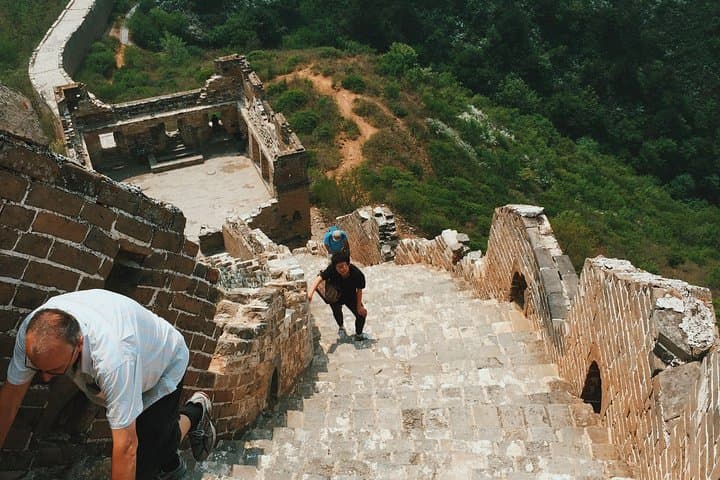


The morning air is thin and cool as the van climbs out of Beijing toward jagged ridgelines. At Kylin Tower on Simatai West the stone underfoot changes from manicured steps to a raw, uneven spine of Ming-era masonry. Hikers set off west along crenellated parapets and broken staircases; tower shadows lengthen over valleys and the wall snakes over serrated peaks.
The morning air is thin and cool as the van climbs out of Beijing toward jagged ridgelines. At Kylin Tower on Simatai West the stone underfoot changes from manicured steps to a raw, uneven spine of Ming-era masonry. Hikers set off west along crenellated parapets and broken staircases; tower shadows lengthen over valleys and the wall snakes over serrated peaks.
This route crosses both restored and unrestored sections—Simatai’s refurbished towers give way to more ruinous stretches at Jinshanling where beacon towers and original fittings are visible. The line itself follows local fault-lines and resistant bedrock that forced builders to trace the ridge; the watchtowers served as signal points during the Ming dynasty and remain prominent features. Nearby villages still practice small-scale farming and some hosts offer simple home-cooked lunches and teas, adding cultural texture to the walk.
Practically, expect three hours on the wall plus driving and breaks—total tour time runs about nine hours. The terrain alternates firm stone, loose rubble, steep stone steps and short scrambling on unrestored parts; moderate fitness and sure footing are required. There are public toilets at the trailheads but none on the exposed ridgeline; carry a daypack with water, layers, and sun protection. Guides typically store spare water and poles in the vehicle and will advise on pacing for older or younger walkers.
Photographers will find dramatic vantage points at tower clusters; respect fragile sections, follow your guide, and leave only footprints.