THE ADVENTURE COLLECTIVE® · Independent discovery and booking for outdoor travel

Step out of Pokhara for a half‑day visit to a working silkworm farm where thousands of mulberry trees feed quiet rows of larvae. Combine hands‑on sericulture insights with an easy, fresh‑air hike through foothill trails.
Step out of Pokhara for a half‑day visit to a working silkworm farm where thousands of mulberry trees feed quiet rows of larvae. Combine hands‑on sericulture insights with an easy, fresh‑air hike through foothill trails.
The bus hums away from Lakeside and, twenty minutes later, the city noise thins into the rustle of mulberry leaves. Sunlight filters through rows of black and red mulberry trees while a guide gestures toward trays of pale, plump silkworms—small engines of an age-old craft—quietly feeding and spinning the morning.
Verified experiences and guided adventures in the surrounding area.
Operated by Nepal Mountain Club Pvt Ltd · Pokhara, Gandaki Province
The bus hums away from Lakeside and, twenty minutes later, the city noise thins into the rustle of mulberry leaves. Sunlight filters through rows of black and red mulberry trees while a guide gestures toward trays of pale, plump silkworms—small engines of an age-old craft—quietly feeding and spinning the morning.
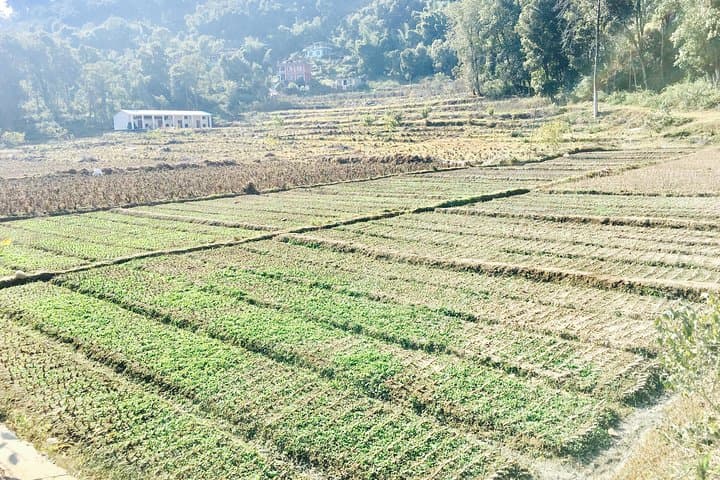
Sericulture in Nepal is a modern rural industry with roots stretching back more than twenty-five years; here the bi‑voltine silkworm thrives in the sub‑tropical foothills of the Annapurna range. The farm occupies gently sloped terraces of alluvial soil, where microclimates and steady humidity favor healthy cocoons. Visit highlights include strolling the mulberry groves, watching the controlled breeding houses, and seeing raw silk processed into skeins and nets by local artisans.
Culture and economy collide simply: families rotate mulberry harvests, timed to the worms’ lifecycle, and small-scale rearing supports local livelihoods. Geologically you’ll be on weathered hill slopes that drain toward the Pokhara valley—expect earthy trails and soft rises rather than steep alpine climbs.
Practically, the experience is a half‑day affair (about 3–4 hours) that pairs a guided educational tour with an easy walk through forested tracks. Wear grippy shoes, bring water and insect repellent, and plan for a brief uphill return to the main road where your vehicle waits. The visit suits travelers curious about sustainable rural industries and anyone wanting a calm outdoor introduction to the Annapurna foothills.
moderate.
3–4 hours.
Suitable for travelers with moderate fitness — short hikes on uneven farm tracks with occasional gentle upslope.
Expect about a 20–30 minute drive one way from Lakeside, depending on traffic and the exact farm location.
Yes — children can enjoy seeing silkworms and the groves, but infants should ride in laps or strollers as noted; supervision is required around breeding areas.
Many farms and nearby workshops offer raw silk or small finished items for sale; availability varies by visit and production cycle.
Basic facilities are usually available near the farm entrance or at the rearing center, but expect simple, rural amenities rather than full-service restrooms.
Sericulture in Nepal expanded in the late 20th century; the region favors bi‑voltine silkworm strains that produce higher‑quality raw silk in sub‑tropical hill climates.
Small farms often practice rotational mulberry planting and localized pest control; visitors should avoid disturbing breeding areas and support local producers to encourage sustainable livelihoods.
Nepal Mountain Club Pvt Ltd operates guided outdoor trips and adventures with an emphasis on safety, stewardship, and memorable experiences.
The bus hums away from Lakeside and, twenty minutes later, the city noise thins into the rustle of mulberry leaves. Sunlight filters through rows of black and red mulberry trees while a guide gestures toward trays of pale, plump silkworms—small engines of an age-old craft—quietly feeding and spinning the morning.
The bus hums away from Lakeside and, twenty minutes later, the city noise thins into the rustle of mulberry leaves. Sunlight filters through rows of black and red mulberry trees while a guide gestures toward trays of pale, plump silkworms—small engines of an age-old craft—quietly feeding and spinning the morning.
Sericulture in Nepal is a modern rural industry with roots stretching back more than twenty-five years; here the bi‑voltine silkworm thrives in the sub‑tropical foothills of the Annapurna range. The farm occupies gently sloped terraces of alluvial soil, where microclimates and steady humidity favor healthy cocoons. Visit highlights include strolling the mulberry groves, watching the controlled breeding houses, and seeing raw silk processed into skeins and nets by local artisans.
Culture and economy collide simply: families rotate mulberry harvests, timed to the worms’ lifecycle, and small-scale rearing supports local livelihoods. Geologically you’ll be on weathered hill slopes that drain toward the Pokhara valley—expect earthy trails and soft rises rather than steep alpine climbs.
Practically, the experience is a half‑day affair (about 3–4 hours) that pairs a guided educational tour with an easy walk through forested tracks. Wear grippy shoes, bring water and insect repellent, and plan for a brief uphill return to the main road where your vehicle waits. The visit suits travelers curious about sustainable rural industries and anyone wanting a calm outdoor introduction to the Annapurna foothills.