THE ADVENTURE COLLECTIVE® · Independent discovery and booking for outdoor travel

Walk Lyon’s silk route from the statue of Jacquard through Croix-Rousse traboules to family-run ateliers in Vieux-Lyon. See original Jacquard looms, hand-painted velvet demos and seasonal silkworm exhibitions on this 3-hour private tour.
Walk Lyon’s silk route from the statue of Jacquard through Croix-Rousse traboules to family-run ateliers in Vieux-Lyon. See original Jacquard looms, hand-painted velvet demos and seasonal silkworm exhibitions on this 3-hour private tour.
Morning light hits the square where the statue of Joseph Marie Jacquard stands, and the city smells faintly of coffee and cotton. You join a small group and step up the slope of Croix-Rousse, its narrow streets folding into hidden courtyards. The city here pushes and yields — winding traboules dare you down stairways where looms once hummed nonstop.
Verified experiences and guided adventures in the surrounding area.
Operated by NEW GENERATION GUIDE · Lyon, Auvergne-Rhône-Alpes
Morning light hits the square where the statue of Joseph Marie Jacquard stands, and the city smells faintly of coffee and cotton. You join a small group and step up the slope of Croix-Rousse, its narrow streets folding into hidden courtyards. The city here pushes and yields — winding traboules dare you down stairways where looms once hummed nonstop.
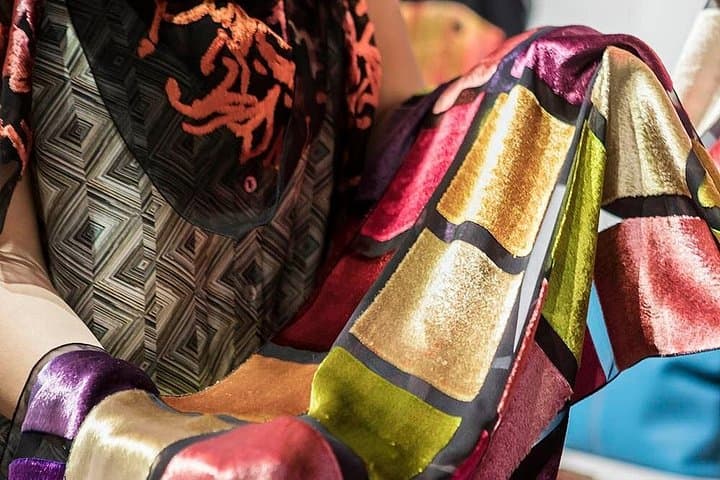
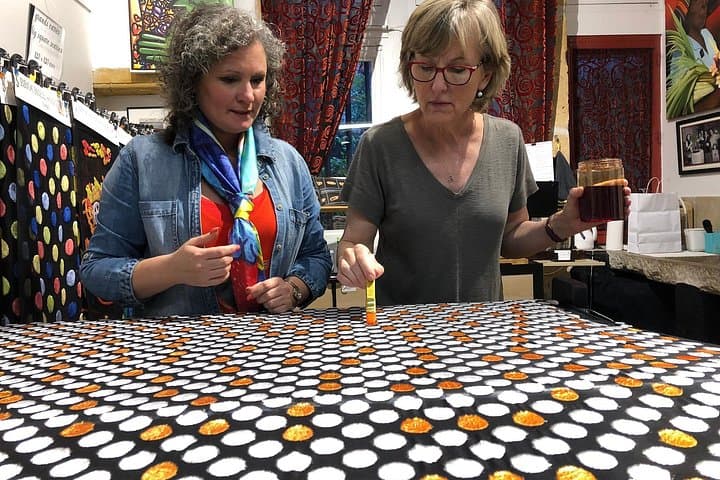
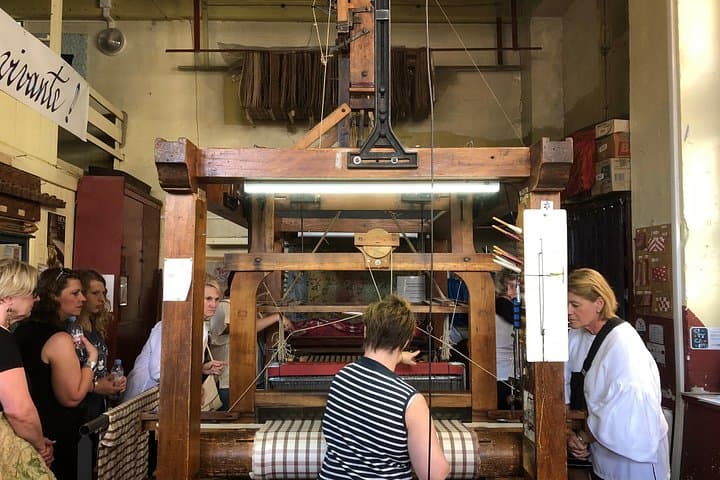
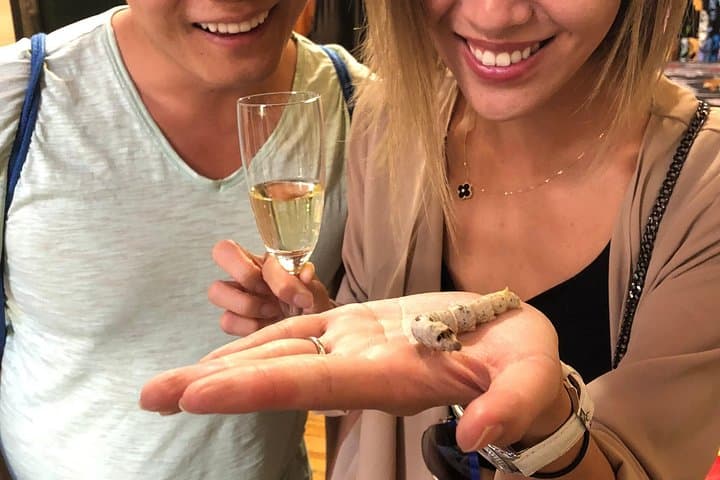
Lyon’s silk story is industrial and intimate: 17th–19th century canuts (silk workers) turned this hill into Europe’s weaving heart. Geologically, the twin rivers Rhône and Saône cut the urban terraces that gave workshops sunlight and cool basements for vats and mills. On this private 3-hour tour you’ll watch an original 19th-century Jacquard loom click to life, see hand-painted napped velvet demonstrations, and — seasonally — view live Bombyx mori silkworms.
Culturally the tour threads fashion, chemistry and zoology: techniques of dye, the precision of patterning, and the local firms that still make ‘Made in France’ silk. Expect a mix of small factories and family-run ateliers in Vieux-Lyon, plus a guided passage through classic traboules.
Practicalities: meet at the Jacquard statue; the route ends near Brochier Soierie on Rue du Boeuf. Moderate fitness is needed — many steps and uneven cobbles. Wear sturdy shoes, bring a light layer (workshops can be cool), and plan for public-transport access. Photography is usually allowed during demonstrations but follow artisan requests. This is a tactile, sensory tour: fabrics will be soft, machines assertive, and history immediately underfoot.
moderate.
3 hours.
Moderately active: able to walk uphill, manage stairs and stand during demonstrations for 45–60 minutes at a time.
The meeting point is at the statue of Jacquard in Croix‑Rousse; the tour finishes at Brochier Soierie on 16 Rue du Boeuf in Vieux‑Lyon.
Silkworm exhibitions are seasonal—typically available from May to November—so availability depends on timing of the tour.
Children are welcome but the tour includes many steps and narrow passages; it’s not recommended for those who cannot manage stairs or uneven surfaces.
Yes—many ateliers sell scarves, ties and small pieces; bring card or cash, though some smaller studios prefer card payments.
Lyon became Europe’s silk capital from the 17th century onward; Joseph Marie Jacquard’s early-19th-century loom automated complex patterning and reshaped the trade.
Support small ateliers that follow low-impact dyeing and local supply chains; avoid mass-produced silk to reduce fast-fashion waste.
NEW GENERATION GUIDE operates guided outdoor trips and adventures with an emphasis on safety, stewardship, and memorable experiences.
Morning light hits the square where the statue of Joseph Marie Jacquard stands, and the city smells faintly of coffee and cotton. You join a small group and step up the slope of Croix-Rousse, its narrow streets folding into hidden courtyards. The city here pushes and yields — winding traboules dare you down stairways where looms once hummed nonstop.
Morning light hits the square where the statue of Joseph Marie Jacquard stands, and the city smells faintly of coffee and cotton. You join a small group and step up the slope of Croix-Rousse, its narrow streets folding into hidden courtyards. The city here pushes and yields — winding traboules dare you down stairways where looms once hummed nonstop.
Lyon’s silk story is industrial and intimate: 17th–19th century canuts (silk workers) turned this hill into Europe’s weaving heart. Geologically, the twin rivers Rhône and Saône cut the urban terraces that gave workshops sunlight and cool basements for vats and mills. On this private 3-hour tour you’ll watch an original 19th-century Jacquard loom click to life, see hand-painted napped velvet demonstrations, and — seasonally — view live Bombyx mori silkworms.
Culturally the tour threads fashion, chemistry and zoology: techniques of dye, the precision of patterning, and the local firms that still make ‘Made in France’ silk. Expect a mix of small factories and family-run ateliers in Vieux-Lyon, plus a guided passage through classic traboules.
Practicalities: meet at the Jacquard statue; the route ends near Brochier Soierie on Rue du Boeuf. Moderate fitness is needed — many steps and uneven cobbles. Wear sturdy shoes, bring a light layer (workshops can be cool), and plan for public-transport access. Photography is usually allowed during demonstrations but follow artisan requests. This is a tactile, sensory tour: fabrics will be soft, machines assertive, and history immediately underfoot.