THE ADVENTURE COLLECTIVE® · Independent discovery and booking for outdoor travel

Float between continents in the crystalline fissure of Silfra at Þingvellir National Park. This guided drysuit snorkeling trip combines geologic spectacle, strict conservation, and an intimate 30–45 minute underwater drift.
Float between continents in the crystalline fissure of Silfra at Þingvellir National Park. This guided drysuit snorkeling trip combines geologic spectacle, strict conservation, and an intimate 30–45 minute underwater drift.
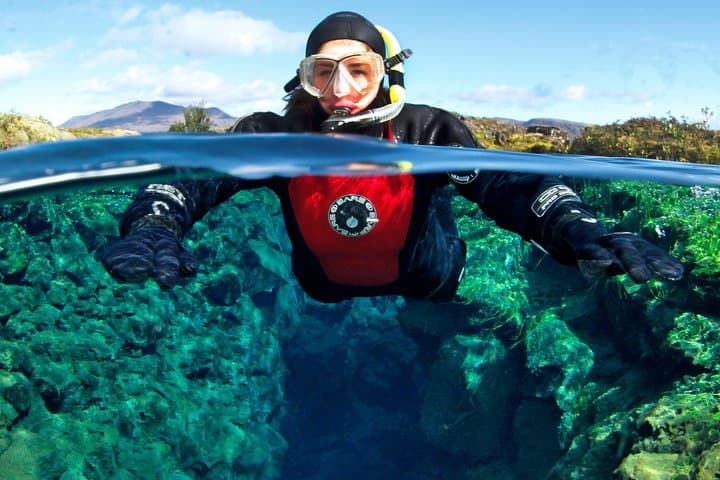
You stand at the lip of a crack in the earth and the water below seems like liquid glass — so clear it feels like a window into the planet. The guides unzip the heated van and hand you a drysuit; the air smells of cold stone and hot cocoa. In a short walk your feet will meet the brink of Silfra, the fissure where the North American and Eurasian tectonic plates drift apart, and the Atlantic’s filtered meltwater will dare you to float between them.
Verified experiences and guided adventures in the surrounding area.
Operated by DIVE.IS - The Sport Diving School of Iceland · Reykjavik, Capital Region
You stand at the lip of a crack in the earth and the water below seems like liquid glass — so clear it feels like a window into the planet. The guides unzip the heated van and hand you a drysuit; the air smells of cold stone and hot cocoa. In a short walk your feet will meet the brink of Silfra, the fissure where the North American and Eurasian tectonic plates drift apart, and the Atlantic’s filtered meltwater will dare you to float between them.
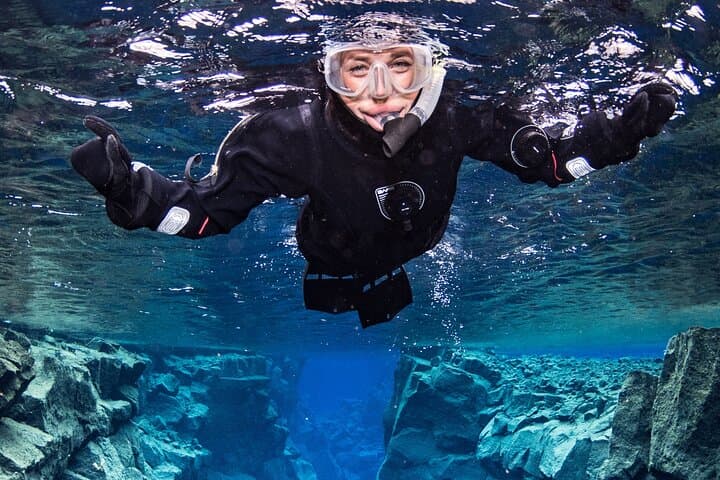
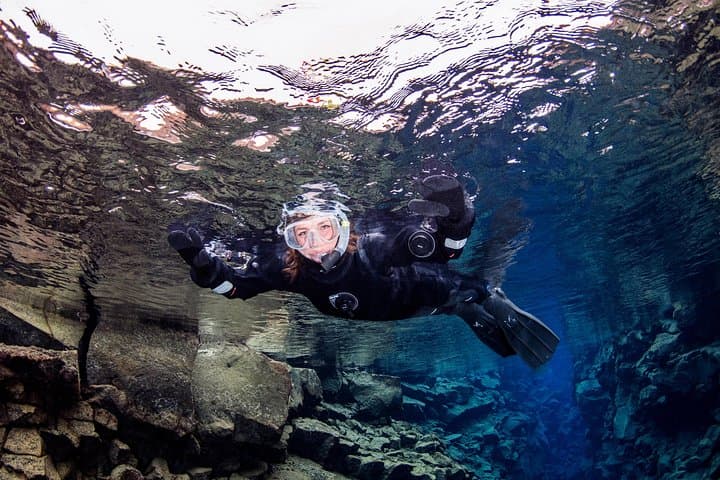
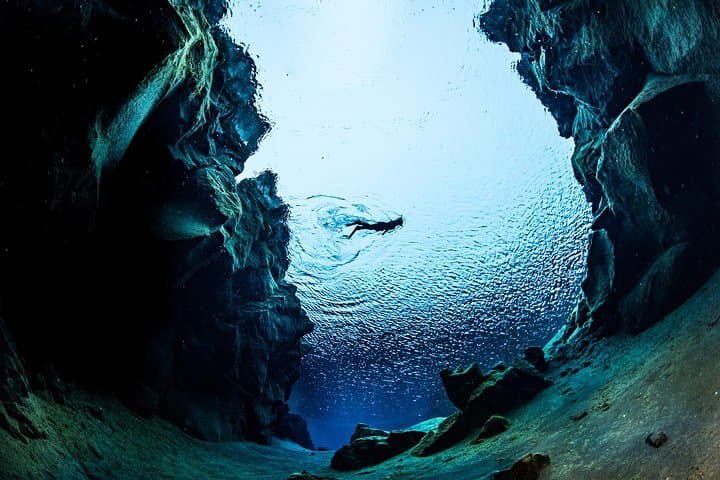
Silfra sits inside Þingvellir (Thingvellir) National Park, a UNESCO World Heritage site that layers geology and human history. Þingvellir was the site of Iceland’s Alþingi, the medieval assembly established in 930 AD — laws were debated on those very rocks. Geologically, Silfra is fed by glacial water that sinks into porous lava fields, spends decades filtering, and reemerges with unrivaled clarity: visibility commonly exceeds 100 meters. The fissure is pure, cold, and slow-moving; currents are minimal, but the water feels alive — it pushes you forward with an almost polite insistence.
The snorkeling route is compact and deliberate. After a thorough briefing and suits fitted in a heated changing van, you hike five minutes to the water. Your in-water time ranges 30–45 minutes, exploring Silfra Hall, Silfra Cathedral and the Silfra Lagoon while a PADI-certified guide points out fracture walls, haloclines and the subtle blues that change with depth.
Culturally, Þingvellir is more than scenery. Icelanders regard the park as the country’s birthplace of law and nationhood — treat the landscape with that quiet respect. Conservation rules are strict: no sunscreen, no touching the fragile algae, and small group sizes help keep the fissure pristine.
Practical details: the full activity is about 2–3 hours (roughly 150 minutes total). Water temps hover around 2–4°C, so the drysuit and thermal layers are non-negotiable. Minimum age is 12; groups are capped at six. Meet at Parking P5 in Thingvellir; remember the ISK entrance fee is included with the tour. Bring long thermal underwear, thick wool socks and a waterproof bag for your downtown clothes. After the dive you’ll be warmed with hot chocolate and cookies while the guide reviews photos.
This is for swimmers who are comfortable in cold water and want a precise, almost scientific closeness with the earth — not a tropical escape. If you plan to photograph underwater, discuss camera housings with the operator ahead of time. Above all: move slowly, breathe steadily, and let the fissure show you how patient water can be.
moderate.
2–3 hours.
Should be comfortable with basic swimming and able to walk short uneven terrain; good mobility for gearing up and a brief hike.
Yes — participants must be comfortable in water and able to swim; the guide will pair close supervision with calm water, but basic swimming ability is required.
Water temperature is about 2–4°C. You wear a drysuit and warm undersuit so you should remain dry and insulated if the suit fits correctly.
Yes, but only with appropriate housings; ask the operator in advance about camera gear and whether guides will take photos for you.
Minimum age is 12 years. Height and weight limits apply (min 150cm/45kg; max 200cm/120kg) to ensure safe drysuit fit.
Meet at Parking P5 in Þingvellir National Park; the operator provides specific map links and recommends saving them offline in case of poor reception.
All participants must complete a medical form; certain conditions or a 'yes' on specific sections may disqualify you or require physician approval, especially for those over 60.
Þingvellir was the site of Iceland’s Alþingi, established in 930 AD, where chieftains met on the exposed rock ledges; the rift itself marks the divergent boundary between two continental plates.
Silfra’s clarity depends on decades of natural filtration; park rules limit groups, ban sunscreens and touching underwater life — follow guides and stay on designated paths to protect the fragile ecosystem.
DIVE.IS - The Sport Diving School of Iceland operates guided outdoor trips and adventures with an emphasis on safety, stewardship, and memorable experiences.
You stand at the lip of a crack in the earth and the water below seems like liquid glass — so clear it feels like a window into the planet. The guides unzip the heated van and hand you a drysuit; the air smells of cold stone and hot cocoa. In a short walk your feet will meet the brink of Silfra, the fissure where the North American and Eurasian tectonic plates drift apart, and the Atlantic’s filtered meltwater will dare you to float between them.
You stand at the lip of a crack in the earth and the water below seems like liquid glass — so clear it feels like a window into the planet. The guides unzip the heated van and hand you a drysuit; the air smells of cold stone and hot cocoa. In a short walk your feet will meet the brink of Silfra, the fissure where the North American and Eurasian tectonic plates drift apart, and the Atlantic’s filtered meltwater will dare you to float between them.
Silfra sits inside Þingvellir (Thingvellir) National Park, a UNESCO World Heritage site that layers geology and human history. Þingvellir was the site of Iceland’s Alþingi, the medieval assembly established in 930 AD — laws were debated on those very rocks. Geologically, Silfra is fed by glacial water that sinks into porous lava fields, spends decades filtering, and reemerges with unrivaled clarity: visibility commonly exceeds 100 meters. The fissure is pure, cold, and slow-moving; currents are minimal, but the water feels alive — it pushes you forward with an almost polite insistence.
The snorkeling route is compact and deliberate. After a thorough briefing and suits fitted in a heated changing van, you hike five minutes to the water. Your in-water time ranges 30–45 minutes, exploring Silfra Hall, Silfra Cathedral and the Silfra Lagoon while a PADI-certified guide points out fracture walls, haloclines and the subtle blues that change with depth.
Culturally, Þingvellir is more than scenery. Icelanders regard the park as the country’s birthplace of law and nationhood — treat the landscape with that quiet respect. Conservation rules are strict: no sunscreen, no touching the fragile algae, and small group sizes help keep the fissure pristine.
Practical details: the full activity is about 2–3 hours (roughly 150 minutes total). Water temps hover around 2–4°C, so the drysuit and thermal layers are non-negotiable. Minimum age is 12; groups are capped at six. Meet at Parking P5 in Thingvellir; remember the ISK entrance fee is included with the tour. Bring long thermal underwear, thick wool socks and a waterproof bag for your downtown clothes. After the dive you’ll be warmed with hot chocolate and cookies while the guide reviews photos.
This is for swimmers who are comfortable in cold water and want a precise, almost scientific closeness with the earth — not a tropical escape. If you plan to photograph underwater, discuss camera housings with the operator ahead of time. Above all: move slowly, breathe steadily, and let the fissure show you how patient water can be.