THE ADVENTURE COLLECTIVE® · Independent discovery and booking for outdoor travel

Float between tectonic plates in the crystalline channel of Silfra at Thingvellir National Park. This guided half-day snorkel from Reykjavik pairs state-of-the-art drysuits with 100m+ visibility and intimate geology lessons.
Float between tectonic plates in the crystalline channel of Silfra at Thingvellir National Park. This guided half-day snorkel from Reykjavik pairs state-of-the-art drysuits with 100m+ visibility and intimate geology lessons.
You step out of the van into a cold, clear hush — the air sharp, the ground a flat stage of ancient rock. A narrow channel of water cuts through the rift like a glass ribbon; the current does not rush so much as invite you forward. Suited in a drysuit, you slide into Silfra and the world above loosens: visibility reaches beyond anything most snorkelers have seen, colors sharpened by purity and light.
Verified experiences and guided adventures in the surrounding area.
Operated by DIVE.IS - The Sport Diving School of Iceland · Thingvellir, Capital Region
You step out of the van into a cold, clear hush — the air sharp, the ground a flat stage of ancient rock. A narrow channel of water cuts through the rift like a glass ribbon; the current does not rush so much as invite you forward. Suited in a drysuit, you slide into Silfra and the world above loosens: visibility reaches beyond anything most snorkelers have seen, colors sharpened by purity and light.
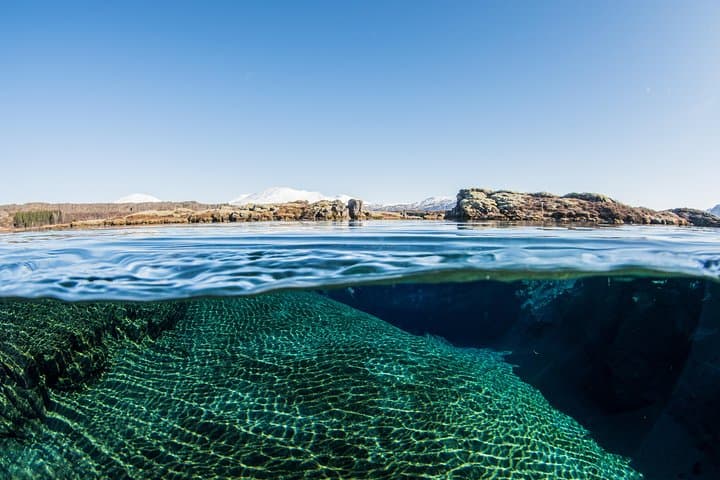
Silfra sits in Thingvellir National Park on the Mid-Atlantic Ridge where the North American and Eurasian plates pull apart. This is where Iceland’s parliament, the Alþingi, met in the 10th century; the landscape is as political as it is geological — cliffs and fissures written by tectonics and history. The fissure names — Hall, Cathedral, Lagoon — hint at scale: narrow walls rise, light filters down, and trout ghost beneath.
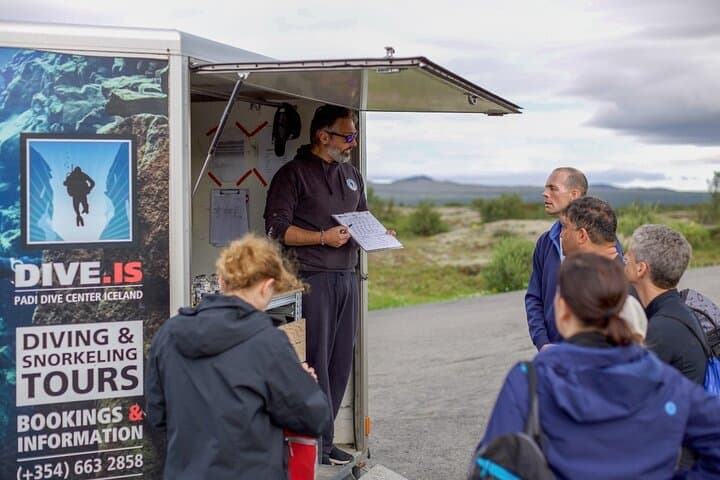
Practically, expect a half-day trip from Reykjavik (about 5–6 hours total with transport and briefing). Guides outfit you with a drysuit and undersuit, teach breathing and hand signals, then lead a 30–45 minute underwater float over stone features and crystal visibility (often 100m+). Water temperatures hover near freezing, so thermal layers and thick socks are essential. Groups are small and the operator manages permits and an entrance fee; after the snorkel, hot chocolate and a heated van restore circulation and conversation.
If you plan to go, be ready with swim competency, a completed medical form, and respect for fragile underwater and park ecosystems — don’t touch the rock, and leave no trace.
moderate.
5–6 hours.
Moderate fitness and comfort in open water required; participants should be able to swim and handle cold-water conditions.
No — snorkeling in a drysuit is suitable for anyone comfortable in water and able to swim; the guide provides instruction and supervision.
Water temperatures are near freezing (around 2–4°C); operators provide drysuits and warm undersuits, but you should wear thermal base layers and wool socks.
Yes — minimum age is 12, minimum height around 150 cm and weight minimum ~45 kg; maximums apply for safe drysuit fit, so check with the operator before booking.
Tours can be canceled for bad weather or insufficient participants; the operator’s policy typically offers a full refund if canceled at least 24 hours ahead.
Thingvellir hosted the Alþingi, one of the world’s oldest parliaments, from 930 AD; the park’s dramatic rifts are visible evidence of plate tectonics.
Silfra’s clarity depends on strict protection: no sunscreens or lotions in the water, small group sizes, and park fees that support preservation.
DIVE.IS - The Sport Diving School of Iceland operates guided outdoor trips and adventures with an emphasis on safety, stewardship, and memorable experiences.
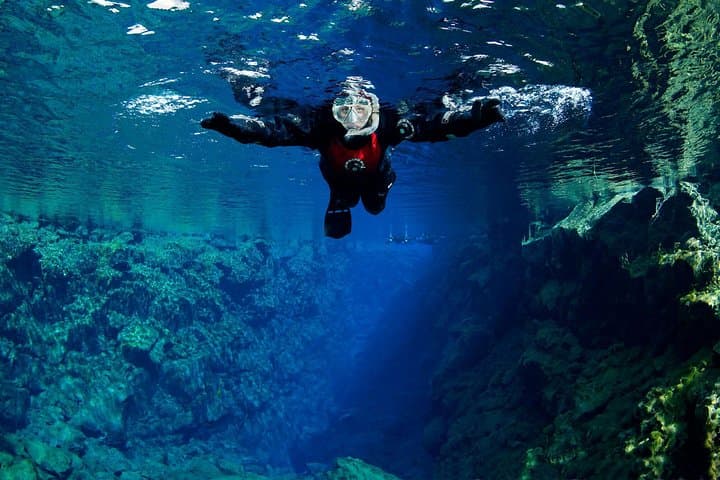
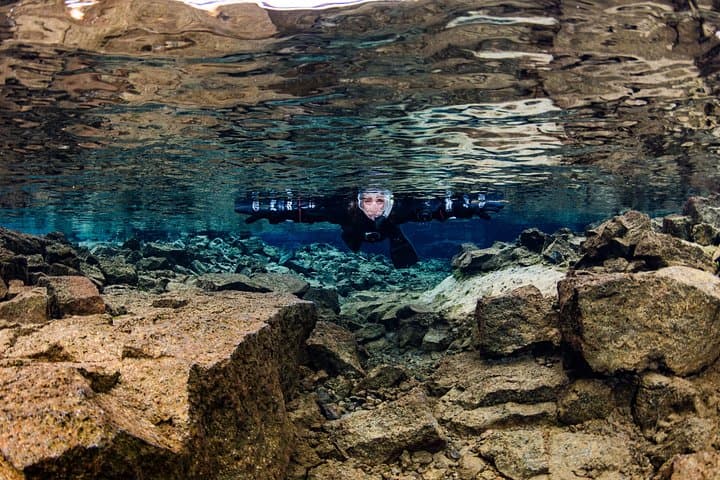
You step out of the van into a cold, clear hush — the air sharp, the ground a flat stage of ancient rock. A narrow channel of water cuts through the rift like a glass ribbon; the current does not rush so much as invite you forward. Suited in a drysuit, you slide into Silfra and the world above loosens: visibility reaches beyond anything most snorkelers have seen, colors sharpened by purity and light.
You step out of the van into a cold, clear hush — the air sharp, the ground a flat stage of ancient rock. A narrow channel of water cuts through the rift like a glass ribbon; the current does not rush so much as invite you forward. Suited in a drysuit, you slide into Silfra and the world above loosens: visibility reaches beyond anything most snorkelers have seen, colors sharpened by purity and light.
Silfra sits in Thingvellir National Park on the Mid-Atlantic Ridge where the North American and Eurasian plates pull apart. This is where Iceland’s parliament, the Alþingi, met in the 10th century; the landscape is as political as it is geological — cliffs and fissures written by tectonics and history. The fissure names — Hall, Cathedral, Lagoon — hint at scale: narrow walls rise, light filters down, and trout ghost beneath.
Practically, expect a half-day trip from Reykjavik (about 5–6 hours total with transport and briefing). Guides outfit you with a drysuit and undersuit, teach breathing and hand signals, then lead a 30–45 minute underwater float over stone features and crystal visibility (often 100m+). Water temperatures hover near freezing, so thermal layers and thick socks are essential. Groups are small and the operator manages permits and an entrance fee; after the snorkel, hot chocolate and a heated van restore circulation and conversation.
If you plan to go, be ready with swim competency, a completed medical form, and respect for fragile underwater and park ecosystems — don’t touch the rock, and leave no trace.