THE ADVENTURE COLLECTIVE® · Independent discovery and booking for outdoor travel

Spend a day underground and between continents: explore Raufarhólshellir’s lava passages in the morning, then don a drysuit to float through Silfra’s crystal-clear fissure in Þingvellir. Practical, immersive, and geologically revealing.
Spend a day underground and between continents: explore Raufarhólshellir’s lava passages in the morning, then don a drysuit to float through Silfra’s crystal-clear fissure in Þingvellir. Practical, immersive, and geologically revealing.
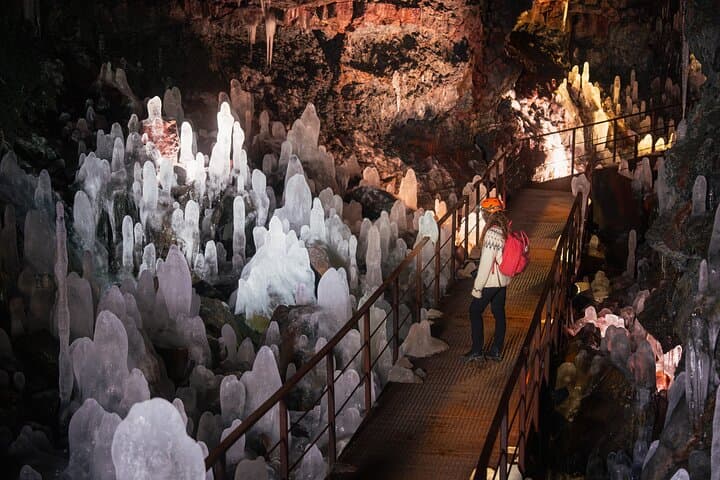
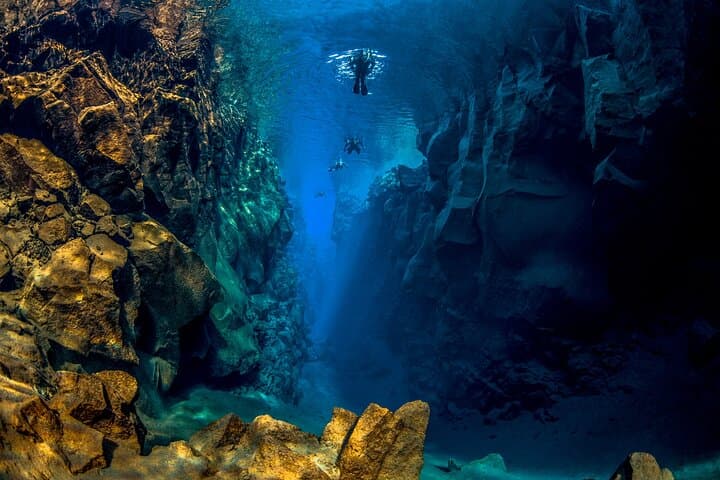
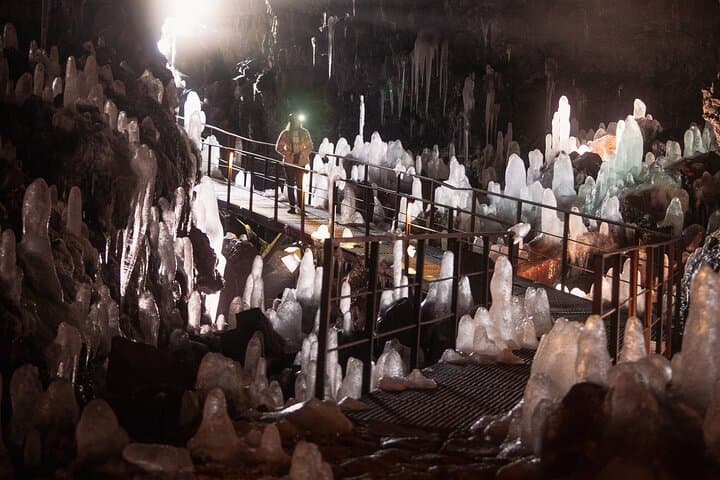
You step off the bus into an Icelandic morning that feels both precise and raw: wind straight from the rift, air that bites and clears your head. The day begins underground at Raufarhólshellir, where a passage of cooled lava stretches for roughly 1.3 kilometers and the cave walls keep a record of fire — bulbous flows, banded colors, and columns like fossilized waves. Headlamps pick out textures and mineral stains; the ceiling hums faintly with the memory of molten rock. Later, after an early lunch and the short drive to Þingvellir, you suit into a drysuit and slip into Silfra’s glass-clear water, floating in a corridor of light that threads between two continents.
Verified experiences and guided adventures in the surrounding area.
Operated by Arctic Adventures · Reykjavík, Capital Region
You step off the bus into an Icelandic morning that feels both precise and raw: wind straight from the rift, air that bites and clears your head. The day begins underground at Raufarhólshellir, where a passage of cooled lava stretches for roughly 1.3 kilometers and the cave walls keep a record of fire — bulbous flows, banded colors, and columns like fossilized waves. Headlamps pick out textures and mineral stains; the ceiling hums faintly with the memory of molten rock. Later, after an early lunch and the short drive to Þingvellir, you suit into a drysuit and slip into Silfra’s glass-clear water, floating in a corridor of light that threads between two continents.
Raufarhólshellir is a product of Iceland’s recent volcanism — a tube formed when surface lava crusted over and molten rock drained away. Þingvellir sits on the Mid-Atlantic Ridge, where Eurasian and North American plates pull apart a few centimeters each year. It’s also where Vikings established Iceland’s parliament, the Alþingi, in 930 AD; the landscape has been both courtroom and playground for centuries. That tension—geology and human history—makes the combo logical: the earth’s inner forces above and below, revealed in rock and water.
The lava tunnel walk is unhurried but uneven; expect cool air, coarse basalt underfoot, and short, low passages. Guides point out flow lines, lava stalactites, and rare mineral pigments. At Silfra the rules tighten: the fissure’s water averages 2–4°C year-round and visibility is often 100 meters or more. You won’t swim fast — you’ll float, fins propelling you slowly through crevices and under sunlit shafts where the rift opens into pale blue.
Practical note: the full combo runs about 10 hours with morning caving and afternoon snorkeling. Tours meet at Raufarhólshellir at 9:30 and at the Silfra car park in Þingvellir at 13:30 (winter) or 14:00 (summer); Reykjavík pickup is available on many departures. Physical requirements are moderate: steady balance for rocky ground and basic swimming ability for snorkeling. There’s a strict weight/height window and participants must review the operator’s Silfra handbook and health requirements in advance.
Dress in layers, bring a change of clothes, and plan for wet boots and chill after the water. Guides provide all caving and snorkeling gear, drysuits and masks, plus a hot chocolate to warm you after the dive. Photography is limited during the water portion, but you’ll get free underwater photos taken by the guide. For anyone wanting to see Iceland’s tectonic and volcanic forces in a single day, this combo is a clear, efficient—and unforgettable—way to do it.
moderate.
10 hours (full combo).
Good general fitness—comfortable walking on uneven lava surfaces and basic swimming ability required for snorkeling.
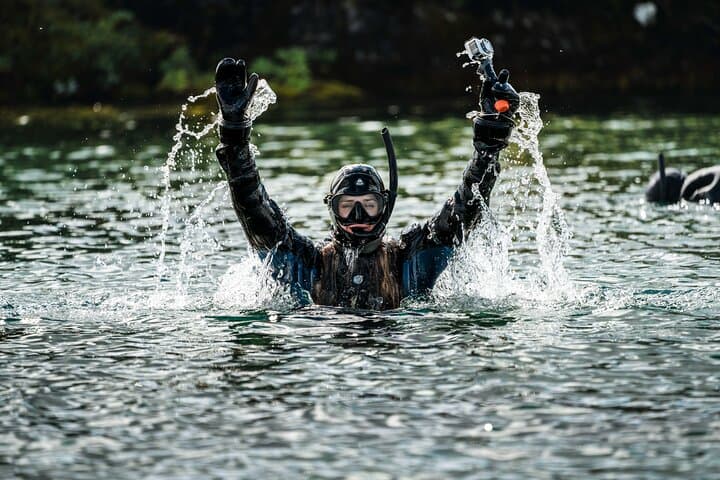
Water in Silfra is glacier-fed and stays around 2–4°C year-round; participants wear drysuits and thermal undergarments provided by the operator.
You’ll typically spend 20–30 minutes floating in the water, with total time at the Silfra site around 60–90 minutes including gearing up and briefing.
No — participants must be able to swim and are required to meet health and weight/height restrictions; consult the Silfra handbook for medical exclusions.
Personal underwater cameras are discouraged; guides take free underwater photos for participants to keep.
Minimum age is 12; weight limit is 45–120 kg and height must be between roughly 150–200 cm—check operator rules when booking.
You can opt for the Reykjavík pickup and dropoff service (pickups begin around 8:00), or drive yourself to the two meeting points: Raufarhólshellir (morning) and Silfra car park (afternoon).
Þingvellir was the site of Iceland’s Alþingi (parliament) from 930 AD and remains a cultural and legal landmark at the rift between continents.
Silfra and Þingvellir are protected; tours follow strict rules to prevent contamination and erosion—stick to guides’ instructions and avoid touching rock or flora.
Arctic Adventures operates guided outdoor trips and adventures with an emphasis on safety, stewardship, and memorable experiences.
You step off the bus into an Icelandic morning that feels both precise and raw: wind straight from the rift, air that bites and clears your head. The day begins underground at Raufarhólshellir, where a passage of cooled lava stretches for roughly 1.3 kilometers and the cave walls keep a record of fire — bulbous flows, banded colors, and columns like fossilized waves. Headlamps pick out textures and mineral stains; the ceiling hums faintly with the memory of molten rock. Later, after an early lunch and the short drive to Þingvellir, you suit into a drysuit and slip into Silfra’s glass-clear water, floating in a corridor of light that threads between two continents.
You step off the bus into an Icelandic morning that feels both precise and raw: wind straight from the rift, air that bites and clears your head. The day begins underground at Raufarhólshellir, where a passage of cooled lava stretches for roughly 1.3 kilometers and the cave walls keep a record of fire — bulbous flows, banded colors, and columns like fossilized waves. Headlamps pick out textures and mineral stains; the ceiling hums faintly with the memory of molten rock. Later, after an early lunch and the short drive to Þingvellir, you suit into a drysuit and slip into Silfra’s glass-clear water, floating in a corridor of light that threads between two continents.
Raufarhólshellir is a product of Iceland’s recent volcanism — a tube formed when surface lava crusted over and molten rock drained away. Þingvellir sits on the Mid-Atlantic Ridge, where Eurasian and North American plates pull apart a few centimeters each year. It’s also where Vikings established Iceland’s parliament, the Alþingi, in 930 AD; the landscape has been both courtroom and playground for centuries. That tension—geology and human history—makes the combo logical: the earth’s inner forces above and below, revealed in rock and water.
The lava tunnel walk is unhurried but uneven; expect cool air, coarse basalt underfoot, and short, low passages. Guides point out flow lines, lava stalactites, and rare mineral pigments. At Silfra the rules tighten: the fissure’s water averages 2–4°C year-round and visibility is often 100 meters or more. You won’t swim fast — you’ll float, fins propelling you slowly through crevices and under sunlit shafts where the rift opens into pale blue.
Practical note: the full combo runs about 10 hours with morning caving and afternoon snorkeling. Tours meet at Raufarhólshellir at 9:30 and at the Silfra car park in Þingvellir at 13:30 (winter) or 14:00 (summer); Reykjavík pickup is available on many departures. Physical requirements are moderate: steady balance for rocky ground and basic swimming ability for snorkeling. There’s a strict weight/height window and participants must review the operator’s Silfra handbook and health requirements in advance.
Dress in layers, bring a change of clothes, and plan for wet boots and chill after the water. Guides provide all caving and snorkeling gear, drysuits and masks, plus a hot chocolate to warm you after the dive. Photography is limited during the water portion, but you’ll get free underwater photos taken by the guide. For anyone wanting to see Iceland’s tectonic and volcanic forces in a single day, this combo is a clear, efficient—and unforgettable—way to do it.