THE ADVENTURE COLLECTIVE® · Independent discovery and booking for outdoor travel

Dive Silfra and swim between the North American and Eurasian plates in crystalline glacial water. This 6-hour guided dry-suit dive from Reykjavík visits four distinct sections of Silfra, where visibility exceeds 100 meters and depth reaches 22 meters.
Dive Silfra and swim between the North American and Eurasian plates in crystalline glacial water. This 6-hour guided dry-suit dive from Reykjavík visits four distinct sections of Silfra, where visibility exceeds 100 meters and depth reaches 22 meters.
You surface into a sky so clean it feels like a punch of cold light, and below, the water is the color of polished glass. On the shore of Þingvellir, the rift between the Eurasian and North American plates narrows into Silfra, a fissure carved by glacial melt and tectonic insistence. When you step into the dry suit and slip your fins on under a pale Icelandic sun, the fissure doesn’t feel like a geological map— it feels like a corridor that pulls you between two worlds.
Verified experiences and guided adventures in the surrounding area.
Operated by Arctic Adventures · Thingvellir, Southwest Iceland
You surface into a sky so clean it feels like a punch of cold light, and below, the water is the color of polished glass. On the shore of Þingvellir, the rift between the Eurasian and North American plates narrows into Silfra, a fissure carved by glacial melt and tectonic insistence. When you step into the dry suit and slip your fins on under a pale Icelandic sun, the fissure doesn’t feel like a geological map— it feels like a corridor that pulls you between two worlds.
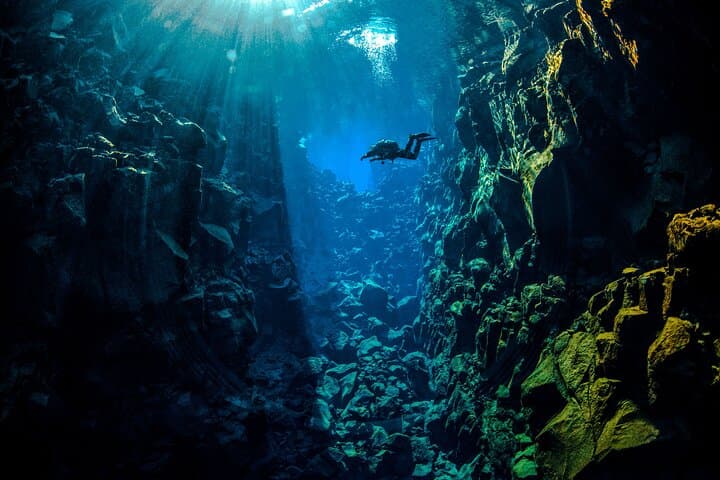
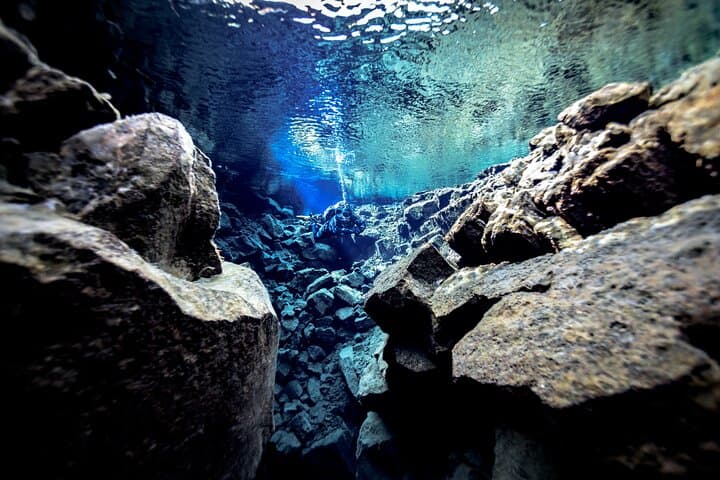
Þingvellir’s history is as sharp as its rock. The Alþingi, established here in 930 AD, is where Icelanders forged the world’s oldest continuous parliament amid lava fields and rifts. Geologically, Silfra is fed by meltwater filtered through ancient lava for decades, giving the site visibility often exceeding 100 meters and an otherworldly blue that refracts like stained glass.
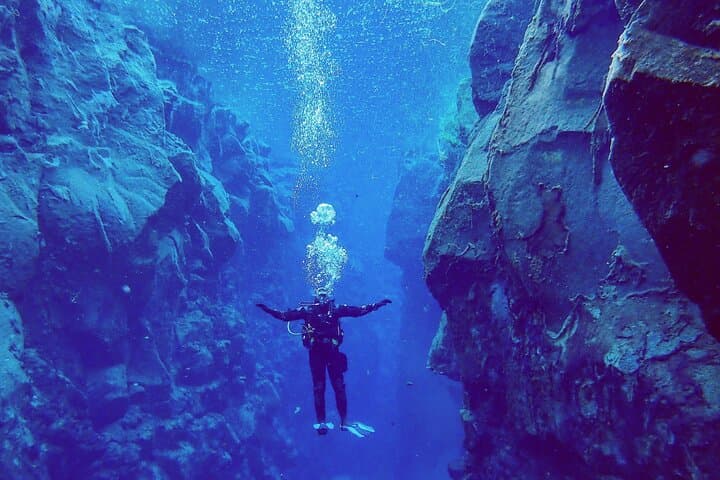
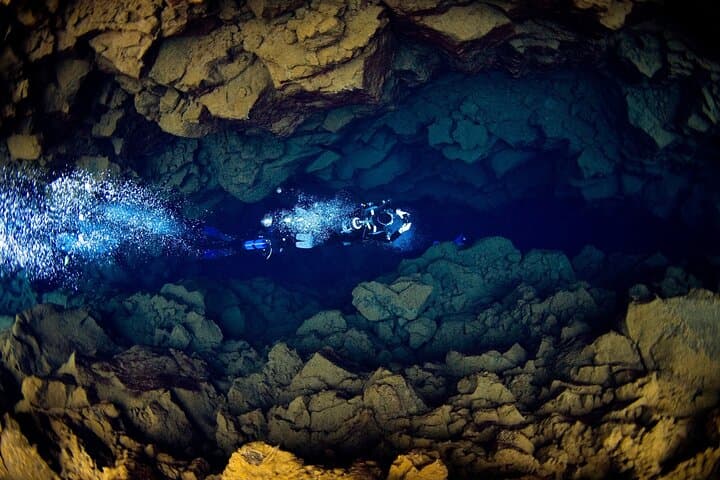
The dive follows four named sections: the narrow Deep Crack, the broader Hall, the cathedral-like Cathedral (the deepest point at 22 m/72 ft), and the quiet Silfra Lagoon. Visibility is the star attraction—clear enough that rock features read like topography on a map, and every breath fogs your visor for a moment before the water clears again. The guides—small-group, experienced dry-suit dive masters—teach a deliberate, slow cadence so divers can admire the tectonic seams and delicate calcified formations without stirring sediment.
Silfra is not a casual plunge. Cold-water protocol, a dry-suit certification, and recent dry-suit experience are mandatory; the operator will request proof of at least 10 prior dry-suit dives, with a recent dive logged within two years. Expect a roughly 6-hour excursion from Reykjavík including transfers; the underwater phase is purposeful and measured, after which a short 300-meter (984-foot) walk returns you to the parking area.
Practicalities matter here: layer wool or fleece under your dry suit, bring warm socks and a complete change of clothes, and wear contacts or a prescription mask—regular glasses won’t fit under a dive mask. Allow 24 hours between diving and flying. The company provides dive gear and a certified guide, hot chocolate at the end, and Reykjavik pickup, but you are responsible for certification, personal undergarments, and fitness.
For photographers, the light is best near midday when the sun penetrates the narrow rift; on land, the viewpoints at the visitor center and rift edges frame Þingvellir’s dramatic lines. Above all, treat the fissure with restraint—its clarity is fragile. Resist touching the walls and follow the guide’s instructions: the landscape here is patient, but human carelessness is not.
challenging.
6 hours.
Good cardiovascular fitness and comfort with cold-water diving required; must be able to carry heavy gear up to ~400 m and manage long periods in a dry suit.
Yes—operators require a dry-suit certification card or a logbook showing at least 10 prior dry-suit dives and a recent dive within two years.
Water temperature at Silfra is near 2–4°C (36–39°F); the dry suit provides insulation but proper undergarments are essential.
This specific tour is for certified dry-suit divers only; snorkeling options exist at Silfra on separate tours for non-divers.
Yes—Reykjavík pickup and drop-off are included from specified pickup points; you must choose an approved pickup location at booking.
You should wear contact lenses or bring a prescription dive mask; standard eyeglasses cannot be worn under a dive mask.
For a full refund cancel at least 24 hours before departure; the operator may cancel tours for bad weather and issue refunds per their policy.
Þingvellir hosted Iceland’s Alþingi since 930 AD, the open-air assembly that helped shape Icelandic law and identity.
Silfra’s clarity depends on strict rules—no touching rock surfaces or using sunscreen; dive operators limit group sizes and enforce leave-no-trace practices to protect the fissure.
Arctic Adventures operates guided outdoor trips and adventures with an emphasis on safety, stewardship, and memorable experiences.
You surface into a sky so clean it feels like a punch of cold light, and below, the water is the color of polished glass. On the shore of Þingvellir, the rift between the Eurasian and North American plates narrows into Silfra, a fissure carved by glacial melt and tectonic insistence. When you step into the dry suit and slip your fins on under a pale Icelandic sun, the fissure doesn’t feel like a geological map— it feels like a corridor that pulls you between two worlds.
You surface into a sky so clean it feels like a punch of cold light, and below, the water is the color of polished glass. On the shore of Þingvellir, the rift between the Eurasian and North American plates narrows into Silfra, a fissure carved by glacial melt and tectonic insistence. When you step into the dry suit and slip your fins on under a pale Icelandic sun, the fissure doesn’t feel like a geological map— it feels like a corridor that pulls you between two worlds.
Þingvellir’s history is as sharp as its rock. The Alþingi, established here in 930 AD, is where Icelanders forged the world’s oldest continuous parliament amid lava fields and rifts. Geologically, Silfra is fed by meltwater filtered through ancient lava for decades, giving the site visibility often exceeding 100 meters and an otherworldly blue that refracts like stained glass.
The dive follows four named sections: the narrow Deep Crack, the broader Hall, the cathedral-like Cathedral (the deepest point at 22 m/72 ft), and the quiet Silfra Lagoon. Visibility is the star attraction—clear enough that rock features read like topography on a map, and every breath fogs your visor for a moment before the water clears again. The guides—small-group, experienced dry-suit dive masters—teach a deliberate, slow cadence so divers can admire the tectonic seams and delicate calcified formations without stirring sediment.
Silfra is not a casual plunge. Cold-water protocol, a dry-suit certification, and recent dry-suit experience are mandatory; the operator will request proof of at least 10 prior dry-suit dives, with a recent dive logged within two years. Expect a roughly 6-hour excursion from Reykjavík including transfers; the underwater phase is purposeful and measured, after which a short 300-meter (984-foot) walk returns you to the parking area.
Practicalities matter here: layer wool or fleece under your dry suit, bring warm socks and a complete change of clothes, and wear contacts or a prescription mask—regular glasses won’t fit under a dive mask. Allow 24 hours between diving and flying. The company provides dive gear and a certified guide, hot chocolate at the end, and Reykjavik pickup, but you are responsible for certification, personal undergarments, and fitness.
For photographers, the light is best near midday when the sun penetrates the narrow rift; on land, the viewpoints at the visitor center and rift edges frame Þingvellir’s dramatic lines. Above all, treat the fissure with restraint—its clarity is fragile. Resist touching the walls and follow the guide’s instructions: the landscape here is patient, but human carelessness is not.