THE ADVENTURE COLLECTIVE® · Independent discovery and booking for outdoor travel

Slide beneath glassy water and float between two continents. Silfra offers world-class visibility and a rare chance to scuba dive inside a tectonic rift inside Thingvellir National Park.
Slide beneath glassy water and float between two continents. Silfra offers world-class visibility and a rare chance to scuba dive inside a tectonic rift inside Thingvellir National Park.
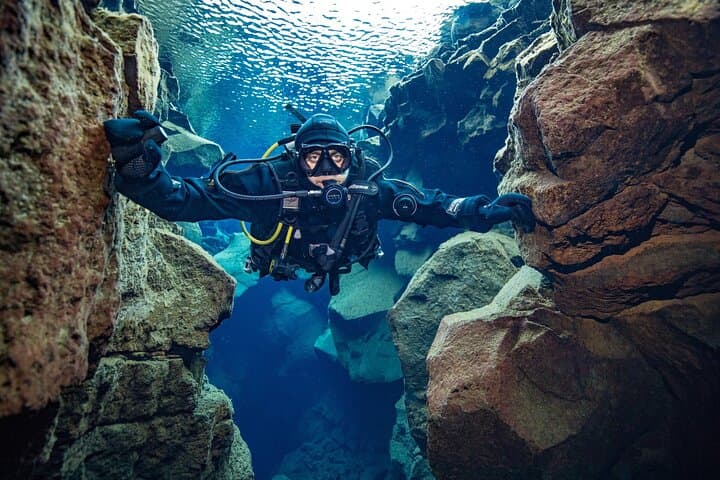
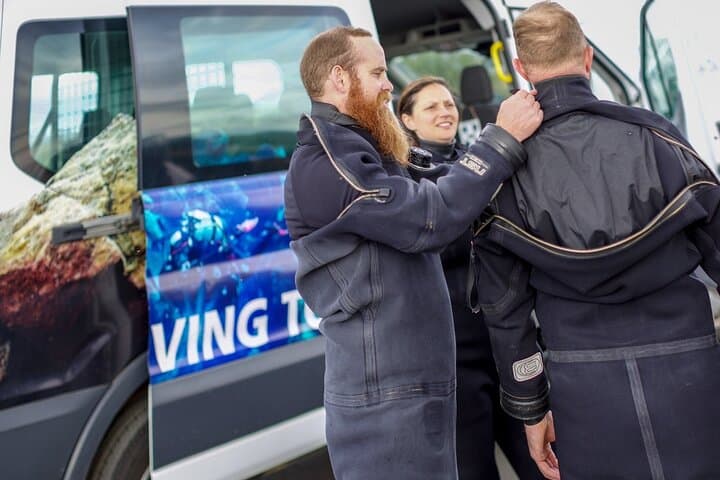
The wind carries a crisp, iron edge as you step from the heated changing van toward a seam in the earth. A ribbon of water sits in the rift, so clear it reads like air beneath the surface; light falls through and picks out striations in ancient lava. You kit up under a brisk sky, the dry suit tugging at your limbs. When you slide beneath the brim of Silfra, the world simplifies to blue glass and stone—two continents separated by meters and a geologic story millions of years long.
Verified experiences and guided adventures in the surrounding area.
Operated by DIVE.IS - The Sport Diving School of Iceland · Thingvellir/Þingvellir National Park, Southwest Iceland
The wind carries a crisp, iron edge as you step from the heated changing van toward a seam in the earth. A ribbon of water sits in the rift, so clear it reads like air beneath the surface; light falls through and picks out striations in ancient lava. You kit up under a brisk sky, the dry suit tugging at your limbs. When you slide beneath the brim of Silfra, the world simplifies to blue glass and stone—two continents separated by meters and a geologic story millions of years long.
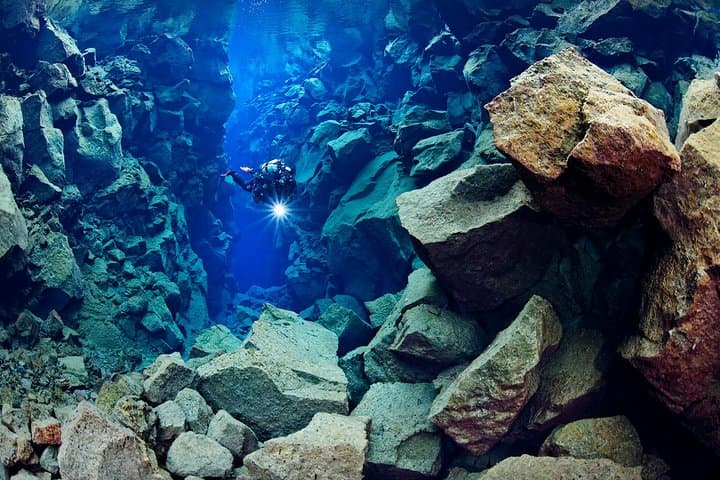
Silfra is a visible fault where the North American and Eurasian plates pull apart inside Thingvellir National Park, a UNESCO World Heritage site and the historic gathering place of Iceland’s Althing parliament since AD 930. Rain and meltwater filter for decades through porous lava, emerging here as some of the planet’s purest, coldest, and most transparent diving water; visibility routinely exceeds 100 meters. The fissure’s main reaches—Big Crack, Silfra Hall, the Cathedral and the Lagoon—each have a different personality: narrow and intimate, vaulted and cavernous, still and mirror-flat.
Geology does the storytelling here. Basalt walls are scored by time; white calcite and green moss pick out shelves and ledges. Locals read Silfra as a place of meetings—of plates, of water and stone, even of travelers who come to touch two tectonic plates at once. Respect for the fragile environment is built into every dive: Þingvellir’s limits and UNESCO protections mean operators run small groups and strict protocols to preserve clarity and fragile life.
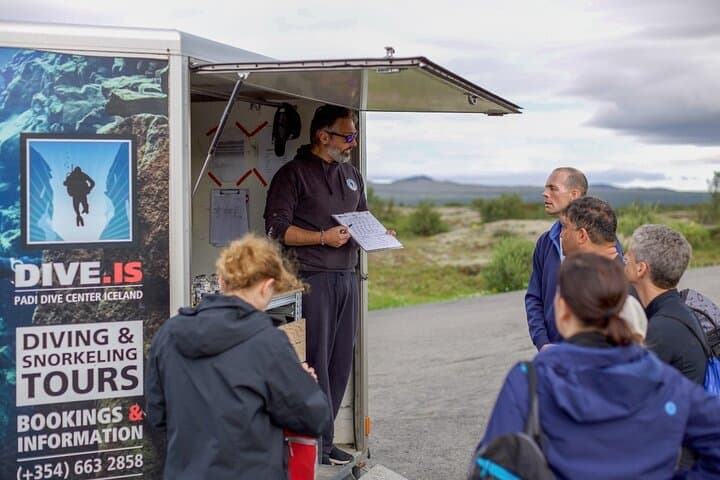
Practicalities matter more here than bravado. The tour requires certified divers with recent dry-suit experience, and the operator outfits you with a dry suit and thermal undergarments. Expect an hour of briefing and gearing, a five-minute walk to the entry, then a 30–45 minute dive. Temperatures hover just above freezing; the dry suit keeps you thermally isolated, but you’ll still want thermal base layers and thick socks. After the dive, guides hand out hot cocoa and cookies—a gentle way back to warmth and conversation.
Timing and logistics: Silfra is on Iceland’s popular Golden Circle route, about a 45–60 minute drive from Reykjavík. Parking is at lot P5, and operators request swimmer details, certification proof, and a medical form in advance. Group sizes are deliberately small—three divers per guide—to protect the site and ensure thorough supervision.
If you come for the bucket-list photo of touching two continents, plan for it; if you come for the immensity of silence and crystal clarity, bring patience and a steady camera rig. Above all, move with intention. Here the earth is active, the water is old, and both demand careful, reverent travel.
challenging.
3 hours.
Good cardiovascular fitness and comfort in cold open water; must be able to carry and manage scuba gear and walk on uneven terrain.
Yes—participants must hold a PADI Open Water (or equivalent) certification and documented dry-suit experience or certification.
Water temperature is just above freezing (near 2–4°C), but dry suits and thermal undergarments keep you insulated for the short dive.
The guided dive is typically 30–45 minutes; total activity time including briefing and gear-up is about three hours.
Not suitable for beginners—operators require dry-suit experience and recent logged dives; novices should book training first.
Meeting point is parking lot P5 in Thingvellir National Park; save the provided coordinates to offline maps in case reception is poor.
Visibility is exceptional—often over 100 meters—because glacial water is extremely well filtered through lava rock.
Thingvellir hosted Iceland’s Althing parliament from 930 AD and remains a cultural and political landmark as well as a geological one.
Silfra’s clarity depends on strict visitor limits and no-contact rules; tours operate small groups and follow park regulations to minimize impact.
DIVE.IS - The Sport Diving School of Iceland operates guided outdoor trips and adventures with an emphasis on safety, stewardship, and memorable experiences.
The wind carries a crisp, iron edge as you step from the heated changing van toward a seam in the earth. A ribbon of water sits in the rift, so clear it reads like air beneath the surface; light falls through and picks out striations in ancient lava. You kit up under a brisk sky, the dry suit tugging at your limbs. When you slide beneath the brim of Silfra, the world simplifies to blue glass and stone—two continents separated by meters and a geologic story millions of years long.
The wind carries a crisp, iron edge as you step from the heated changing van toward a seam in the earth. A ribbon of water sits in the rift, so clear it reads like air beneath the surface; light falls through and picks out striations in ancient lava. You kit up under a brisk sky, the dry suit tugging at your limbs. When you slide beneath the brim of Silfra, the world simplifies to blue glass and stone—two continents separated by meters and a geologic story millions of years long.
Silfra is a visible fault where the North American and Eurasian plates pull apart inside Thingvellir National Park, a UNESCO World Heritage site and the historic gathering place of Iceland’s Althing parliament since AD 930. Rain and meltwater filter for decades through porous lava, emerging here as some of the planet’s purest, coldest, and most transparent diving water; visibility routinely exceeds 100 meters. The fissure’s main reaches—Big Crack, Silfra Hall, the Cathedral and the Lagoon—each have a different personality: narrow and intimate, vaulted and cavernous, still and mirror-flat.
Geology does the storytelling here. Basalt walls are scored by time; white calcite and green moss pick out shelves and ledges. Locals read Silfra as a place of meetings—of plates, of water and stone, even of travelers who come to touch two tectonic plates at once. Respect for the fragile environment is built into every dive: Þingvellir’s limits and UNESCO protections mean operators run small groups and strict protocols to preserve clarity and fragile life.
Practicalities matter more here than bravado. The tour requires certified divers with recent dry-suit experience, and the operator outfits you with a dry suit and thermal undergarments. Expect an hour of briefing and gearing, a five-minute walk to the entry, then a 30–45 minute dive. Temperatures hover just above freezing; the dry suit keeps you thermally isolated, but you’ll still want thermal base layers and thick socks. After the dive, guides hand out hot cocoa and cookies—a gentle way back to warmth and conversation.
Timing and logistics: Silfra is on Iceland’s popular Golden Circle route, about a 45–60 minute drive from Reykjavík. Parking is at lot P5, and operators request swimmer details, certification proof, and a medical form in advance. Group sizes are deliberately small—three divers per guide—to protect the site and ensure thorough supervision.
If you come for the bucket-list photo of touching two continents, plan for it; if you come for the immensity of silence and crystal clarity, bring patience and a steady camera rig. Above all, move with intention. Here the earth is active, the water is old, and both demand careful, reverent travel.