THE ADVENTURE COLLECTIVE® · Independent discovery and booking for outdoor travel

Explore Boka Bay in a silent, electric tuk-tuk loop from Kotor. This private 2.5-hour coastal ride stops at Verige Strait, Prčanj’s Our Lady’s Temple, Porto Montenegro and panoramic viewpoints above Kotor.
Explore Boka Bay in a silent, electric tuk-tuk loop from Kotor. This private 2.5-hour coastal ride stops at Verige Strait, Prčanj’s Our Lady’s Temple, Porto Montenegro and panoramic viewpoints above Kotor.
The tuk-tuk hums into life and the postcard geometry of Boka Bay unfurls: a narrow sea that pushes and pulls at the coast, stone houses clinging to steep slopes, and a road that threads villages like beads. Riding in a fully electric tuk, you feel the breeze as Verige Strait narrows and the baroque islands of Perast slide into view—each bend revealing another shuttered house, a church bell, a fishing skiff.
Verified experiences and guided adventures in the surrounding area.
Operated by Montenegro Destinations DMC · Kotor, Kotor Municipality
The tuk-tuk hums into life and the postcard geometry of Boka Bay unfurls: a narrow sea that pushes and pulls at the coast, stone houses clinging to steep slopes, and a road that threads villages like beads. Riding in a fully electric tuk, you feel the breeze as Verige Strait narrows and the baroque islands of Perast slide into view—each bend revealing another shuttered house, a church bell, a fishing skiff.
Boka Kotorska preserves layers of history: Illyrian and Roman beginnings, Venetian maritime power, and later Austro-Hungarian influence that shaped the coastal architecture. Geologically the bay is a submerged ria, carved by tectonics and sea-level change into fjord-like inlets and steep limestone slopes. Local culture is maritime and ceremonial—churches in Prčanj and Perast mark centuries of seafaring wealth and devotion.
Practically, the tour is a relaxed 2.5–2.75-hour private loop from Kotor, with multiple short photo stops and a 30-minute leisure break in Porto Montenegro. Terrain underwheel is paved coastal road; on-foot exploration is short and mostly level, but expect steps in older villages and church interiors with narrow doorways.
Bring sun protection, a light wind layer, and a camera with spare battery—light can change fast between shaded bays and sunlit promontories. Hydrate before you board; the electric tuk is quiet but you’ll still want a bottle for the shore stops. Aim for morning or late afternoon for softer light and fewer crowds. Respect sacral sites and local rhythms: modest dress in churches and minimal noise at small fishing hamlets. This is an intimate way to read Boka’s coastline—slow, visual, and surprisingly instructive about Montenegro’s coastal identity.
easy.
2.5–2.75 hours.
Suitable for most fitness levels; requires short, easy walks and some standing during stops.
The private tour lasts about 150–160 minutes, including multiple short photo stops and a 30-minute break in Porto Montenegro.
Yes—stops include Our Lady’s Temple in Prčanj; modest dress is requested and some interiors may charge a small entry or ask for quiet.
Infants must sit on an adult’s lap; the tour is suitable for families but the small vehicle and village steps limit accessibility for some mobility needs.
The vehicle meets near the parking in front of the Port of Kotor; drop-off is typically about 500 meters from Old Town Kotor or directly at your hotel if arranged.
Boka Bay’s towns grew under Venetian maritime rule and later Austro-Hungarian administration, leaving a mix of baroque churches and seafaring monuments; the bay is protected for its cultural landscape.
Tourism pressure concentrates on narrow roads and fragile shorelines—stick to paved areas, avoid littering, and respect boat speed zones to reduce wake and shoreline erosion.
Montenegro Destinations DMC operates guided outdoor trips and adventures with an emphasis on safety, stewardship, and memorable experiences.
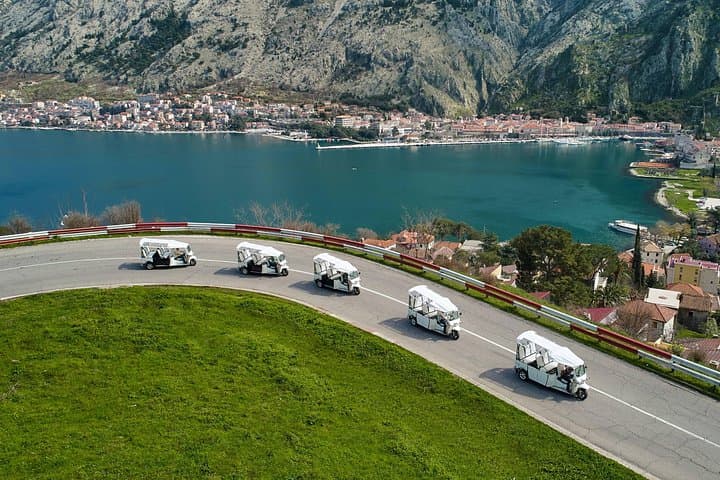
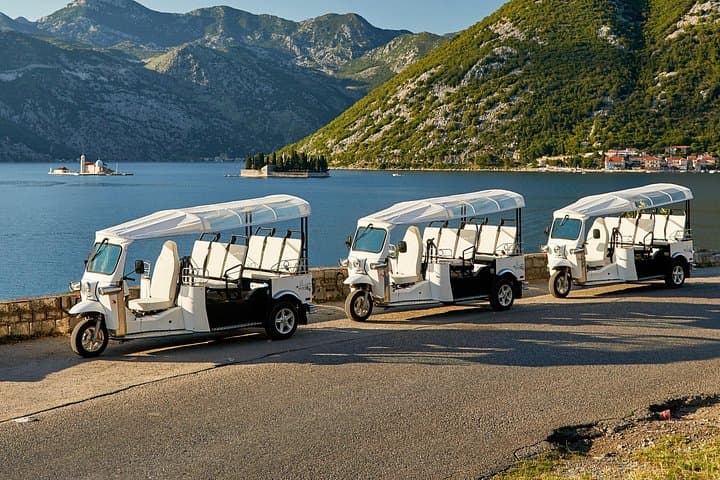
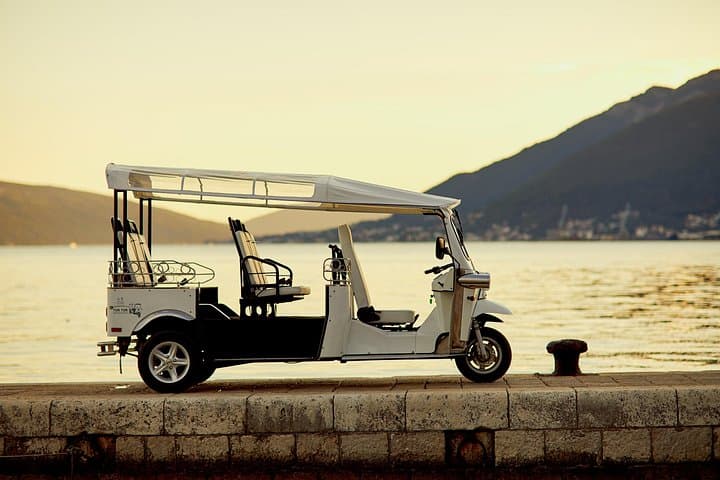
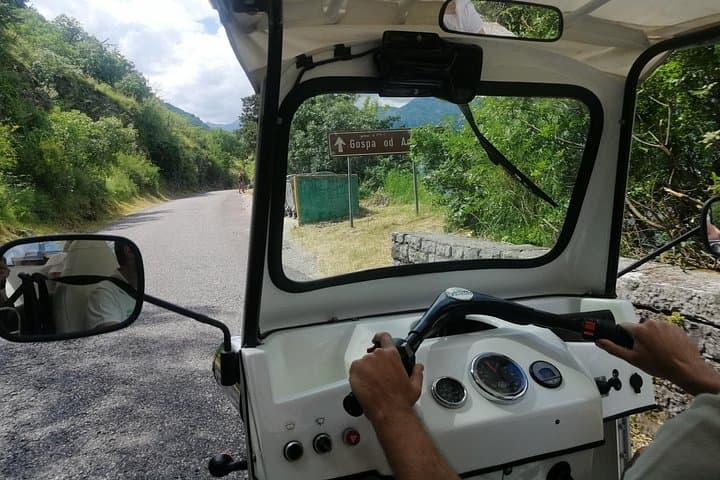
The tuk-tuk hums into life and the postcard geometry of Boka Bay unfurls: a narrow sea that pushes and pulls at the coast, stone houses clinging to steep slopes, and a road that threads villages like beads. Riding in a fully electric tuk, you feel the breeze as Verige Strait narrows and the baroque islands of Perast slide into view—each bend revealing another shuttered house, a church bell, a fishing skiff.
The tuk-tuk hums into life and the postcard geometry of Boka Bay unfurls: a narrow sea that pushes and pulls at the coast, stone houses clinging to steep slopes, and a road that threads villages like beads. Riding in a fully electric tuk, you feel the breeze as Verige Strait narrows and the baroque islands of Perast slide into view—each bend revealing another shuttered house, a church bell, a fishing skiff.
Boka Kotorska preserves layers of history: Illyrian and Roman beginnings, Venetian maritime power, and later Austro-Hungarian influence that shaped the coastal architecture. Geologically the bay is a submerged ria, carved by tectonics and sea-level change into fjord-like inlets and steep limestone slopes. Local culture is maritime and ceremonial—churches in Prčanj and Perast mark centuries of seafaring wealth and devotion.
Practically, the tour is a relaxed 2.5–2.75-hour private loop from Kotor, with multiple short photo stops and a 30-minute leisure break in Porto Montenegro. Terrain underwheel is paved coastal road; on-foot exploration is short and mostly level, but expect steps in older villages and church interiors with narrow doorways.
Bring sun protection, a light wind layer, and a camera with spare battery—light can change fast between shaded bays and sunlit promontories. Hydrate before you board; the electric tuk is quiet but you’ll still want a bottle for the shore stops. Aim for morning or late afternoon for softer light and fewer crowds. Respect sacral sites and local rhythms: modest dress in churches and minimal noise at small fishing hamlets. This is an intimate way to read Boka’s coastline—slow, visual, and surprisingly instructive about Montenegro’s coastal identity.