THE ADVENTURE COLLECTIVE® · Independent discovery and booking for outdoor travel

Glide through Bahía Muertos’ mangrove labyrinth on a quiet, three-hour kayak tour that brings you close to howler monkeys, frigatebirds and complex tidal channels. Learn the ecology and local culture that sustain this wetland while practicing low-impact paddling.
Glide through Bahía Muertos’ mangrove labyrinth on a quiet, three-hour kayak tour that brings you close to howler monkeys, frigatebirds and complex tidal channels. Learn the ecology and local culture that sustain this wetland while practicing low-impact paddling.
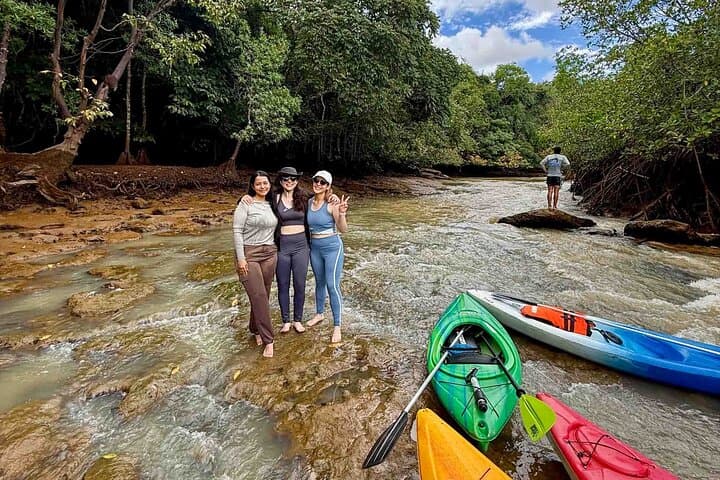
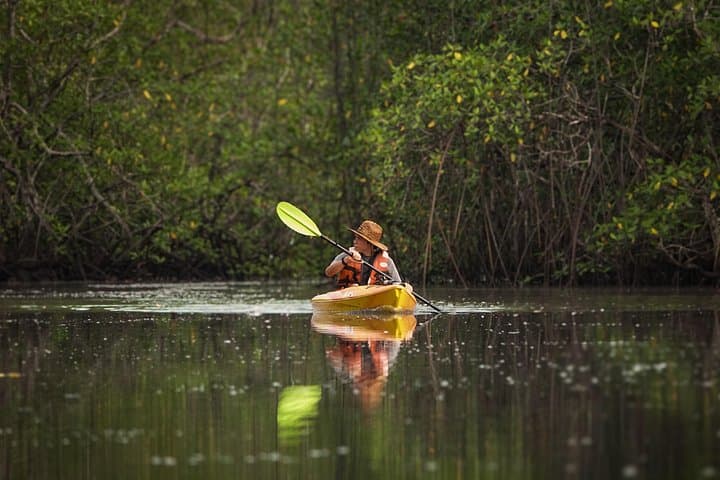
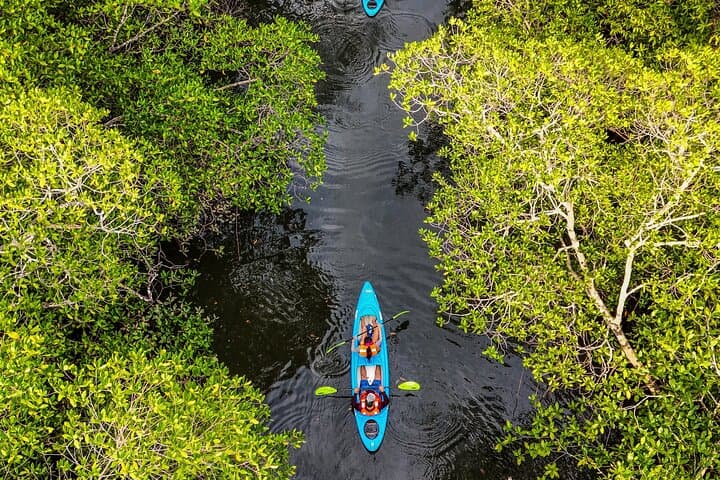
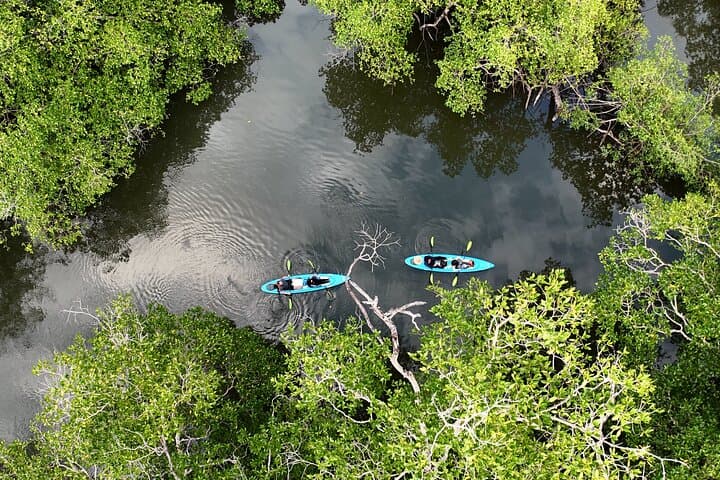
Paddling out at dawn, the mangrove roots slip past like the ribs of an ancient ship and the bay holds its breath. A private kayak tour through Bahía Muertos moves quietly—your paddle is the only percussion—letting howler monkeys, frigatebirds and herons test how close you’ll let them come. The water mirrors a low sky while the mangroves push salt-scented air toward you, daring you to look closer.
Verified experiences and guided adventures in the surrounding area.
Operated by Bongo Outdoors Tours · Boca Chica, Chiriquí
Paddling out at dawn, the mangrove roots slip past like the ribs of an ancient ship and the bay holds its breath. A private kayak tour through Bahía Muertos moves quietly—your paddle is the only percussion—letting howler monkeys, frigatebirds and herons test how close you’ll let them come. The water mirrors a low sky while the mangroves push salt-scented air toward you, daring you to look closer.
Geologically, the Gulf of Chiriquí is a shallow shelf of alluvial and mangrove soils fed by Pacific tides; these wetlands trap sediments and feed coastal fisheries. Culturally, local fishing communities and indigenous groups have long relied on these mangroves for shellfish and nursery habitat, and contemporary guides emphasize stewardship along with interpretation.
Expect a three-hour excursion weaving narrow channels and open ponds. Wildlife viewing is best in low wind and at tidal change when bird activity spikes and fish follow the moving water. Guides will point out red, black and white mangrove species and explain why root structures matter to crab and shrimp life.
Practical guidance: arrive with reef‑safe sunscreen, water, and footwear that can get wet; the tour provides lifevests and kayaks. Keep movements slow near roosts, store cameras in dry bags, and follow your guide’s distance rules—flashy approaches stress animals.
This trip suits paddlers with moderate fitness and curiosity about coastal ecosystems. It’s a low-impact way to experience Chiriquí’s biodiversity while supporting local conservation-minded operators.
moderate.
2–3 hours.
Moderately fit: able to paddle for sustained periods and re‑enter a kayak if necessary
The activity runs about 150 minutes (roughly 2½ hours) including brief orientation and paddling time.
No prior experience is required, but a moderate fitness level and willingness to paddle for extended stretches help.
Common sightings include howler monkeys, frigatebirds, herons, pelicans, crabs and a variety of small fish and shorebirds.
Operators may cancel for heavy rain or strong winds; minor rain is common and tours often proceed with appropriate gear.
Mangroves around Bahía Muertos have supported coastal communities for generations as sites for shellfish gathering and small‑scale fisheries, and local guides often share traditional knowledge about tides and species.
These wetlands are fragile—avoid trampling roots, dispose of waste properly, and choose operators who emphasize wildlife distance and education.
Bongo Outdoors Tours operates guided outdoor trips and adventures with an emphasis on safety, stewardship, and memorable experiences.
Paddling out at dawn, the mangrove roots slip past like the ribs of an ancient ship and the bay holds its breath. A private kayak tour through Bahía Muertos moves quietly—your paddle is the only percussion—letting howler monkeys, frigatebirds and herons test how close you’ll let them come. The water mirrors a low sky while the mangroves push salt-scented air toward you, daring you to look closer.
Paddling out at dawn, the mangrove roots slip past like the ribs of an ancient ship and the bay holds its breath. A private kayak tour through Bahía Muertos moves quietly—your paddle is the only percussion—letting howler monkeys, frigatebirds and herons test how close you’ll let them come. The water mirrors a low sky while the mangroves push salt-scented air toward you, daring you to look closer.
Geologically, the Gulf of Chiriquí is a shallow shelf of alluvial and mangrove soils fed by Pacific tides; these wetlands trap sediments and feed coastal fisheries. Culturally, local fishing communities and indigenous groups have long relied on these mangroves for shellfish and nursery habitat, and contemporary guides emphasize stewardship along with interpretation.
Expect a three-hour excursion weaving narrow channels and open ponds. Wildlife viewing is best in low wind and at tidal change when bird activity spikes and fish follow the moving water. Guides will point out red, black and white mangrove species and explain why root structures matter to crab and shrimp life.
Practical guidance: arrive with reef‑safe sunscreen, water, and footwear that can get wet; the tour provides lifevests and kayaks. Keep movements slow near roosts, store cameras in dry bags, and follow your guide’s distance rules—flashy approaches stress animals.
This trip suits paddlers with moderate fitness and curiosity about coastal ecosystems. It’s a low-impact way to experience Chiriquí’s biodiversity while supporting local conservation-minded operators.