THE ADVENTURE COLLECTIVE® · Independent discovery and booking for outdoor travel

Board a quiet hybrid Rodman 1100 from Pasito Blanco for a three‑hour, small‑group dolphin watch led by a marine biologist. Expect close, low‑stress encounters with Atlantic spotted and bottlenose dolphins while supporting local conservation.
Board a quiet hybrid Rodman 1100 from Pasito Blanco for a three‑hour, small‑group dolphin watch led by a marine biologist. Expect close, low‑stress encounters with Atlantic spotted and bottlenose dolphins while supporting local conservation.
The sun lifts off the volcanic spine of Gran Canaria and the quiet electric hum of the Rodman 1100 replaces the usual engine roar. You step aboard Senda del Azul at Pasito Blanco Harbour with seven other passengers; the boat slips away from the marina without jarring the surface and the Atlantic seems to breathe with you.
Verified experiences and guided adventures in the surrounding area.
Operated by WeWhale · Pasito Blanco, Las Palmas
The sun lifts off the volcanic spine of Gran Canaria and the quiet electric hum of the Rodman 1100 replaces the usual engine roar. You step aboard Senda del Azul at Pasito Blanco Harbour with seven other passengers; the boat slips away from the marina without jarring the surface and the Atlantic seems to breathe with you.
Gran Canaria's southern coast is volcanic rock meeting open ocean—the underwater canyons carved by basalt flows funnel nutrients and attract cetaceans. Fishing towns like Puerto de Mogán built their rhythms around these waters; today local crews blend that knowledge with modern conservation practice, donating proceeds to WeWhale and running low-impact hybrid trips.
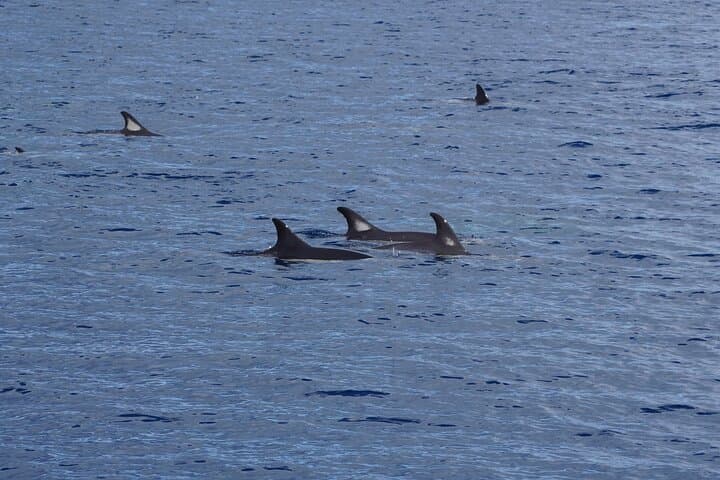
On a typical three‑hour outing the marine biologist narrates what you see: Atlantic spotted dolphins flashing along the bow, the slower, curious approach of bottlenose groups, or the distant silhouettes of short‑finned pilot whales. The quiet propulsion invites natural behavior; here the animals decide how close they’ll come.
Practically, expect gentle rolling seas, plenty of photo opportunities from the deck, and live interpretation in English, Spanish and French. Bring binoculars and a light windbreaker—early mornings can be crisp—and time your trip for mid‑mornings when winds are steadier. The voyage is as much classroom as safari: learn to read dorsal fins, understand local migration timing, and leave no trace—no tossing snacks or attempting to touch wildlife.
For travelers wanting an intimate, educational encounter that supports local conservation, this small‑group hybrid cruise offers a responsible way to meet the Canary Islands at sea.
easy.
3 hours.
Suitable for most fitness levels; requires stepping on/off a low-rail boat and standing on deck for periods.
The outing is three hours from Pasito Blanco Harbour, typically mid‑morning to midday depending on booking.
Common sightings include Atlantic spotted dolphins, bottlenose dolphins, common dolphins and occasional short‑finned pilot whales; sightings can’t be guaranteed.
Yes; the tour accepts infants and has infant seats, but boarding requires stepping onto a low rail—inform operators of any mobility needs before arrival.
Trips are canceled in unsafe conditions with full refunds if canceled at least 24 hours prior; operators may also cancel for insufficient participants.
Gran Canaria’s coast is shaped by volcanic flows and centuries of fishing culture; Pasito Blanco evolved from local harbors to a modern marina serving tourism and conservation-minded operators.
The operator runs a low‑noise hybrid vessel to minimize disturbance and donates part of proceeds to WeWhale; visitors are asked not to feed or touch wildlife and to follow crew guidance.
WeWhale operates guided outdoor trips and adventures with an emphasis on safety, stewardship, and memorable experiences.
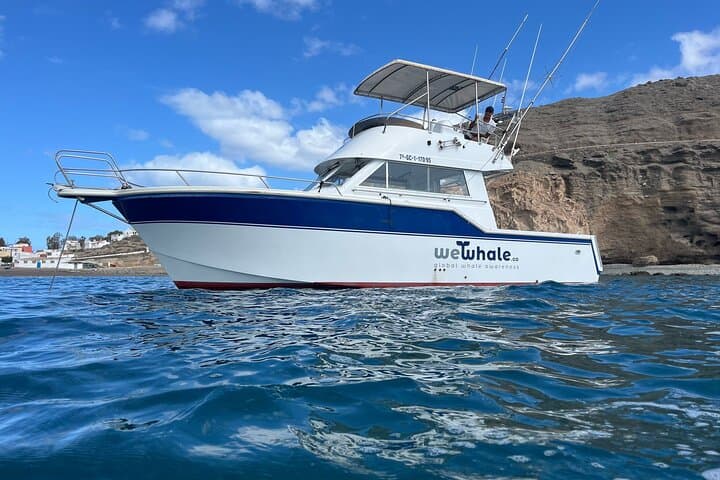
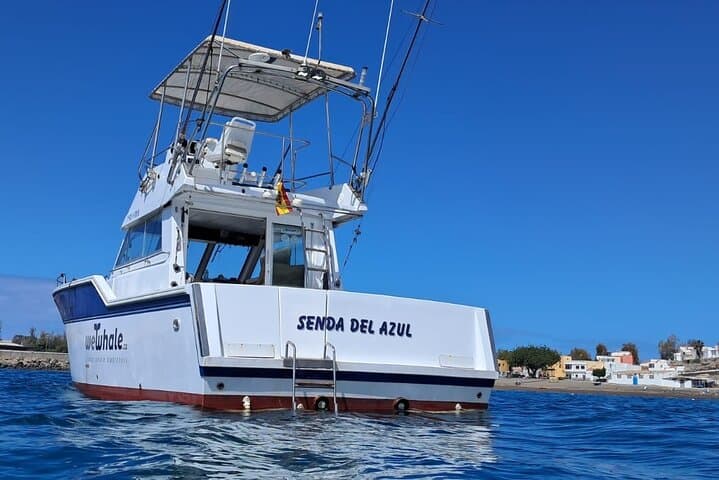
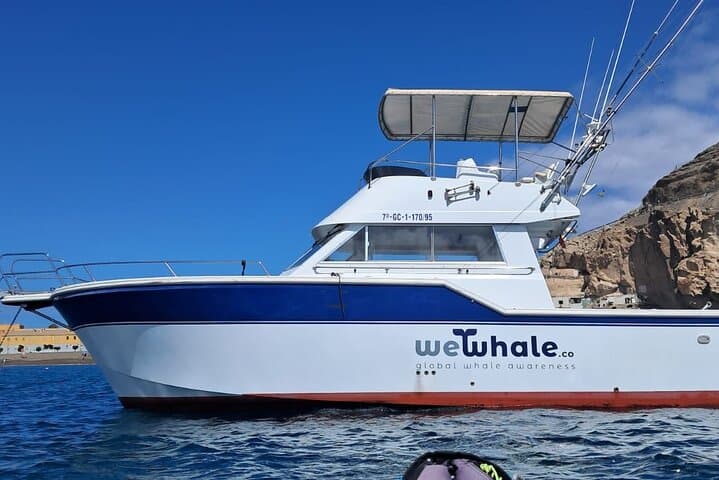
The sun lifts off the volcanic spine of Gran Canaria and the quiet electric hum of the Rodman 1100 replaces the usual engine roar. You step aboard Senda del Azul at Pasito Blanco Harbour with seven other passengers; the boat slips away from the marina without jarring the surface and the Atlantic seems to breathe with you.
The sun lifts off the volcanic spine of Gran Canaria and the quiet electric hum of the Rodman 1100 replaces the usual engine roar. You step aboard Senda del Azul at Pasito Blanco Harbour with seven other passengers; the boat slips away from the marina without jarring the surface and the Atlantic seems to breathe with you.
Gran Canaria's southern coast is volcanic rock meeting open ocean—the underwater canyons carved by basalt flows funnel nutrients and attract cetaceans. Fishing towns like Puerto de Mogán built their rhythms around these waters; today local crews blend that knowledge with modern conservation practice, donating proceeds to WeWhale and running low-impact hybrid trips.
On a typical three‑hour outing the marine biologist narrates what you see: Atlantic spotted dolphins flashing along the bow, the slower, curious approach of bottlenose groups, or the distant silhouettes of short‑finned pilot whales. The quiet propulsion invites natural behavior; here the animals decide how close they’ll come.
Practically, expect gentle rolling seas, plenty of photo opportunities from the deck, and live interpretation in English, Spanish and French. Bring binoculars and a light windbreaker—early mornings can be crisp—and time your trip for mid‑mornings when winds are steadier. The voyage is as much classroom as safari: learn to read dorsal fins, understand local migration timing, and leave no trace—no tossing snacks or attempting to touch wildlife.
For travelers wanting an intimate, educational encounter that supports local conservation, this small‑group hybrid cruise offers a responsible way to meet the Canary Islands at sea.