THE ADVENTURE COLLECTIVE® · Independent discovery and booking for outdoor travel

Board a fully electric catamaran from Puerto Calero for a 3–4 hour whale and dolphin observation using an onboard hydrophone. Small groups, low noise, and local snacks make this a low-impact sea wildlife experience around Lanzarote.
Board a fully electric catamaran from Puerto Calero for a 3–4 hour whale and dolphin observation using an onboard hydrophone. Small groups, low noise, and local snacks make this a low-impact sea wildlife experience around Lanzarote.
The catamaran slips away from Puerto Calero with almost no sound — a quiet hull cutting the Atlantic, speakers replaced by a hydrophone that translates the sea’s conversations into low, human frequencies. You feel the swell beneath your feet, the spray tasting faintly of salt and volcanic dust; the captain points toward dark backs breaking the surface and, minutes later, an arcing school of dolphins rides the bow wave.
Verified experiences and guided adventures in the surrounding area.
Operated by WeWhale · Puerto Calero, Canary Islands
The catamaran slips away from Puerto Calero with almost no sound — a quiet hull cutting the Atlantic, speakers replaced by a hydrophone that translates the sea’s conversations into low, human frequencies. You feel the swell beneath your feet, the spray tasting faintly of salt and volcanic dust; the captain points toward dark backs breaking the surface and, minutes later, an arcing school of dolphins rides the bow wave.
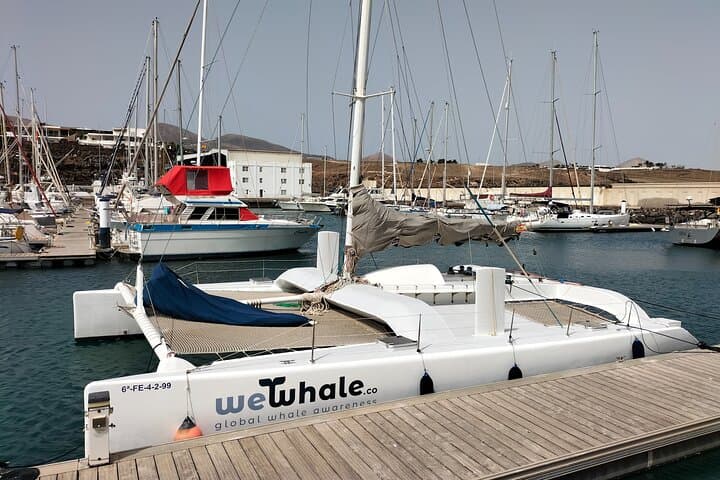
Lanzarote’s coastline is recent geology: basalt flows and ash from Timanfaya’s 18th-century eruptions sculpt cliffs and submerged reefs that funnel nutrients and attract cetaceans. The Canary archipelago has long mingled fishing culture with maritime science; today many operators blend tourism with monitoring and education. On this 14-meter, fully electric catamaran (max 12 guests) the emphasis is low impact — emission- and noise-free propulsion that reduces disturbance and lets the hydrophone pick up clicks and whistles without masking them.
Expect 3–4 hours at sea, an open-deck vantage for photos, a guided naturalist commentary, and local snacks and drinks. Sightings are common here — common and bottlenose dolphins and the occasional short-finned pilot whale — but not guaranteed: currents, plankton blooms and seasonal movements shift animal locations.
Practical tips: arrive with layered clothing and non-slip shoes, stow gear in soft bags, take motion-sickness precautions if you’re prone, and follow the crew’s instructions on approach and distance to wildlife. The trip balances adventure and stewardship: you’ll leave with salt on your skin, recordings of cetacean calls, and a clearer sense of why quiet boats matter for marine life.
easy.
3–4 hours.
Suitable for all fitness levels; involves boarding ladders and standing on deck for extended periods.
No—while sightings are frequent in these waters, marine wildlife is wild and moves with food and currents; operators cannot guarantee any particular species.
The vessel has standard boarding ladders and deck steps; guests with mobility limitations should contact the operator in advance to discuss assistance and feasibility.
Yes—the tour includes live hydrophone monitoring so guests can hear cetacean vocalizations when animals are nearby and vocalizing.
Service animals are permitted, but notify the operator when booking so they can advise on space and safety considerations.
Lanzarote’s modern coastline was forged by repeated volcanic eruptions; human use shifted from small-scale fishing and historical whaling to conservation and marine tourism over the 20th century.
The electric, low-noise vessel reduces disturbance and emissions; follow crew guidance, avoid throwing food into the sea, and maintain distance to minimize impact on cetaceans.
WeWhale operates guided outdoor trips and adventures with an emphasis on safety, stewardship, and memorable experiences.
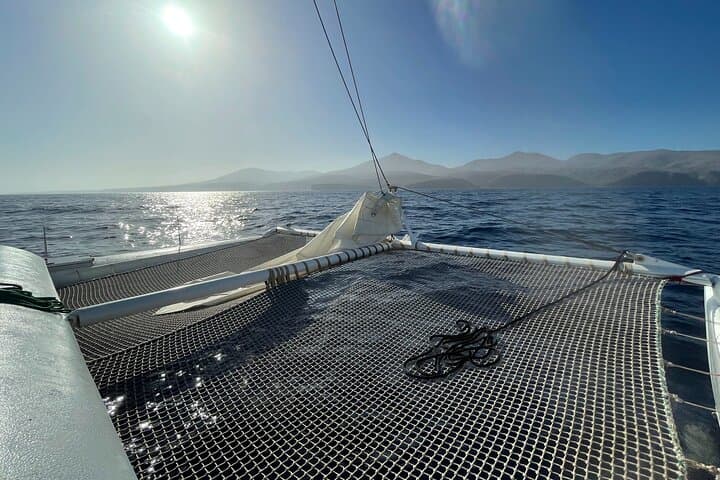
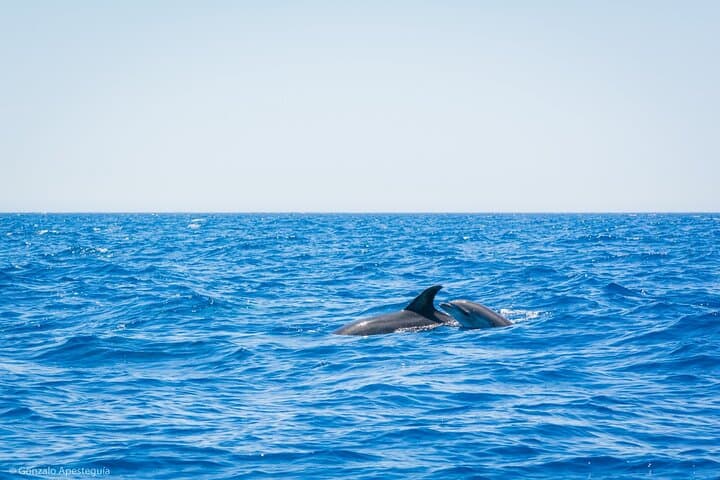
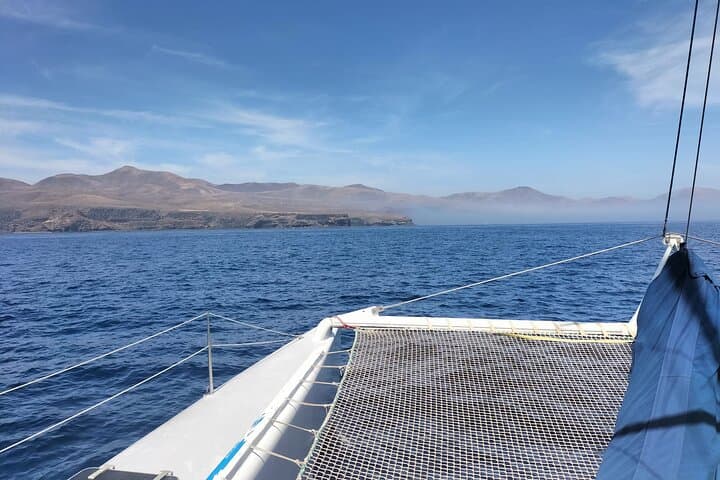
The catamaran slips away from Puerto Calero with almost no sound — a quiet hull cutting the Atlantic, speakers replaced by a hydrophone that translates the sea’s conversations into low, human frequencies. You feel the swell beneath your feet, the spray tasting faintly of salt and volcanic dust; the captain points toward dark backs breaking the surface and, minutes later, an arcing school of dolphins rides the bow wave.
The catamaran slips away from Puerto Calero with almost no sound — a quiet hull cutting the Atlantic, speakers replaced by a hydrophone that translates the sea’s conversations into low, human frequencies. You feel the swell beneath your feet, the spray tasting faintly of salt and volcanic dust; the captain points toward dark backs breaking the surface and, minutes later, an arcing school of dolphins rides the bow wave.
Lanzarote’s coastline is recent geology: basalt flows and ash from Timanfaya’s 18th-century eruptions sculpt cliffs and submerged reefs that funnel nutrients and attract cetaceans. The Canary archipelago has long mingled fishing culture with maritime science; today many operators blend tourism with monitoring and education. On this 14-meter, fully electric catamaran (max 12 guests) the emphasis is low impact — emission- and noise-free propulsion that reduces disturbance and lets the hydrophone pick up clicks and whistles without masking them.
Expect 3–4 hours at sea, an open-deck vantage for photos, a guided naturalist commentary, and local snacks and drinks. Sightings are common here — common and bottlenose dolphins and the occasional short-finned pilot whale — but not guaranteed: currents, plankton blooms and seasonal movements shift animal locations.
Practical tips: arrive with layered clothing and non-slip shoes, stow gear in soft bags, take motion-sickness precautions if you’re prone, and follow the crew’s instructions on approach and distance to wildlife. The trip balances adventure and stewardship: you’ll leave with salt on your skin, recordings of cetacean calls, and a clearer sense of why quiet boats matter for marine life.