THE ADVENTURE COLLECTIVE® · Independent discovery and booking for outdoor travel

Witness a volcanic sunrise from Sikunir Hill, then explore color-changing Telaga Warna, bubbling Sikidang Crater, and the seventh-century Arjuna temple complex on a full-day tour from Yogyakarta.
Witness a volcanic sunrise from Sikunir Hill, then explore color-changing Telaga Warna, bubbling Sikidang Crater, and the seventh-century Arjuna temple complex on a full-day tour from Yogyakarta.
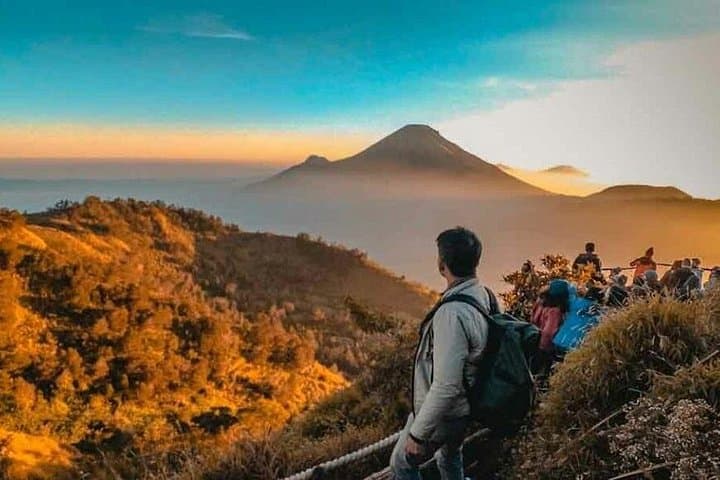
You climb from the shadowed parking lot with the air already cool and thin, a headlamp bobbing like a moth as the horizon lightens. Within 20–30 minutes of steady uphill on packed earth and loose rocks, Sikunir’s crest opens: a low sea of cloud parts and the sun pushes itself up behind a jagged row of volcanoes, coloring sulfur-steamed ridges gold.
Verified experiences and guided adventures in the surrounding area.
Operated by Asmaradhana Borobudur Tours · Wonosobo, Central Java
You climb from the shadowed parking lot with the air already cool and thin, a headlamp bobbing like a moth as the horizon lightens. Within 20–30 minutes of steady uphill on packed earth and loose rocks, Sikunir’s crest opens: a low sea of cloud parts and the sun pushes itself up behind a jagged row of volcanoes, coloring sulfur-steamed ridges gold.
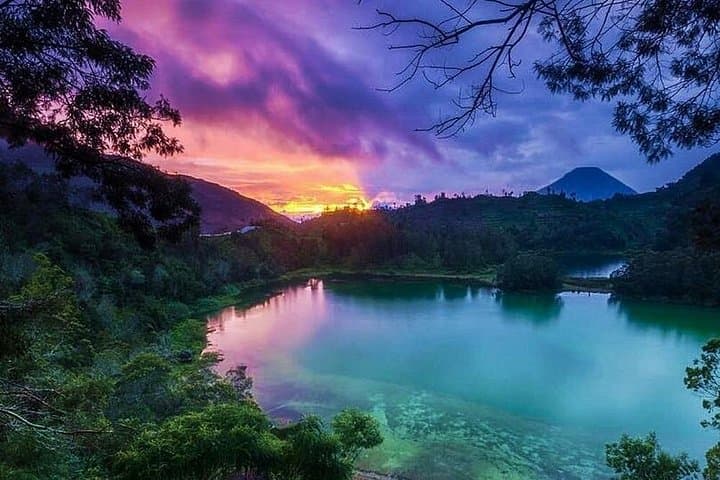
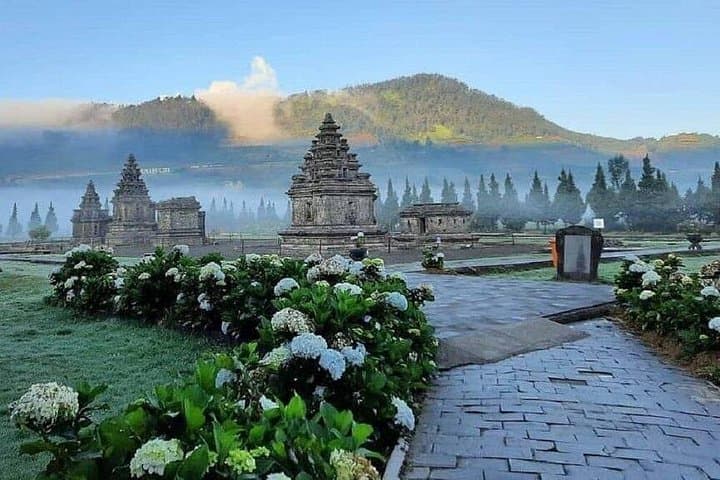
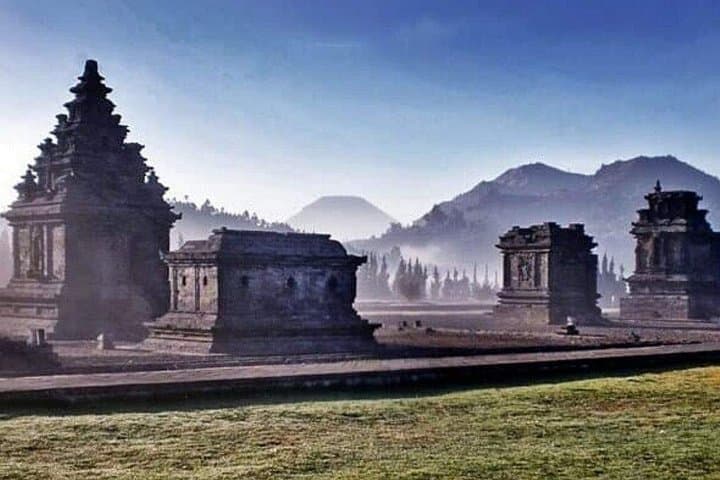
The Dieng Plateau sits high on Java’s central spine, a volcanic tableland where geothermal chemistry writes the landscape. Small Hindu shrines at the Arjuna temple complex date to the 7th century and stand on cooled lava flows; British observers in the 1800s recorded dozens more temple ruins here. The plateau’s crater lakes—most famously Telaga Warna—flash strange colors because dissolved minerals and sulfur change reflection with sunlight.
Culture here is agricultural and ritual: farmers tend potato plots and cabbage terraces, and local vendors boil eggs in hot fumaroles for breakfast. You’ll see steam venting from Sikidang's mud pots, a reminder that the ground remains alive and unstable.
Practical guidance: expect a very early pickup from Yogyakarta (around midnight), a 3‑hour drive, and a short but sometimes steep walk to the viewpoint in damp, cold air. Wear layered clothing, waterproof outerwear if rain is forecast, and sturdy footwear for uneven volcanic soil. Bring a headlamp, water, small cash for entrance and snacks, and a camera with a spare battery—dawn light drains power fast. Be respectful at temple sites and follow marked paths around fumaroles; sulfur gases and thin crusts are hazardous.
moderate.
12–13 hours.
Light to moderate fitness—able to manage a 20–30 minute uphill walk at altitude and several short walks over uneven ground.
The uphill walk from the trailhead takes about 20–30 minutes at a steady pace over uneven, rocky steps.
No—cloud, haze, or rain can obscure the view; guides time the trip to maximize clear conditions but weather is variable.
This tour notes entrance fees are included, but bring small cash for incidental purchases and donations at temple sites.
The route is short but steep; it’s suitable for families and older travelers in reasonable health, but not recommended for those with serious mobility or cardiac issues.
Arjuna and surrounding temples date to the 7th century and reflect early Hindu influence; British-era accounts once recorded many more ruined structures across the plateau.
Dieng’s geothermal features are fragile—stay on paths, avoid collecting mineral samples, and pack out trash to protect thin soils and water quality.
Asmaradhana Borobudur Tours operates guided outdoor trips and adventures with an emphasis on safety, stewardship, and memorable experiences.
You climb from the shadowed parking lot with the air already cool and thin, a headlamp bobbing like a moth as the horizon lightens. Within 20–30 minutes of steady uphill on packed earth and loose rocks, Sikunir’s crest opens: a low sea of cloud parts and the sun pushes itself up behind a jagged row of volcanoes, coloring sulfur-steamed ridges gold.
You climb from the shadowed parking lot with the air already cool and thin, a headlamp bobbing like a moth as the horizon lightens. Within 20–30 minutes of steady uphill on packed earth and loose rocks, Sikunir’s crest opens: a low sea of cloud parts and the sun pushes itself up behind a jagged row of volcanoes, coloring sulfur-steamed ridges gold.
The Dieng Plateau sits high on Java’s central spine, a volcanic tableland where geothermal chemistry writes the landscape. Small Hindu shrines at the Arjuna temple complex date to the 7th century and stand on cooled lava flows; British observers in the 1800s recorded dozens more temple ruins here. The plateau’s crater lakes—most famously Telaga Warna—flash strange colors because dissolved minerals and sulfur change reflection with sunlight.
Culture here is agricultural and ritual: farmers tend potato plots and cabbage terraces, and local vendors boil eggs in hot fumaroles for breakfast. You’ll see steam venting from Sikidang's mud pots, a reminder that the ground remains alive and unstable.
Practical guidance: expect a very early pickup from Yogyakarta (around midnight), a 3‑hour drive, and a short but sometimes steep walk to the viewpoint in damp, cold air. Wear layered clothing, waterproof outerwear if rain is forecast, and sturdy footwear for uneven volcanic soil. Bring a headlamp, water, small cash for entrance and snacks, and a camera with a spare battery—dawn light drains power fast. Be respectful at temple sites and follow marked paths around fumaroles; sulfur gases and thin crusts are hazardous.