THE ADVENTURE COLLECTIVE® · Independent discovery and booking for outdoor travel

Climb Sikunir before dawn, watch a two-stage sunrise over the Dieng volcanic plateau, then explore steaming craters, colored lakes and 8th‑century temple ruins. This full‑day tour combines a short steep hike with a scenic highland drive from Yogyakarta.
Climb Sikunir before dawn, watch a two-stage sunrise over the Dieng volcanic plateau, then explore steaming craters, colored lakes and 8th‑century temple ruins. This full‑day tour combines a short steep hike with a scenic highland drive from Yogyakarta.
Before dawn the ridge of Sikunir is a dark blade against a low sea of clouds; hikers move in single file, headlamps bobbing, breath visible in the cold air. By the time the first light eases over the horizon the plateau opens—four high volcanic peaks step into view and the valley below is washed in gold then silver as the light shifts.
Verified experiences and guided adventures in the surrounding area.
Operated by Triptrik · Wonosobo, Central Java
Before dawn the ridge of Sikunir is a dark blade against a low sea of clouds; hikers move in single file, headlamps bobbing, breath visible in the cold air. By the time the first light eases over the horizon the plateau opens—four high volcanic peaks step into view and the valley below is washed in gold then silver as the light shifts.
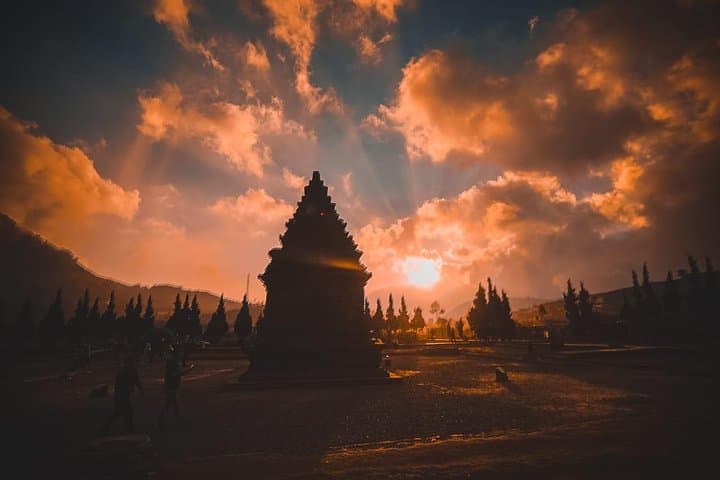
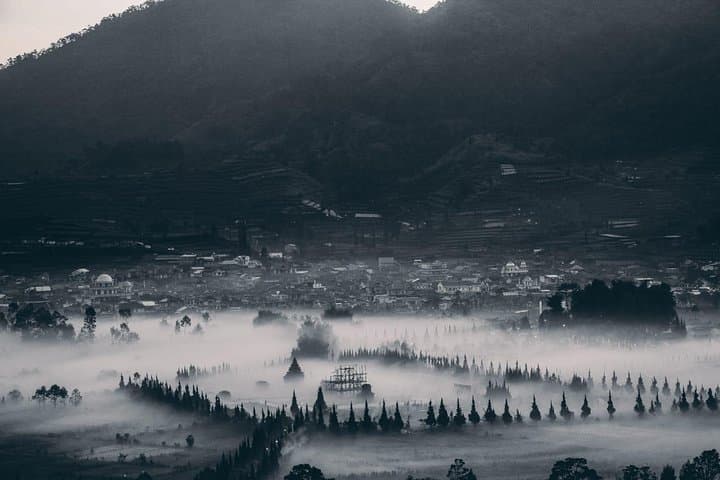
The Dieng Plateau is a high volcanic complex—its steaming craters, colored lakes and sulfur-smoked ground record an active geological past. “Dieng” means “abode of the gods,” a name earned by temples like the Arjuna group, stone relics from the 8th century Sanjaya dynasty that speak to early Javanese Hindu culture. Farmers carve narrow terraces and tobacco plots into the slopes, using every inch of the cool highland soil.
Practically, the experience is a long day trip from Yogyakarta: expect several hours of driving each way, an early-morning 20–45 minute steep walk up to the Sikunir viewpoint (roughly 100–300 m elevation gain depending on route), and short stops at Kawah Sikidang, Telaga Warna and Arjuna temples. Temperatures at ~2,000 m can be near freezing pre-dawn—layers are essential. Trails are compacted dirt and stone; some sections are steep and can be slippery when wet. Sulfur fumes near active craters can be sharp—follow posted warnings.
Timing matters: aim to arrive at the Sikunir ridge before first light for best sky conditions, and allow extra time for fog. Bring a warm jacket, sturdy shoes and a headlamp, and budget modest local entrance fees for crater and lake viewpoints.
moderate.
12–15 hours.
Suitable for travelers who can handle several hours of driving and a short steep hike of 20–45 minutes at altitude; basic stamina required.
The ascent to the main Sikunir viewpoint is typically a steep 20–45 minute walk depending on pace and trailhead, with roughly 100–300 m of elevation gain from the parking/starting point.
The tour is marketed as suitable for all fitness levels, but the early start, long driving, and a short steep climb mean caregivers should assess mobility and cold tolerance.
Local entrance fees for sites like Kawah Sikidang and Telaga Warna are commonly charged separately; confirm with the operator whether fees are included in your booking.
Yes—fumarole activity and strong sulfur emissions can close crater areas. Tours may be altered or canceled for safety; follow guide instructions on-site.
The Arjuna temple cluster on Dieng dates to the 8th century Sanjaya dynasty; these small stone candi are among Java’s oldest Hindu monuments.
The plateau’s fragile volcanic soils and unique lake chemistry are sensitive—stay on trails, avoid littering, and respect posted closures around active craters.
Triptrik operates guided outdoor trips and adventures with an emphasis on safety, stewardship, and memorable experiences.
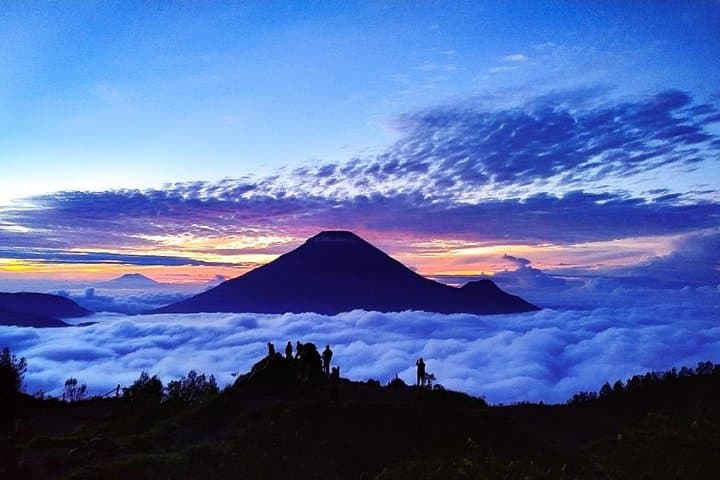
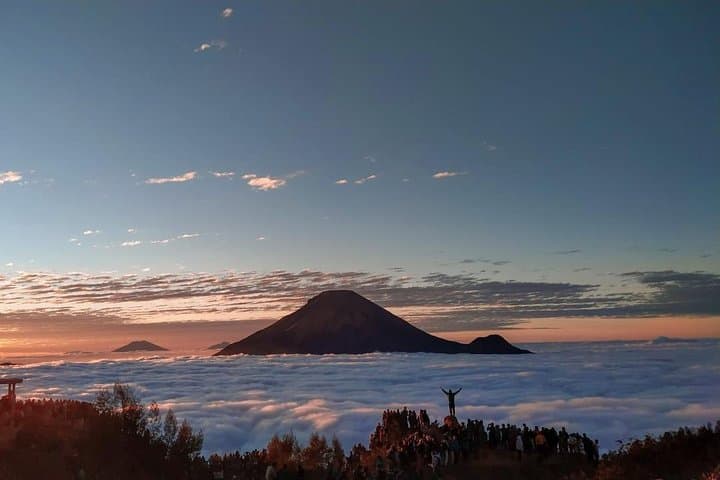
Before dawn the ridge of Sikunir is a dark blade against a low sea of clouds; hikers move in single file, headlamps bobbing, breath visible in the cold air. By the time the first light eases over the horizon the plateau opens—four high volcanic peaks step into view and the valley below is washed in gold then silver as the light shifts.
Before dawn the ridge of Sikunir is a dark blade against a low sea of clouds; hikers move in single file, headlamps bobbing, breath visible in the cold air. By the time the first light eases over the horizon the plateau opens—four high volcanic peaks step into view and the valley below is washed in gold then silver as the light shifts.
The Dieng Plateau is a high volcanic complex—its steaming craters, colored lakes and sulfur-smoked ground record an active geological past. “Dieng” means “abode of the gods,” a name earned by temples like the Arjuna group, stone relics from the 8th century Sanjaya dynasty that speak to early Javanese Hindu culture. Farmers carve narrow terraces and tobacco plots into the slopes, using every inch of the cool highland soil.
Practically, the experience is a long day trip from Yogyakarta: expect several hours of driving each way, an early-morning 20–45 minute steep walk up to the Sikunir viewpoint (roughly 100–300 m elevation gain depending on route), and short stops at Kawah Sikidang, Telaga Warna and Arjuna temples. Temperatures at ~2,000 m can be near freezing pre-dawn—layers are essential. Trails are compacted dirt and stone; some sections are steep and can be slippery when wet. Sulfur fumes near active craters can be sharp—follow posted warnings.
Timing matters: aim to arrive at the Sikunir ridge before first light for best sky conditions, and allow extra time for fog. Bring a warm jacket, sturdy shoes and a headlamp, and budget modest local entrance fees for crater and lake viewpoints.