THE ADVENTURE COLLECTIVE® · Independent discovery and booking for outdoor travel

A long, full-day private tour links two of Sri Lanka’s most striking sites—Sigiriya’s cliff-top fortress and the painted caves of Dambulla—into one efficient, interpretation-rich itinerary. Ideal for travelers on the south coast who want a single-day deep dive into the island’s ancient heart.
A long, full-day private tour links two of Sri Lanka’s most striking sites—Sigiriya’s cliff-top fortress and the painted caves of Dambulla—into one efficient, interpretation-rich itinerary. Ideal for travelers on the south coast who want a single-day deep dive into the island’s ancient heart.
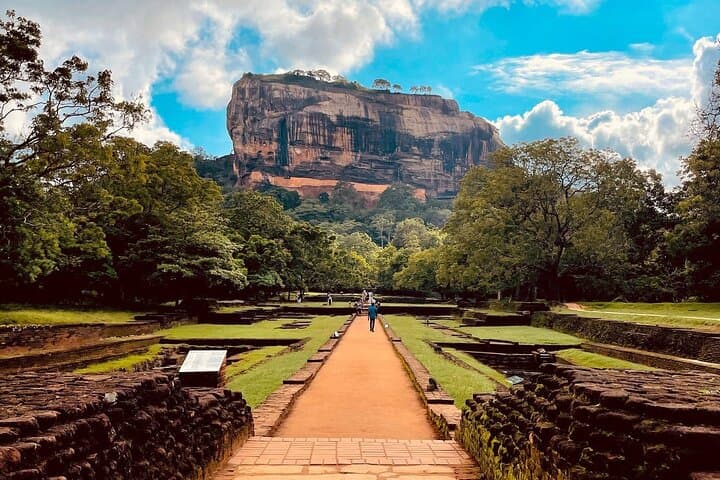
You step out before dawn into humid Sri Lankan air; the minivan hums through paddy plains as the coastline falls away behind you. By the time the sun clears the horizon, Sigiriya’s monolithic head appears—an abrupt, ochre mushroom of granite rising from flat scrub. The rock seems to test you, its sheer face orange in the low light, staircases and metal walkways cut into its flanks like veins waiting for travelers.
Verified experiences and guided adventures in the surrounding area.
Operated by Travelhikka tours Sri Lanka · Sigiriya, Central Province
You step out before dawn into humid Sri Lankan air; the minivan hums through paddy plains as the coastline falls away behind you. By the time the sun clears the horizon, Sigiriya’s monolithic head appears—an abrupt, ochre mushroom of granite rising from flat scrub. The rock seems to test you, its sheer face orange in the low light, staircases and metal walkways cut into its flanks like veins waiting for travelers.
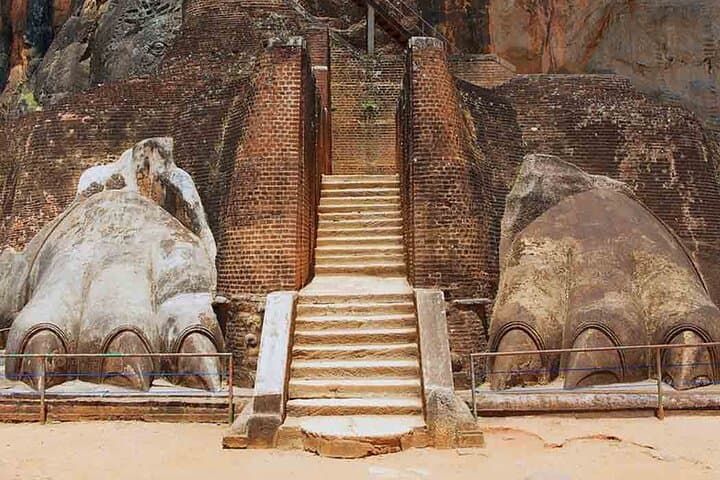
Climbing the ancient stairway, the wind plays along the face and the ruined terraces reveal themselves in stages: battered fresco panels half-hidden in shade, the famous Mirror Wall reflecting centuries of carved graffiti, and at the summit, sparse foundations where a palace once sat—its water gardens below still precise, geometric, and stubbornly modern. Sigiriya was crowned in the 5th century by King Kashyapa, who transformed a military stronghold and pleasure palace into a bold architectural statement that reoriented the landscape.
Geologically, Sigiriya is a hardened volcanic plug stuck into older sediments; its hardness left it standing while softer rock eroded away. The climb presses you into both history and stone: the rock’s heat, the creak of the stairs, and the long views over patchwork fields and distant hills.
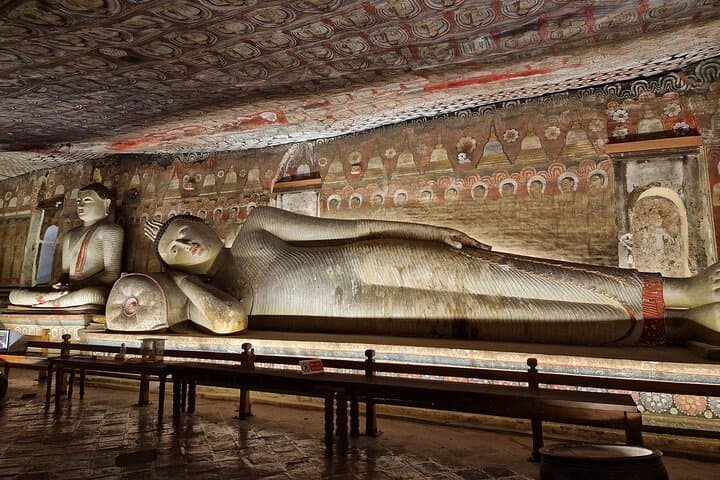
After lunch at a nearby restaurant—often rice, curry, and fresh sambol—the tour moves to Dambulla. The Dambulla Cave Temple folds into the hillside like a carved secret. Carved Buddhas and painted ceilings span five principal caves, a continuous visual narrative begun by King Walagambahu in the 1st century BCE and refreshed across dynasties. It’s the largest painted cave complex in the world; the statues range from intimate seated Buddhas to a 14-meter reclining figure that dominates one chamber.
Culture and rhythm matter here. Farmers tend fields in the valley; temple custodians maintain rituals; offerings of flowers and oil lamps thread present-day devotion to ancient practice. Guides on the tour translate fragments of legend into practical detail—why certain frescoes survive, and how water management around Sigiriya reflects advanced hydraulic planning.
Practical edge: this is a very long day—expect early pickup from the south coast and up to five hours of driving each way. Wear sturdy shoes for stone stairs and slick patches, bring a refillable water bottle (water is supplied on the tour but it’s wise to have your own), and carry modest clothing for temple entry (shoulders and knees covered). The tour includes entrance fees, lunch, and hotel pickup/drop-off if you’re based in Galle, Hikkaduwa or Bentota, which simplifies logistics.
Timing matters for both photos and temperature—aim for the morning at Sigiriya to avoid midafternoon heat, and leave extra time for queues at the stairheads. Whether you come for the engineering, the frescoes, or the view from the top, the day stitches together two of Sri Lanka’s most deliberate monuments into one travelable story.
moderate.
12–15 hours.
Moderate endurance required—long drives plus steep stair climbs; be comfortable on uneven stone steps and standing for extended periods.
Expect roughly 4.5–5.5 hours each way depending on traffic; the operator schedules early pickup to make sightseeing time effective.
Yes—this all-inclusive tour covers admission to Sigiriya and Dambulla, lunch, highway and parking charges, and bottled water.
Children and older adults with reasonable mobility can climb but should be cautious—there are steep sections and exposed walkways; the tour notes moderate fitness is needed.
Pickup from hotels in those towns is offered; you can request a specific pickup point when booking.
Yes—there are restroom stops and a local restaurant for lunch included in the itinerary; bring small change for snacks between sites.
Dress conservatively—shoulders and knees covered; remove shoes before entering the cave shrines and avoid flash photography where restricted.
Sigiriya was fortified and turned into a palace complex by King Kashyapa in the 5th century; Dambulla’s cave paintings and statues began under King Walagambahu in the 1st century BCE and accumulated over centuries.
Both sites are managed as protected heritage areas; visitors should stick to marked paths, avoid touching frescoes, and minimize plastic waste—this helps preserve fragile paintings and local ecosystems.
Travelhikka tours Sri Lanka operates guided outdoor trips and adventures with an emphasis on safety, stewardship, and memorable experiences.
You step out before dawn into humid Sri Lankan air; the minivan hums through paddy plains as the coastline falls away behind you. By the time the sun clears the horizon, Sigiriya’s monolithic head appears—an abrupt, ochre mushroom of granite rising from flat scrub. The rock seems to test you, its sheer face orange in the low light, staircases and metal walkways cut into its flanks like veins waiting for travelers.
You step out before dawn into humid Sri Lankan air; the minivan hums through paddy plains as the coastline falls away behind you. By the time the sun clears the horizon, Sigiriya’s monolithic head appears—an abrupt, ochre mushroom of granite rising from flat scrub. The rock seems to test you, its sheer face orange in the low light, staircases and metal walkways cut into its flanks like veins waiting for travelers.
Climbing the ancient stairway, the wind plays along the face and the ruined terraces reveal themselves in stages: battered fresco panels half-hidden in shade, the famous Mirror Wall reflecting centuries of carved graffiti, and at the summit, sparse foundations where a palace once sat—its water gardens below still precise, geometric, and stubbornly modern. Sigiriya was crowned in the 5th century by King Kashyapa, who transformed a military stronghold and pleasure palace into a bold architectural statement that reoriented the landscape.
Geologically, Sigiriya is a hardened volcanic plug stuck into older sediments; its hardness left it standing while softer rock eroded away. The climb presses you into both history and stone: the rock’s heat, the creak of the stairs, and the long views over patchwork fields and distant hills.
After lunch at a nearby restaurant—often rice, curry, and fresh sambol—the tour moves to Dambulla. The Dambulla Cave Temple folds into the hillside like a carved secret. Carved Buddhas and painted ceilings span five principal caves, a continuous visual narrative begun by King Walagambahu in the 1st century BCE and refreshed across dynasties. It’s the largest painted cave complex in the world; the statues range from intimate seated Buddhas to a 14-meter reclining figure that dominates one chamber.
Culture and rhythm matter here. Farmers tend fields in the valley; temple custodians maintain rituals; offerings of flowers and oil lamps thread present-day devotion to ancient practice. Guides on the tour translate fragments of legend into practical detail—why certain frescoes survive, and how water management around Sigiriya reflects advanced hydraulic planning.
Practical edge: this is a very long day—expect early pickup from the south coast and up to five hours of driving each way. Wear sturdy shoes for stone stairs and slick patches, bring a refillable water bottle (water is supplied on the tour but it’s wise to have your own), and carry modest clothing for temple entry (shoulders and knees covered). The tour includes entrance fees, lunch, and hotel pickup/drop-off if you’re based in Galle, Hikkaduwa or Bentota, which simplifies logistics.
Timing matters for both photos and temperature—aim for the morning at Sigiriya to avoid midafternoon heat, and leave extra time for queues at the stairheads. Whether you come for the engineering, the frescoes, or the view from the top, the day stitches together two of Sri Lanka’s most deliberate monuments into one travelable story.