THE ADVENTURE COLLECTIVE® · Independent discovery and booking for outdoor travel

Scale the ancient stairways of Sigiriya Lion Rock at dawn, then spend the afternoon on a Jeep safari through Minneriya’s plains to watch elephant herds gather. This private full-day tour pairs archaeology with wildlife viewing for a focused taste of Sri Lanka’s cultural and natural highlights.
Scale the ancient stairways of Sigiriya Lion Rock at dawn, then spend the afternoon on a Jeep safari through Minneriya’s plains to watch elephant herds gather. This private full-day tour pairs archaeology with wildlife viewing for a focused taste of Sri Lanka’s cultural and natural highlights.
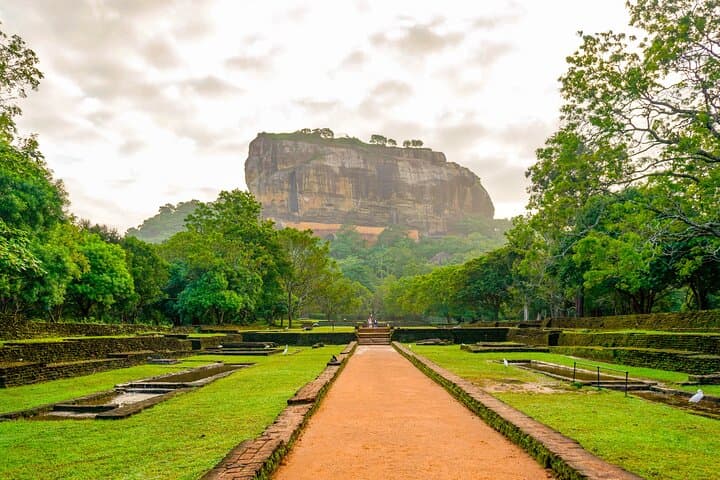
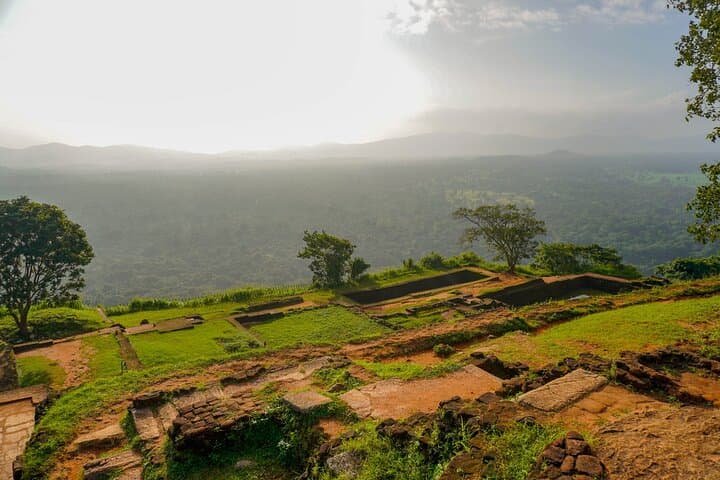
The morning begins at first light when the plain around Sigiriya glows a dusty gold and the narrow staircases that hug the rock throw long shadows. Climbers move deliberately—local guides, families, and solo travelers—ascending the iron ladders and carved steps that lead up 200 meters (about 660 feet) from the base to the ruined palace on top. The rock doesn’t give its view away easily: the climb alternates between shaded galleries of frescoes, the polished Mirror Wall, and exposed walkways where the breeze tests your balance and patience.
Verified experiences and guided adventures in the surrounding area.
Operated by Minneriya Wild Tours · Sigiriya, North Central Province
The morning begins at first light when the plain around Sigiriya glows a dusty gold and the narrow staircases that hug the rock throw long shadows. Climbers move deliberately—local guides, families, and solo travelers—ascending the iron ladders and carved steps that lead up 200 meters (about 660 feet) from the base to the ruined palace on top. The rock doesn’t give its view away easily: the climb alternates between shaded galleries of frescoes, the polished Mirror Wall, and exposed walkways where the breeze tests your balance and patience.
Sigiriya was a fortified royal center in the fifth century AD, raised by King Kasyapa as both palace and propaganda: terraces, water gardens, and painted maidens still hint at the ambition behind the stone. Geologically the formation is an igneous intrusion—hard volcanic rock risen through softer sediments—leaving a near-vertical monolith that the ancient engineers turned into architecture. Cultural layers are visible in the carvings and the silent foundations of a once-grand compound.
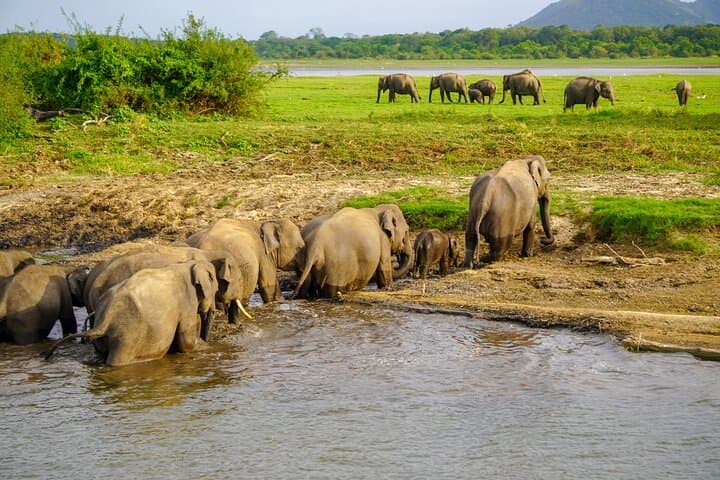
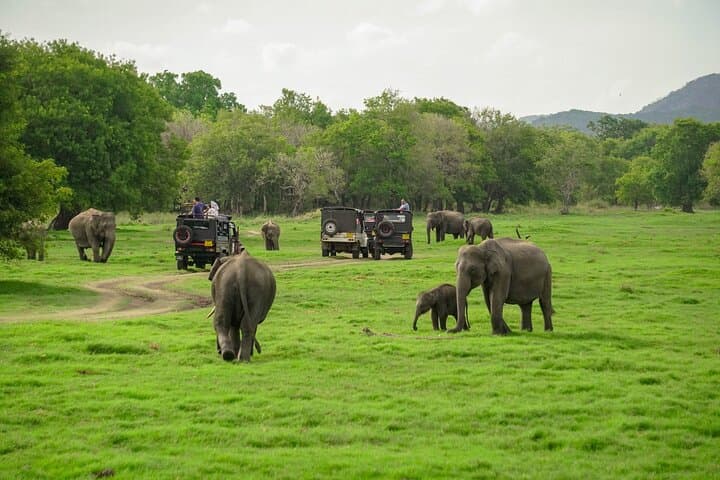
After a traditional Sri Lankan lunch—rice and curry fragrant with pandan and roasted spices—the tempo changes. A safari jeep waits to take you across the Minneriya or Kaudulla plains, where the land becomes a magnet for wildlife. In the dry season the Minneriya Tank shrinks into pools and the grassy flats attract elephant families in what wildlife biologists call the “gathering,” a spectacle of tusks and trunks that move with slow, purposeful unity. The jeep’s engine is a low hum; the elephants regard the vehicle as one more element in the landscape, sometimes curious, often indifferent, but always compelling.
This private full-day pairing gives a compact cross-section of North Central Sri Lanka: high rock and royal history in the morning, broad savanna and close-up natural drama in the afternoon. Practicalities matter—the Sigiriya ascent is steep and can involve roughly a thousand steps across mixed terrain, metal stairways and stone ramps; the safari covers uneven off-road tracks and may include long stretches in sun and dust.
Plan to start early to beat the heat, carry at least 2 liters of water, and wear sturdy shoes with good tread for the climb. Binoculars and a long lens make a difference on safari; a light rain layer is useful during inter-monsoon showers. Respect local customs at the shrine areas—cover shoulders and remove shoes where required—and follow your driver’s instructions during wildlife viewing to minimize disturbance.
By dusk, when the plain cools and the silhouettes of elephants fade into the tank’s reflections, the day reads like an efficient primer on Sri Lanka’s contrasts: ascents that require steadiness, landscapes that demand patience, and natural encounters that reward quiet attention.
moderate.
8 hours.
Good for travelers comfortable with a sustained stair climb and a long day of walking and sitting; allow for heat and humidity.
The ascent gains about 200 meters (≈660 ft) and takes 45–90 minutes depending on fitness and stops for photos; expect mixed rock and metal stair sections.
You’ll visit either Minneriya or Kaudulla National Park, selected on the day depending on wildlife movement and park conditions.
The safari is family-friendly, but the Sigiriya ascent involves many steps and may be strenuous for young children or those with mobility limits; consult guides about alternatives like partial climbs.
The dry season—roughly July through October—sees the largest congregations around the Minneriya Tank, but sightings can occur year-round.
A traditional Sri Lankan lunch and bottled water are included in the tour package.
Yes—hotel pickup and drop-off are provided; confirm your pickup point when booking.
Sigiriya was constructed in the 5th century AD by King Kasyapa as a fortified palace complex and is notable for its frescoes and hydraulic gardens.
Increased visitation during elephant gatherings stresses local habitats; stick to designated routes, avoid off-track drives, and follow park rules to reduce impact.
Minneriya Wild Tours operates guided outdoor trips and adventures with an emphasis on safety, stewardship, and memorable experiences.
The morning begins at first light when the plain around Sigiriya glows a dusty gold and the narrow staircases that hug the rock throw long shadows. Climbers move deliberately—local guides, families, and solo travelers—ascending the iron ladders and carved steps that lead up 200 meters (about 660 feet) from the base to the ruined palace on top. The rock doesn’t give its view away easily: the climb alternates between shaded galleries of frescoes, the polished Mirror Wall, and exposed walkways where the breeze tests your balance and patience.
The morning begins at first light when the plain around Sigiriya glows a dusty gold and the narrow staircases that hug the rock throw long shadows. Climbers move deliberately—local guides, families, and solo travelers—ascending the iron ladders and carved steps that lead up 200 meters (about 660 feet) from the base to the ruined palace on top. The rock doesn’t give its view away easily: the climb alternates between shaded galleries of frescoes, the polished Mirror Wall, and exposed walkways where the breeze tests your balance and patience.
Sigiriya was a fortified royal center in the fifth century AD, raised by King Kasyapa as both palace and propaganda: terraces, water gardens, and painted maidens still hint at the ambition behind the stone. Geologically the formation is an igneous intrusion—hard volcanic rock risen through softer sediments—leaving a near-vertical monolith that the ancient engineers turned into architecture. Cultural layers are visible in the carvings and the silent foundations of a once-grand compound.
After a traditional Sri Lankan lunch—rice and curry fragrant with pandan and roasted spices—the tempo changes. A safari jeep waits to take you across the Minneriya or Kaudulla plains, where the land becomes a magnet for wildlife. In the dry season the Minneriya Tank shrinks into pools and the grassy flats attract elephant families in what wildlife biologists call the “gathering,” a spectacle of tusks and trunks that move with slow, purposeful unity. The jeep’s engine is a low hum; the elephants regard the vehicle as one more element in the landscape, sometimes curious, often indifferent, but always compelling.
This private full-day pairing gives a compact cross-section of North Central Sri Lanka: high rock and royal history in the morning, broad savanna and close-up natural drama in the afternoon. Practicalities matter—the Sigiriya ascent is steep and can involve roughly a thousand steps across mixed terrain, metal stairways and stone ramps; the safari covers uneven off-road tracks and may include long stretches in sun and dust.
Plan to start early to beat the heat, carry at least 2 liters of water, and wear sturdy shoes with good tread for the climb. Binoculars and a long lens make a difference on safari; a light rain layer is useful during inter-monsoon showers. Respect local customs at the shrine areas—cover shoulders and remove shoes where required—and follow your driver’s instructions during wildlife viewing to minimize disturbance.
By dusk, when the plain cools and the silhouettes of elephants fade into the tank’s reflections, the day reads like an efficient primer on Sri Lanka’s contrasts: ascents that require steadiness, landscapes that demand patience, and natural encounters that reward quiet attention.