THE ADVENTURE COLLECTIVE® · Independent discovery and booking for outdoor travel

Scale the 5th‑century Lion Rock at Sigiriya and step into the painted caverns of Dambulla on a private day tour. This guide outlines what to expect—terrain, history, and practical tips to plan a full day of Sri Lanka’s UNESCO highlights.
Scale the 5th‑century Lion Rock at Sigiriya and step into the painted caverns of Dambulla on a private day tour. This guide outlines what to expect—terrain, history, and practical tips to plan a full day of Sri Lanka’s UNESCO highlights.
You arrive before the heat thickens, the vehicle pulling off a narrow road into scrubland where a 200‑metre basalt pillar rises like a carved challenge. Climbers thread iron ladders and terraces to reach Sigiriya’s summit, where crumbling walls and mirror pools recall a 5th‑century court that once watched the plain below. Later, cool cave mouths at Dambulla open into a painted darkness where Buddha figures loom and ceilings keep the brushstrokes of ancient worshipers.
Verified experiences and guided adventures in the surrounding area.
Operated by JD Tours · Sigiriya, Central Province
You arrive before the heat thickens, the vehicle pulling off a narrow road into scrubland where a 200‑metre basalt pillar rises like a carved challenge. Climbers thread iron ladders and terraces to reach Sigiriya’s summit, where crumbling walls and mirror pools recall a 5th‑century court that once watched the plain below. Later, cool cave mouths at Dambulla open into a painted darkness where Buddha figures loom and ceilings keep the brushstrokes of ancient worshipers.
Sigiriya was King Kashyapa’s fortress and garden-city, engineered with moats, ramps and sophisticated waterworks; the mirror-like pools at its base still channel monsoon runoff. Dambulla’s five caves are the largest painted cavern complex in Sri Lanka, their murals spanning centuries and mixing myth, devotion and political history tied to King Valagamba. Geologically, both sites sit on Precambrian rock uplift and later volcanic intrusions—hard rock that resisted erosion and yielded dramatic vertical faces.
Expect steep stone steps, narrow platforms and humid lowland air; monkeys and peafowl frequent both sites and the water gardens dare you to pause and cool down. Cultural norms are strict: modest clothing, removed shoes at temple interiors and quiet reverence in sacred spaces.
Practical guidance: start early to avoid midday heat, carry 2–3 liters of water, wear grippy shoes for uneven rock, and allow 3–4 hours at Sigiriya and another 2–3 at Dambulla including walking and photos. Admission lines move steadily but allow time for photos and a measured pace—these sites reward curiosity and patience more than speed.
moderate.
12–15 hours.
Moderate fitness—able to climb several hundred uneven steps and walk for most of the day.
The private day runs about 12–15 hours door to door, typically spending 3–4 hours at Sigiriya and 2–3 hours at Dambulla with transport and breaks in between.
Both sites have uneven steps and steep sections; Dambulla’s lower areas are easier, but Sigiriya’s summit climb is not wheelchair friendly and requires careful mobility assessment.
Admission is typically not included automatically—confirm with the operator and budget for entrance fees at both UNESCO sites.
Yes, but children should be supervised on narrow stairways; infants should be kept in carriers rather than strollers due to steps and uneven paths.
Sigiriya was built by King Kashyapa in the 5th century as a fortified palace complex; Dambulla’s cave temples date to the 1st century B.C., expanded over centuries of Buddhist devotion.
Both UNESCO sites face wear from foot traffic, humidity and pollution—stick to marked paths and avoid touching painted surfaces to help preserve them.
JD Tours operates guided outdoor trips and adventures with an emphasis on safety, stewardship, and memorable experiences.


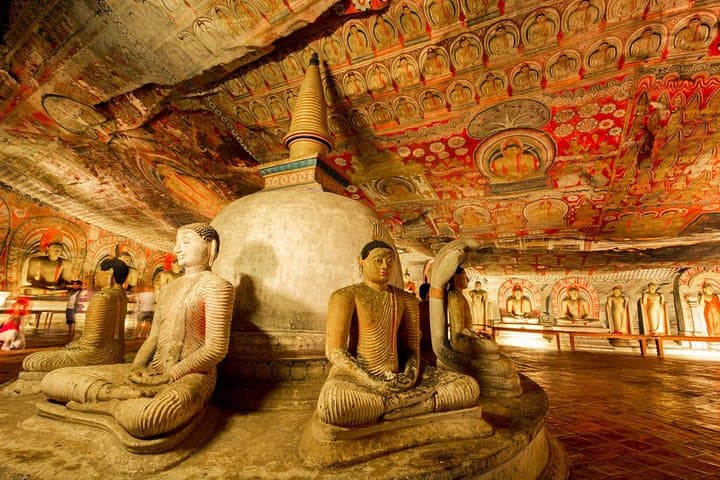
You arrive before the heat thickens, the vehicle pulling off a narrow road into scrubland where a 200‑metre basalt pillar rises like a carved challenge. Climbers thread iron ladders and terraces to reach Sigiriya’s summit, where crumbling walls and mirror pools recall a 5th‑century court that once watched the plain below. Later, cool cave mouths at Dambulla open into a painted darkness where Buddha figures loom and ceilings keep the brushstrokes of ancient worshipers.
You arrive before the heat thickens, the vehicle pulling off a narrow road into scrubland where a 200‑metre basalt pillar rises like a carved challenge. Climbers thread iron ladders and terraces to reach Sigiriya’s summit, where crumbling walls and mirror pools recall a 5th‑century court that once watched the plain below. Later, cool cave mouths at Dambulla open into a painted darkness where Buddha figures loom and ceilings keep the brushstrokes of ancient worshipers.
Sigiriya was King Kashyapa’s fortress and garden-city, engineered with moats, ramps and sophisticated waterworks; the mirror-like pools at its base still channel monsoon runoff. Dambulla’s five caves are the largest painted cavern complex in Sri Lanka, their murals spanning centuries and mixing myth, devotion and political history tied to King Valagamba. Geologically, both sites sit on Precambrian rock uplift and later volcanic intrusions—hard rock that resisted erosion and yielded dramatic vertical faces.
Expect steep stone steps, narrow platforms and humid lowland air; monkeys and peafowl frequent both sites and the water gardens dare you to pause and cool down. Cultural norms are strict: modest clothing, removed shoes at temple interiors and quiet reverence in sacred spaces.
Practical guidance: start early to avoid midday heat, carry 2–3 liters of water, wear grippy shoes for uneven rock, and allow 3–4 hours at Sigiriya and another 2–3 at Dambulla including walking and photos. Admission lines move steadily but allow time for photos and a measured pace—these sites reward curiosity and patience more than speed.