THE ADVENTURE COLLECTIVE® · Independent discovery and booking for outdoor travel

Spend a day tracing Sri Lanka’s ancient power centers: climb the dramatic Sigiriya rock fortress, then cool off in the painted caverns of Dambulla. This private door-to-door trip from Trincomalee pairs practical logistics with rich historical context.
Spend a day tracing Sri Lanka’s ancient power centers: climb the dramatic Sigiriya rock fortress, then cool off in the painted caverns of Dambulla. This private door-to-door trip from Trincomalee pairs practical logistics with rich historical context.
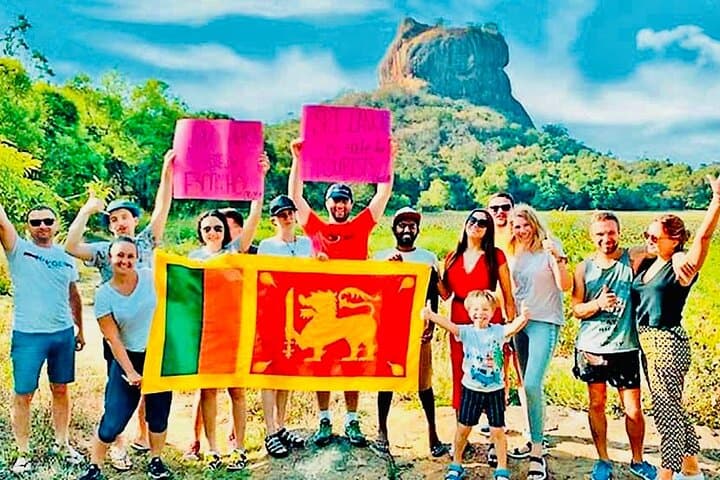
Dawn leaks over the paddy fields as the driver pulls away from Trincomalee’s palm-fringed coastline and the lowland becomes a checkerboard of tanks, bullock tracks and Buddhist stupas. In the distance a single, abrupt column of stone rises from the plains — Sigiriya — an iron-hearted rock that seems to have dared the sky for millennia. By midmorning the tour drops travelers at the base of that vertical face. The path climbs through gardens of split stone, past fresco panels frozen in pigment, and along the mirror wall where ancient visitors once scrawled comments that still read like breath across the centuries.
Verified experiences and guided adventures in the surrounding area.
Operated by Sigiritrip Tours · Sigiriya, North Central Province
Dawn leaks over the paddy fields as the driver pulls away from Trincomalee’s palm-fringed coastline and the lowland becomes a checkerboard of tanks, bullock tracks and Buddhist stupas. In the distance a single, abrupt column of stone rises from the plains — Sigiriya — an iron-hearted rock that seems to have dared the sky for millennia. By midmorning the tour drops travelers at the base of that vertical face. The path climbs through gardens of split stone, past fresco panels frozen in pigment, and along the mirror wall where ancient visitors once scrawled comments that still read like breath across the centuries.
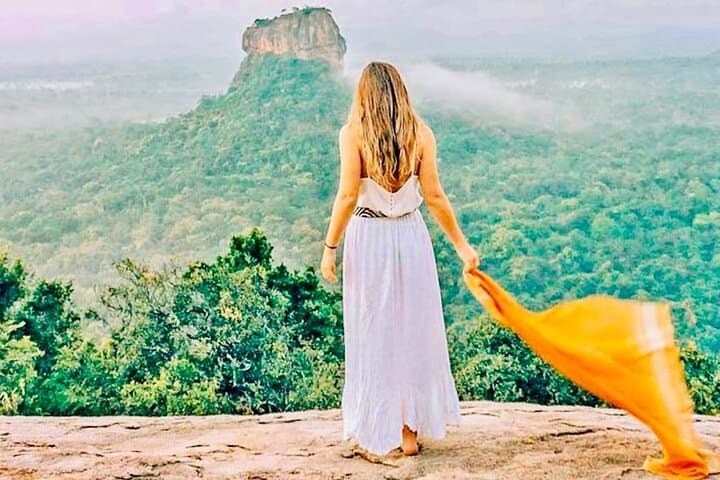
Sigiriya was forged by an interplay of geology and politics. The rock is an ancient igneous plug — a core of hardened magma left when surrounding softer rock eroded away — and in the 5th century CE King Kashyapa crowned it with terraces, water gardens and fortifications. The engineering is as compelling as the legend: moats that double as reflective ponds, hydraulic features that still route water through carved channels, and staircases that wind into caverns where the fortress meets the sky.
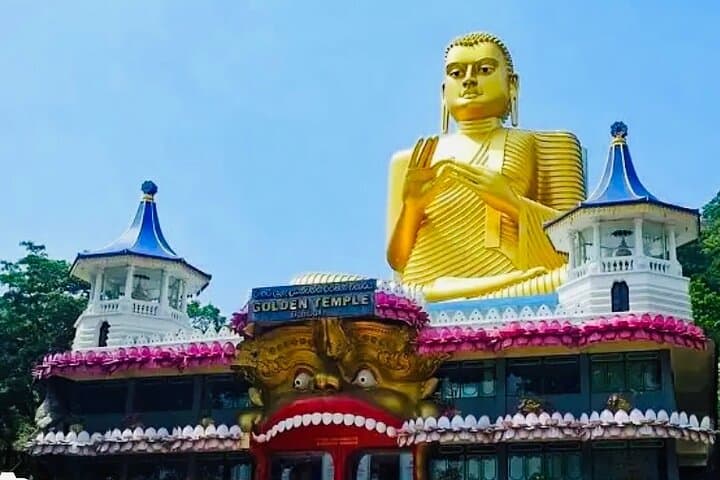
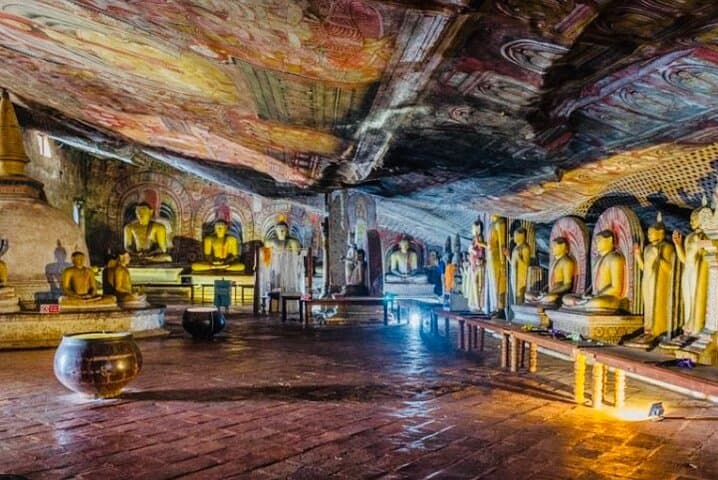
A short drive from Sigiriya, the Royal Cave Temple of Dambulla presents a different kind of wonder. Five main caves slope into a hillside and open into cool, dim chambers where hundreds of Buddha images and ceiling murals fold history into paint. Pilgrims and guides move with practiced quiet; a dress code and modest behavior are expected inside the sanctified rock.
This private, full-day route is a practical way to experience both sites in one day. The package includes an air-conditioned vehicle, bottled water, snacks (including fresh coconut) and an on-site professional guide. It’s an 8–10 hour day from Trincomalee with hotel pickup and drop-off, which makes logistics simple for travelers based on the east coast.
Practicalities: the Sigiriya ascent gains roughly 200 meters and requires climbing about 1,000–1,200 steps on metal and stone stairways; expect steep sections and narrow viewing platforms. Start early to beat heat and crowds, bring sun protection and steady footwear, and pace the descent — many travelers underestimate the knees-on-the-way-down. At Dambulla expect a series of steps to reach the caves and a cool, humid interior where flash photography may be restricted. Local guides add context — from Colombo-era restoration work to folklore about the frescoes — and tipping the driver and guide is customary.
Taken together, the day blends geology, royal drama and devotional art in a compact rhythm: a tough climb rewarded by sweeping plains, and a hush of centuries inside painted caves. For anyone with a full day and an appetite for Sri Lanka’s layered history, this is a straightforward, deeply readable introduction.
moderate.
8–10 hours.
Moderate fitness; able to climb 1,000+ steps and walk uneven paths for several hours.
Expect about 8–10 hours door-to-door, including driving time and stops at both sites.
The tour listing indicates fees and taxes are included; confirm at booking if you want individual tickets itemized.
The ascent involves steep, exposed sections and many steps; it’s manageable with breaks but may be strenuous for those with mobility issues.
Food is not appropriate inside the caves; eat before or after and follow guidance from the on-site guide.
Photography is generally allowed at Sigiriya viewpoints; at Dambulla, some caves restrict flash or require moderation — follow signage and guide instructions.
Yes — the itinerary includes breaks, and restroom facilities are available at site entries and the museum.
Sigiriya was fortified and transformed into a palace-fortress by King Kashyapa in the 5th century CE; Dambulla’s caves have been a continuous pilgrimage site since the 1st century BCE.
Both sites are UNESCO-protected and visitor impact is managed through defined trails and site limits; stick to paths and avoid touching murals to preserve fragile pigments.
Sigiritrip Tours operates guided outdoor trips and adventures with an emphasis on safety, stewardship, and memorable experiences.
Dawn leaks over the paddy fields as the driver pulls away from Trincomalee’s palm-fringed coastline and the lowland becomes a checkerboard of tanks, bullock tracks and Buddhist stupas. In the distance a single, abrupt column of stone rises from the plains — Sigiriya — an iron-hearted rock that seems to have dared the sky for millennia. By midmorning the tour drops travelers at the base of that vertical face. The path climbs through gardens of split stone, past fresco panels frozen in pigment, and along the mirror wall where ancient visitors once scrawled comments that still read like breath across the centuries.
Dawn leaks over the paddy fields as the driver pulls away from Trincomalee’s palm-fringed coastline and the lowland becomes a checkerboard of tanks, bullock tracks and Buddhist stupas. In the distance a single, abrupt column of stone rises from the plains — Sigiriya — an iron-hearted rock that seems to have dared the sky for millennia. By midmorning the tour drops travelers at the base of that vertical face. The path climbs through gardens of split stone, past fresco panels frozen in pigment, and along the mirror wall where ancient visitors once scrawled comments that still read like breath across the centuries.
Sigiriya was forged by an interplay of geology and politics. The rock is an ancient igneous plug — a core of hardened magma left when surrounding softer rock eroded away — and in the 5th century CE King Kashyapa crowned it with terraces, water gardens and fortifications. The engineering is as compelling as the legend: moats that double as reflective ponds, hydraulic features that still route water through carved channels, and staircases that wind into caverns where the fortress meets the sky.
A short drive from Sigiriya, the Royal Cave Temple of Dambulla presents a different kind of wonder. Five main caves slope into a hillside and open into cool, dim chambers where hundreds of Buddha images and ceiling murals fold history into paint. Pilgrims and guides move with practiced quiet; a dress code and modest behavior are expected inside the sanctified rock.
This private, full-day route is a practical way to experience both sites in one day. The package includes an air-conditioned vehicle, bottled water, snacks (including fresh coconut) and an on-site professional guide. It’s an 8–10 hour day from Trincomalee with hotel pickup and drop-off, which makes logistics simple for travelers based on the east coast.
Practicalities: the Sigiriya ascent gains roughly 200 meters and requires climbing about 1,000–1,200 steps on metal and stone stairways; expect steep sections and narrow viewing platforms. Start early to beat heat and crowds, bring sun protection and steady footwear, and pace the descent — many travelers underestimate the knees-on-the-way-down. At Dambulla expect a series of steps to reach the caves and a cool, humid interior where flash photography may be restricted. Local guides add context — from Colombo-era restoration work to folklore about the frescoes — and tipping the driver and guide is customary.
Taken together, the day blends geology, royal drama and devotional art in a compact rhythm: a tough climb rewarded by sweeping plains, and a hush of centuries inside painted caves. For anyone with a full day and an appetite for Sri Lanka’s layered history, this is a straightforward, deeply readable introduction.