THE ADVENTURE COLLECTIVE® · Independent discovery and booking for outdoor travel

A full-day private tour from Mount Lavinia that pairs the cave sanctuaries of Dambulla with the dramatic rock fortress of Sigiriya. Expect long drives, steep stairs and luminous ancient art — plus practical tips to make the most of the day.
A full-day private tour from Mount Lavinia that pairs the cave sanctuaries of Dambulla with the dramatic rock fortress of Sigiriya. Expect long drives, steep stairs and luminous ancient art — plus practical tips to make the most of the day.
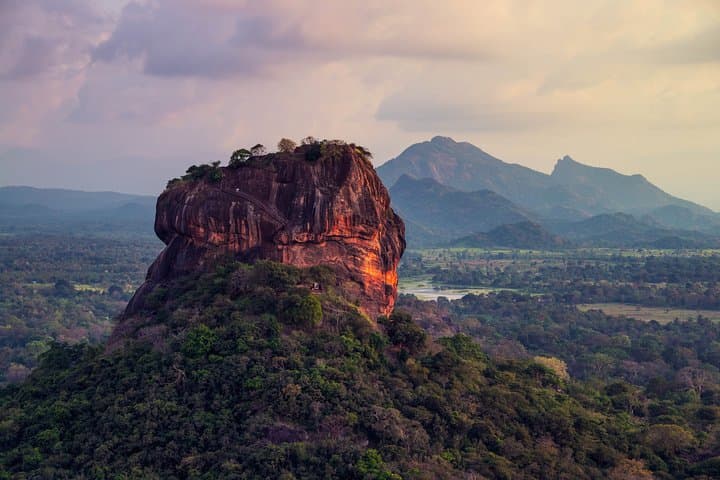
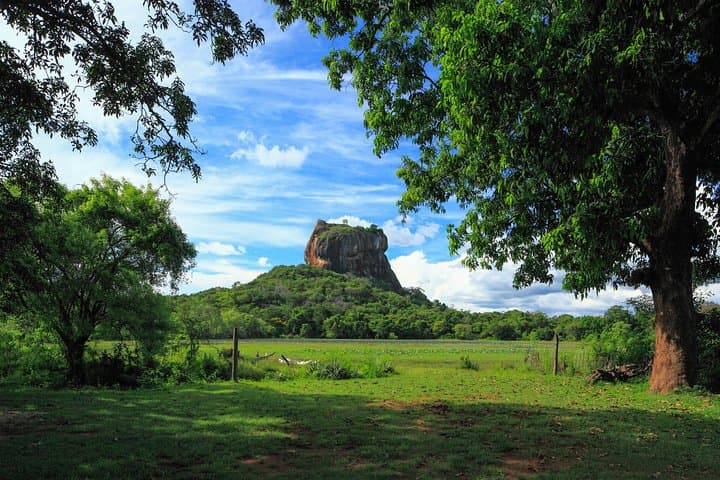
You crest a corridor of heat and humidity long before the stone gives way to frescoes. The van leaves the coast early, the little palms of Mount Lavinia shrinking into a green plain, and after hours of tea country and scrub you arrive beneath a flat-topped rock that seems to have been dropped into the landscape by an impatient giant. Sigiriya isn't coy — its sheer sides demand attention, its iron staircases and carved lions insist you earn the view.
Verified experiences and guided adventures in the surrounding area.
Operated by Lakpura LLC · Sigiriya, Central Province
You crest a corridor of heat and humidity long before the stone gives way to frescoes. The van leaves the coast early, the little palms of Mount Lavinia shrinking into a green plain, and after hours of tea country and scrub you arrive beneath a flat-topped rock that seems to have been dropped into the landscape by an impatient giant. Sigiriya isn't coy — its sheer sides demand attention, its iron staircases and carved lions insist you earn the view.
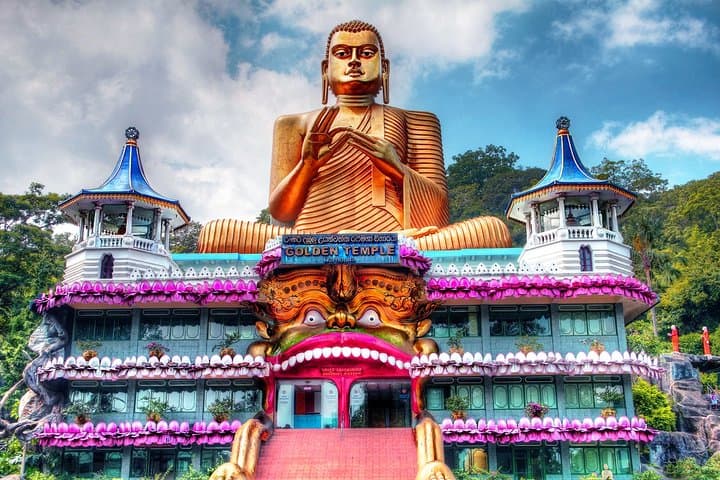
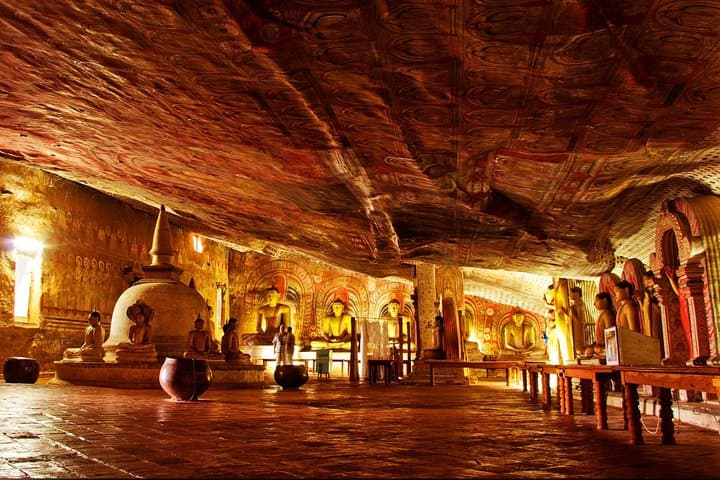
The day moves like an old procession: first the Dambulla Cave Temple, a cluster of five caverns hewn from granite where over 150 statues of Buddha and vivid frescoes have been protected from the weather for centuries. The paint and gilding, applied by monks and royal patrons from the 1st century BCE onward, still hold a solemn intimacy. Later you climb Sigiriya, Kasyapa's 5th-century citadel-turned-palace. Water gardens, moats and terraces reveal an advanced hydraulic program; the fortress is part engineering marvel, part theatrical stage — you climb through mirror-walls of rock painting, past the lion's paws that signal the final ascent.
Geology and history are inseparable here. The rock is an ancient magma plug, hardened as the softer surrounding rock eroded away, leaving a natural tower that the island's rulers turned into a defensible capital. Culturally, these sites tell Sri Lanka's mash-up of Buddhist devotion and early Sinhalese statecraft — places of meditation, display and political theater. Today's private tour from Mount Lavinia compresses all of that context into a single, full day: time on temple thresholds, time on steep stairs, and long kilometers between the coast and the Cultural Triangle.
Practical edge: expect a long day. Pickup in Mount Lavinia means an early start and roughly three to four hours of driving total, depending on traffic. The Sigiriya climb gains about 200 meters (650 feet) and includes exposed metal stairs; if you have vertigo or major knee issues, consider skipping the upper tiers. Temple rules at Dambulla require modest dress and shoe removal — bring a sarong or long shirt and carry small bills for donations and lockers. Water is provided on the tour, but bring an extra bottle, sun protection and a light rain layer — weather can flip quickly in the interior.
A private chauffeur-guide lets you set the pace: linger at frescoes, move quickly through the gardens, or spend extra time at the Sigiriya Museum. Photographers should time the climb for late morning light when the rock's faces pick up color and the murals are easier to read. Above all, approach both sites with patience — the history is carved into tight spaces and high places, and it rewards close attention.
moderate.
10–11 hours.
Good general fitness; able to climb several hundred steps and manage uneven terrain for short stretches.
Expect roughly 3–4 hours each way depending on traffic; the tour is a full 11-hour day including transfers and visits.
The main ascent includes steep, narrow steps and metal staircases; those with serious mobility issues should avoid the upper sections or stay at the base gardens and museum.
This tour description notes admissions as not included; confirm with your operator whether UNESCO site fees are covered or payable on arrival.
Modest clothing that covers shoulders and knees; you must remove shoes and hats inside the caves.
Stairs and iron ladders become slippery when wet; guides may restrict access during heavy rain for safety.
Most private tours include a lunch stop at a local restaurant; confirm dietary needs when booking and carry snacks for energy between long transfers.
Sigiriya was transformed into a palace and fortress by King Kasyapa in the 5th century AD; Dambulla's caves were used by Buddhist monks and royal patrons from as early as the 1st century BCE.
Both sites are UNESCO-protected; visitors should stick to marked paths, avoid touching frescoes and dispose of waste properly to protect delicate murals and archaeological layers.
Lakpura LLC operates guided outdoor trips and adventures with an emphasis on safety, stewardship, and memorable experiences.
You crest a corridor of heat and humidity long before the stone gives way to frescoes. The van leaves the coast early, the little palms of Mount Lavinia shrinking into a green plain, and after hours of tea country and scrub you arrive beneath a flat-topped rock that seems to have been dropped into the landscape by an impatient giant. Sigiriya isn't coy — its sheer sides demand attention, its iron staircases and carved lions insist you earn the view.
You crest a corridor of heat and humidity long before the stone gives way to frescoes. The van leaves the coast early, the little palms of Mount Lavinia shrinking into a green plain, and after hours of tea country and scrub you arrive beneath a flat-topped rock that seems to have been dropped into the landscape by an impatient giant. Sigiriya isn't coy — its sheer sides demand attention, its iron staircases and carved lions insist you earn the view.
The day moves like an old procession: first the Dambulla Cave Temple, a cluster of five caverns hewn from granite where over 150 statues of Buddha and vivid frescoes have been protected from the weather for centuries. The paint and gilding, applied by monks and royal patrons from the 1st century BCE onward, still hold a solemn intimacy. Later you climb Sigiriya, Kasyapa's 5th-century citadel-turned-palace. Water gardens, moats and terraces reveal an advanced hydraulic program; the fortress is part engineering marvel, part theatrical stage — you climb through mirror-walls of rock painting, past the lion's paws that signal the final ascent.
Geology and history are inseparable here. The rock is an ancient magma plug, hardened as the softer surrounding rock eroded away, leaving a natural tower that the island's rulers turned into a defensible capital. Culturally, these sites tell Sri Lanka's mash-up of Buddhist devotion and early Sinhalese statecraft — places of meditation, display and political theater. Today's private tour from Mount Lavinia compresses all of that context into a single, full day: time on temple thresholds, time on steep stairs, and long kilometers between the coast and the Cultural Triangle.
Practical edge: expect a long day. Pickup in Mount Lavinia means an early start and roughly three to four hours of driving total, depending on traffic. The Sigiriya climb gains about 200 meters (650 feet) and includes exposed metal stairs; if you have vertigo or major knee issues, consider skipping the upper tiers. Temple rules at Dambulla require modest dress and shoe removal — bring a sarong or long shirt and carry small bills for donations and lockers. Water is provided on the tour, but bring an extra bottle, sun protection and a light rain layer — weather can flip quickly in the interior.
A private chauffeur-guide lets you set the pace: linger at frescoes, move quickly through the gardens, or spend extra time at the Sigiriya Museum. Photographers should time the climb for late morning light when the rock's faces pick up color and the murals are easier to read. Above all, approach both sites with patience — the history is carved into tight spaces and high places, and it rewards close attention.