THE ADVENTURE COLLECTIVE® · Independent discovery and booking for outdoor travel

A 16 km guided trek across Sierra Negra’s active caldera on Isabela Island. Expect lava tunnels, tuff cones and a 360° viewpoint—plan for rough volcanic terrain and sectional exposure.
A 16 km guided trek across Sierra Negra’s active caldera on Isabela Island. Expect lava tunnels, tuff cones and a 360° viewpoint—plan for rough volcanic terrain and sectional exposure.
The wind hits first—cool and mineral-scented—before the landscape fully unfolds: a broad, pockmarked caldera rim that feels more lunar than tropical. Walking here is rhythmic and direct: footfalls over basalt, the hiss of loose scoria, and the caldera’s enormous fissures daring you to peer into the volcano’s raw architecture.
Verified experiences and guided adventures in the surrounding area.
Operated by Enchanted Islands · Puerto Villamil, Galápagos
The wind hits first—cool and mineral-scented—before the landscape fully unfolds: a broad, pockmarked caldera rim that feels more lunar than tropical. Walking here is rhythmic and direct: footfalls over basalt, the hiss of loose scoria, and the caldera’s enormous fissures daring you to peer into the volcano’s raw architecture.
Sierra Negra on Isabela Island hosts the third-largest active caldera on Earth. The route threads through young lava flows, tuff cones, and collapsed lava tubes that reveal geologic processes from recent eruptions (notably 2005 and 2018) to older shield-building phases. The Galápagos’ human history is modest here—scientific stations, occasional ranching on Isabela, and a long-standing focus on conservation under the Galápagos National Park.
Plant life changes visibly with elevation: scrubby, wind-pruned vegetation gives way to hardy páramo-like plants near the rim. Wildlife is discreet but present—ground-finches, lava lizards and endemic plants that cling to volcanic soil.
Practical guidance: the guided itinerary covers roughly 16 km in about six hours, with uneven volcanic terrain and an estimated 200–400 m of elevation change depending on route. Expect loose rock, steep short pitches, and open exposure; wear sturdy boots, carry 2–3 liters of water, high-SPF sun protection, and a layered wind shell. The final viewpoint rewards effort with a near-360° panorama across the caldera and the northern flank of Isabela—bring a camera with a wide lens and a midday snack.
Tours include hotel pickup, transport, a bilingual guide and a boxed lunch; permits and park entry formalities can apply separately. Aim for early starts to avoid midday heat and to enjoy clearer light for the caldera’s colors.
moderate.
6 hours.
Suitable for hikers with moderate fitness who can manage 16 km on uneven, rocky ground and short steep sections.
The tour covers about 16 km over roughly six hours; terrain is uneven volcanic rock with moderate elevation change—suitable for hikers with moderate fitness.
Yes—this excursion includes hotel pickup/drop-off, transport on Isabela, and a certified bilingual guide, plus a boxed lunch.
Visitors to the Galápagos must comply with national park regulations; park entry and transit control fees may apply and are sometimes paid separately from the tour booking.
No—this route is not recommended for travelers with serious cardiovascular, spinal, or mobility limitations due to uneven terrain and sustained effort.
Sierra Negra’s caldera and recent eruptions (including 2005 and 2018) shaped much of Isabela’s northern flank; scientific study of these eruptions informs modern volcanology in the islands.
The area is protected by the Galápagos National Park—stay on marked trails, avoid collecting samples, and minimize disturbance to endemic plants and wildlife.
Enchanted Islands operates guided outdoor trips and adventures with an emphasis on safety, stewardship, and memorable experiences.
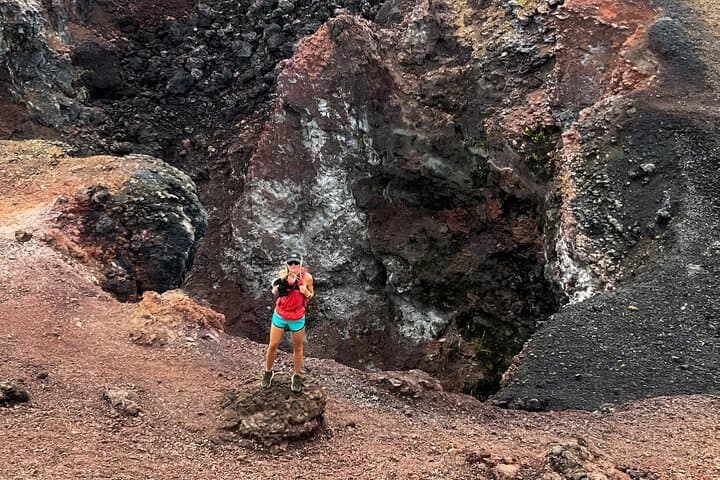
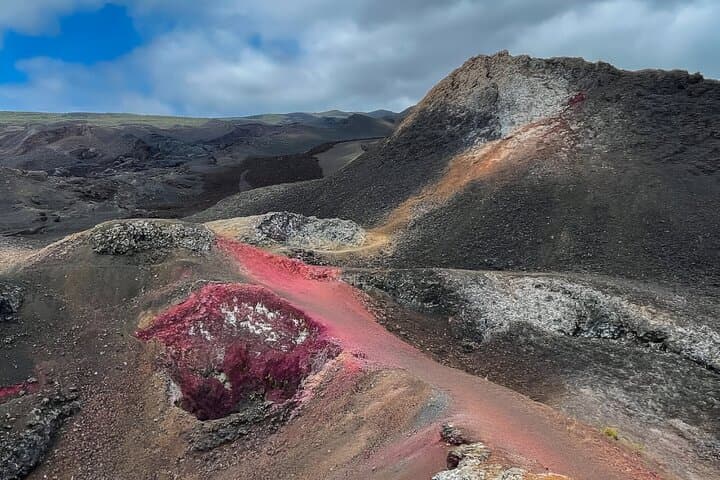
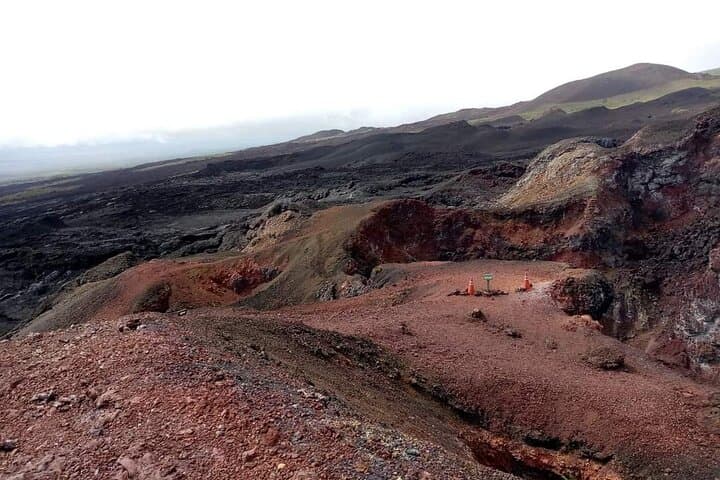
The wind hits first—cool and mineral-scented—before the landscape fully unfolds: a broad, pockmarked caldera rim that feels more lunar than tropical. Walking here is rhythmic and direct: footfalls over basalt, the hiss of loose scoria, and the caldera’s enormous fissures daring you to peer into the volcano’s raw architecture.
The wind hits first—cool and mineral-scented—before the landscape fully unfolds: a broad, pockmarked caldera rim that feels more lunar than tropical. Walking here is rhythmic and direct: footfalls over basalt, the hiss of loose scoria, and the caldera’s enormous fissures daring you to peer into the volcano’s raw architecture.
Sierra Negra on Isabela Island hosts the third-largest active caldera on Earth. The route threads through young lava flows, tuff cones, and collapsed lava tubes that reveal geologic processes from recent eruptions (notably 2005 and 2018) to older shield-building phases. The Galápagos’ human history is modest here—scientific stations, occasional ranching on Isabela, and a long-standing focus on conservation under the Galápagos National Park.
Plant life changes visibly with elevation: scrubby, wind-pruned vegetation gives way to hardy páramo-like plants near the rim. Wildlife is discreet but present—ground-finches, lava lizards and endemic plants that cling to volcanic soil.
Practical guidance: the guided itinerary covers roughly 16 km in about six hours, with uneven volcanic terrain and an estimated 200–400 m of elevation change depending on route. Expect loose rock, steep short pitches, and open exposure; wear sturdy boots, carry 2–3 liters of water, high-SPF sun protection, and a layered wind shell. The final viewpoint rewards effort with a near-360° panorama across the caldera and the northern flank of Isabela—bring a camera with a wide lens and a midday snack.
Tours include hotel pickup, transport, a bilingual guide and a boxed lunch; permits and park entry formalities can apply separately. Aim for early starts to avoid midday heat and to enjoy clearer light for the caldera’s colors.