THE ADVENTURE COLLECTIVE® · Independent discovery and booking for outdoor travel

Walk Siena’s Contrade with a Polaguide and instant camera, visiting 17 neighborhood fountains while learning the Palio stories tied to each district. This accessible, 1–4 hour tour combines local history with hands-on photography and a personalized keepsake album.
Walk Siena’s Contrade with a Polaguide and instant camera, visiting 17 neighborhood fountains while learning the Palio stories tied to each district. This accessible, 1–4 hour tour combines local history with hands-on photography and a personalized keepsake album.
You step off a narrow street and the sound of water guides you into a tiny piazza where a contrada’s fountain looks like a small stage — stonework softened by centuries of hands and rain. The PolaTour threads through Siena’s districts, pausing at each of the 17 small fountains that mark neighborhood pride, offering a steady rhythm to the city’s steep lanes and brick terraces.
Verified experiences and guided adventures in the surrounding area.
Operated by Peace&Road · Siena, Tuscany
You step off a narrow street and the sound of water guides you into a tiny piazza where a contrada’s fountain looks like a small stage — stonework softened by centuries of hands and rain. The PolaTour threads through Siena’s districts, pausing at each of the 17 small fountains that mark neighborhood pride, offering a steady rhythm to the city’s steep lanes and brick terraces.
Siena sits on three low Tuscan hills; its streets and public wells trace medieval urban planning and the social map of the Contrade — the 17 civic neighborhoods whose rivalries play out in the Palio horse race. Many fountains date to the same eras that shaped Siena’s brick Gothic facades; public water points were practical, ceremonial, and later, emblematic for each contrada.
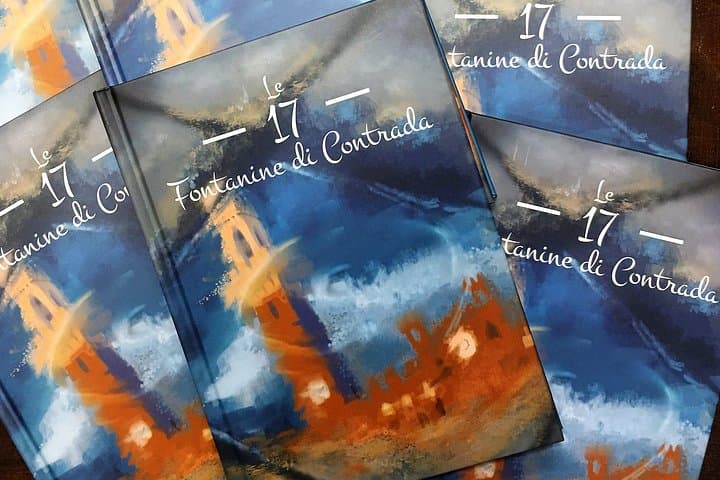
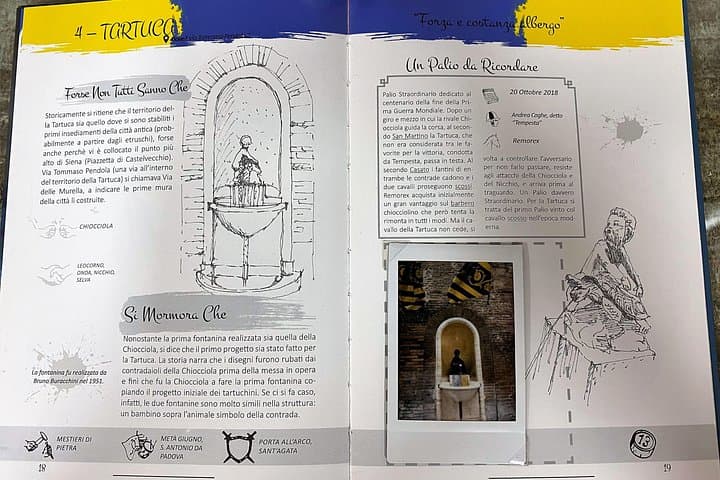
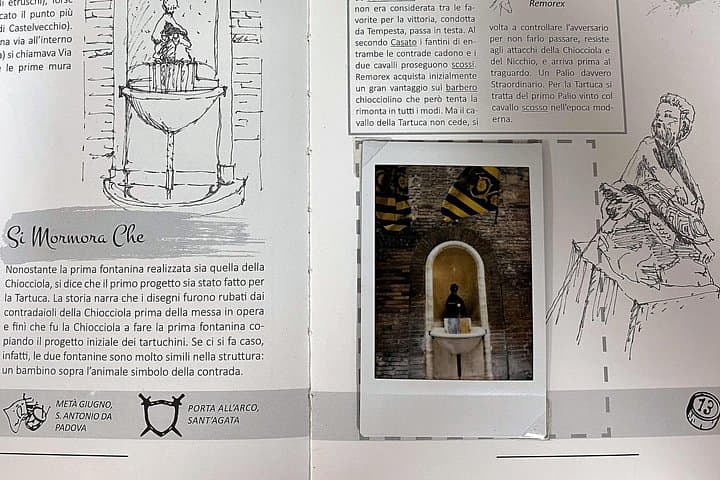
The tour blends compact cultural history with hands-on creativity: a Polaguide explains each fountain’s story and the district’s Palio anecdotes while an instant camera lets you capture a moment to mount in the supplied guide-album. Expect close-up views of carved stone, coats of arms, and intimate courtyards rather than wide panoramic vistas — this is urban exploration at walking pace.
Practical tips: routes last 1–4 hours depending on pace and stops; book outside the Palio windows (late June and mid-August) when the itinerary changes. Wear grippy shoes for cobbles, carry water, and protect cameras from sudden showers. The format is family-friendly and accessible, making it a good half-day complement to a visit to Piazza del Campo or the Duomo.
easy.
1–4 hours.
Suitable for most fitness levels; involves steady walking on cobbles and occasional short stair sections.
The Polakit for rent includes a Polaguide and the option to rent an instant camera with either 10 or 20 films; confirm your choice when booking.
The operator lists the experience as wheelchair accessible, but street surfaces and some narrow passages may vary; contact the provider to review specific accessibility needs.
During the Palio windows (29 June–2 July and 13–16 August) the 17 fountains route is not feasible and is replaced with a Top 10 Palio-focused route and map provided by the guide.
Plan 1–4 hours depending on pace and photo stops; many travelers use it as a focused morning or afternoon activity within a full-day Siena itinerary.
The Contrade developed in the Middle Ages as civic neighborhoods; their fountains served communal needs and later became symbols of local identity tied to the Palio.
Respecting historic stonework is key: avoid leaning or climbing on fountains, and use designated paths to limit wear on fragile pavement and masonry.
Peace&Road operates guided outdoor trips and adventures with an emphasis on safety, stewardship, and memorable experiences.

You step off a narrow street and the sound of water guides you into a tiny piazza where a contrada’s fountain looks like a small stage — stonework softened by centuries of hands and rain. The PolaTour threads through Siena’s districts, pausing at each of the 17 small fountains that mark neighborhood pride, offering a steady rhythm to the city’s steep lanes and brick terraces.
You step off a narrow street and the sound of water guides you into a tiny piazza where a contrada’s fountain looks like a small stage — stonework softened by centuries of hands and rain. The PolaTour threads through Siena’s districts, pausing at each of the 17 small fountains that mark neighborhood pride, offering a steady rhythm to the city’s steep lanes and brick terraces.
Siena sits on three low Tuscan hills; its streets and public wells trace medieval urban planning and the social map of the Contrade — the 17 civic neighborhoods whose rivalries play out in the Palio horse race. Many fountains date to the same eras that shaped Siena’s brick Gothic facades; public water points were practical, ceremonial, and later, emblematic for each contrada.
The tour blends compact cultural history with hands-on creativity: a Polaguide explains each fountain’s story and the district’s Palio anecdotes while an instant camera lets you capture a moment to mount in the supplied guide-album. Expect close-up views of carved stone, coats of arms, and intimate courtyards rather than wide panoramic vistas — this is urban exploration at walking pace.
Practical tips: routes last 1–4 hours depending on pace and stops; book outside the Palio windows (late June and mid-August) when the itinerary changes. Wear grippy shoes for cobbles, carry water, and protect cameras from sudden showers. The format is family-friendly and accessible, making it a good half-day complement to a visit to Piazza del Campo or the Duomo.