THE ADVENTURE COLLECTIVE® · Independent discovery and booking for outdoor travel

Cycle out of Siem Reap into paddies, markets and the broad sweep of West Baray on a private half-day ride. Expect flat, easy terrain, cultural stops at markets and a pagoda, and local snacks along the way.
Cycle out of Siem Reap into paddies, markets and the broad sweep of West Baray on a private half-day ride. Expect flat, easy terrain, cultural stops at markets and a pagoda, and local snacks along the way.
You push off from your hotel into a street already alive: tuk-tuks weaving, vendors calling, the scent of frying shallots rising with the heat. The guide tightens your helmet and the city gives way to narrow lanes lined by wooden houses on stilts; rice paddies ripple like green mirrors and the reservoir’s surface—West Baray—stretches flat and blue, daring you to pause and look.
Verified experiences and guided adventures in the surrounding area.
Operated by Ra Tour Guide · Siem Reap, Siem Reap Province
You push off from your hotel into a street already alive: tuk-tuks weaving, vendors calling, the scent of frying shallots rising with the heat. The guide tightens your helmet and the city gives way to narrow lanes lined by wooden houses on stilts; rice paddies ripple like green mirrors and the reservoir’s surface—West Baray—stretches flat and blue, daring you to pause and look.
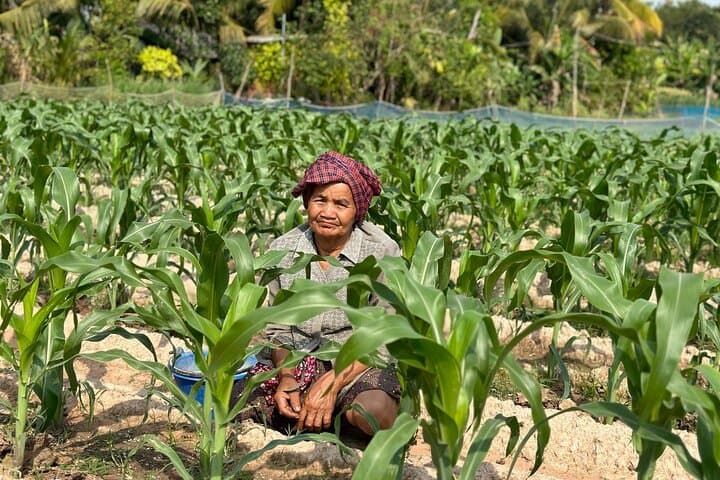
This half-day village ride moves through living history. Angkor’s ancient reservoirs and canal networks still shape local farming patterns, and many families here maintain techniques unchanged for generations. Geologically flat plains and recent alluvial soil make for easy pedaling; you’ll pass compacted dirt tracks, small paved roads and occasional sand, with near-zero elevation gain but plenty of sensory change. Culture arrives in bites: morning markets, steaming bowls of Khmer noodles, and bamboo cake sold from roadside stalls. A visit to a local pagoda offers a quiet contrast — simple wood and stone, a place where community life meets faith.
Practical guidance: expect roughly 15–20 km over 3–4 hours on mostly flat terrain. Bikes and helmets are provided and the tour supplies bottled water; bring sun protection, a long-sleeve shirt to respect temples and reduce sun exposure, and closed-toe shoes for uneven paths. Start earlier to avoid midday heat and be ready for light traffic in town and dusty rural stretches. Photography is welcome, but always ask before photographing people in intimate settings. The route is private and suitable for a wide range of fitness levels — it’s an accessible way to see daily Cambodian life while keeping the rhythm of the land under your wheels.
moderate.
3–4 hours.
Suitable for most riders with basic cycling ability; expect intermittent pedaling and some stop-and-go at markets.
The tour is rated easy-to-moderate with mostly flat terrain; basic cycling fitness is sufficient and the pace includes regular stops.
Yes — bikes and helmets are included and fitted during the pre-ride briefing.
Children can often join but age and height are asked at booking; contact the operator for under-age participation rules and suitable bikes.
Bring sun protection, comfortable closed-toe shoes, a long-sleeve for temple visits, small cash for food, and any personal medications.
West Baray is one of Angkor’s large, human-made reservoirs built during the Angkorian period to manage irrigation and support rice cultivation.
Visitors should avoid single-use plastics where possible and respect village routines; staying on minor roads reduces erosion and disturbance to farmland.
Ra Tour Guide operates guided outdoor trips and adventures with an emphasis on safety, stewardship, and memorable experiences.
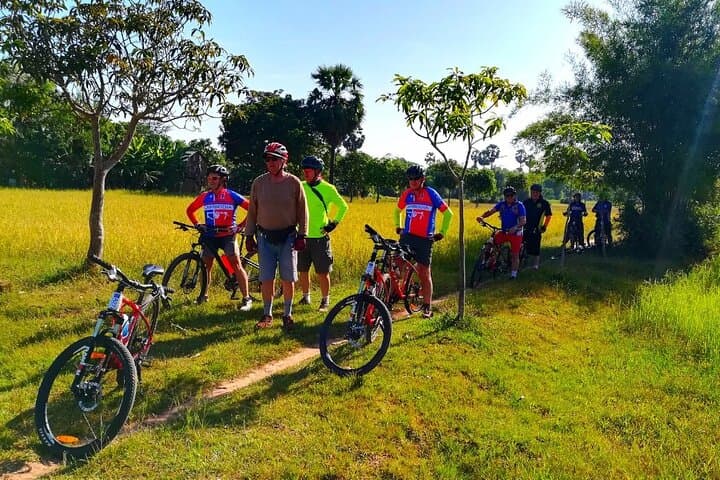


You push off from your hotel into a street already alive: tuk-tuks weaving, vendors calling, the scent of frying shallots rising with the heat. The guide tightens your helmet and the city gives way to narrow lanes lined by wooden houses on stilts; rice paddies ripple like green mirrors and the reservoir’s surface—West Baray—stretches flat and blue, daring you to pause and look.
You push off from your hotel into a street already alive: tuk-tuks weaving, vendors calling, the scent of frying shallots rising with the heat. The guide tightens your helmet and the city gives way to narrow lanes lined by wooden houses on stilts; rice paddies ripple like green mirrors and the reservoir’s surface—West Baray—stretches flat and blue, daring you to pause and look.
This half-day village ride moves through living history. Angkor’s ancient reservoirs and canal networks still shape local farming patterns, and many families here maintain techniques unchanged for generations. Geologically flat plains and recent alluvial soil make for easy pedaling; you’ll pass compacted dirt tracks, small paved roads and occasional sand, with near-zero elevation gain but plenty of sensory change. Culture arrives in bites: morning markets, steaming bowls of Khmer noodles, and bamboo cake sold from roadside stalls. A visit to a local pagoda offers a quiet contrast — simple wood and stone, a place where community life meets faith.
Practical guidance: expect roughly 15–20 km over 3–4 hours on mostly flat terrain. Bikes and helmets are provided and the tour supplies bottled water; bring sun protection, a long-sleeve shirt to respect temples and reduce sun exposure, and closed-toe shoes for uneven paths. Start earlier to avoid midday heat and be ready for light traffic in town and dusty rural stretches. Photography is welcome, but always ask before photographing people in intimate settings. The route is private and suitable for a wide range of fitness levels — it’s an accessible way to see daily Cambodian life while keeping the rhythm of the land under your wheels.