THE ADVENTURE COLLECTIVE® · Independent discovery and booking for outdoor travel

Boat across Tonle Sap to Chong Kneas and meet a community that lives on water. This private half‑day tour blends wildlife viewing, cultural insight, and practical observations about life on Cambodia’s great lake.
Boat across Tonle Sap to Chong Kneas and meet a community that lives on water. This private half‑day tour blends wildlife viewing, cultural insight, and practical observations about life on Cambodia’s great lake.
You step off Siem Reap’s tuk‑tuk onto a low wooden jetty and the lake immediately claims the sound—lapping boards, calling birds, the soft clack of oars. A longtail boat slips from the shore and takes you across Tonle Sap’s broad, changeable surface toward Chong Kneas, a settlement where homes, schools and markets rise and fall with the seasons.
Verified experiences and guided adventures in the surrounding area.
Operated by Discova Southeast Asia · Siem Reap, Siem Reap Province
You step off Siem Reap’s tuk‑tuk onto a low wooden jetty and the lake immediately claims the sound—lapping boards, calling birds, the soft clack of oars. A longtail boat slips from the shore and takes you across Tonle Sap’s broad, changeable surface toward Chong Kneas, a settlement where homes, schools and markets rise and fall with the seasons.
Tonle Sap is Southeast Asia’s largest freshwater lake, shaped by dramatic monsoon pulses that reverse the flow of rivers and expand wetlands for miles. That hydrology has defined the culture here: villagers build on stilts or floating platforms, and fishing techniques have evolved to match the lake’s rhythm. Geologically simple but ecologically rich, the lake supports large populations of migratory and resident birds; Prek Toal, upriver, is one of the region’s important bird sanctuaries.
Your guide will outline the village’s contemporary challenges—seasonal flooding, dwindling fish stocks, and economic shifts—while pointing out local trades, floating schools, and birdlife. Conversations with residents reveal practical adaptations rather than romantic myths: nets, pumps, and boats are daily technology.
Practical guidance: travel in the morning for calmer water and better light, bring sun protection and a light rain layer during the wet season, and keep interactions respectful—ask before photographing people’s homes. The half‑day private tour typically runs three hours and uses small boats and short walking on uneven docks; it’s accessible for most fitness levels. Expect wildlife glimpses, hands‑on cultural moments, and a clear picture of how humans and water coexist here.
easy.
3 hours.
Suitable for most fitness levels; requires short walks on uneven floating platforms and stable balance getting in/out of boats.
The private tour runs about three hours total, including boat transfers and time spent in Chong Kneas before returning to Siem Reap.
Yes—this tour is rated easy. It involves short, level walks on docks and boarding small boats; mobility limitations should be noted when booking so guides can assist.
Expect a variety of waterbirds—storks, kingfishers and herons are common; sightings vary seasonally and are best in the morning or dry season.
Yes; respectful interaction is encouraged. Always ask before photographing or entering private areas and follow your guide’s advice about appropriate behavior.
Tonle Sap’s annual flood pulse has shaped settlement patterns and livelihoods for centuries; floating villages developed as adaptive responses to the lake’s seasonal rise and fall.
Tonle Sap faces pressures from overfishing, upstream dams and habitat loss; responsible tourism supports local incomes while reducing unsustainable resource use.
Discova Southeast Asia operates guided outdoor trips and adventures with an emphasis on safety, stewardship, and memorable experiences.
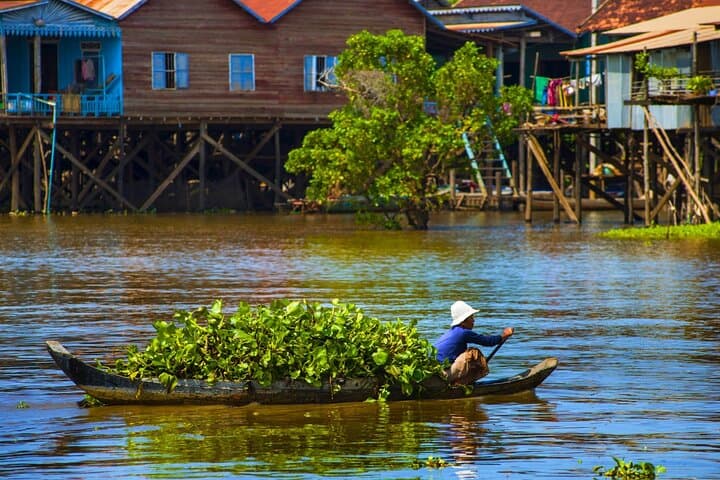
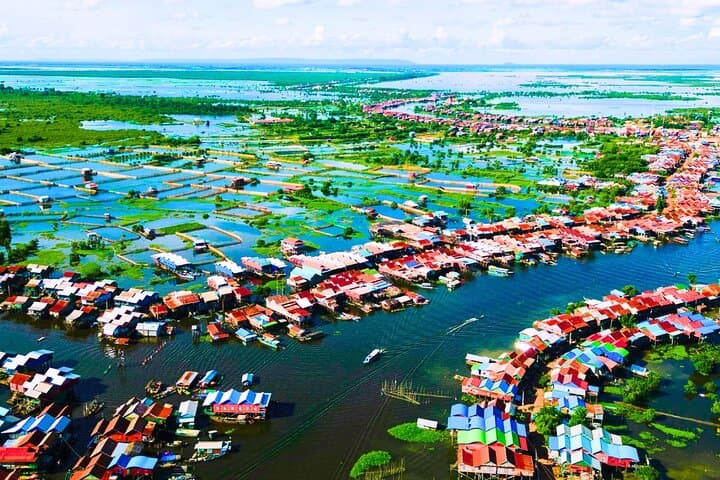
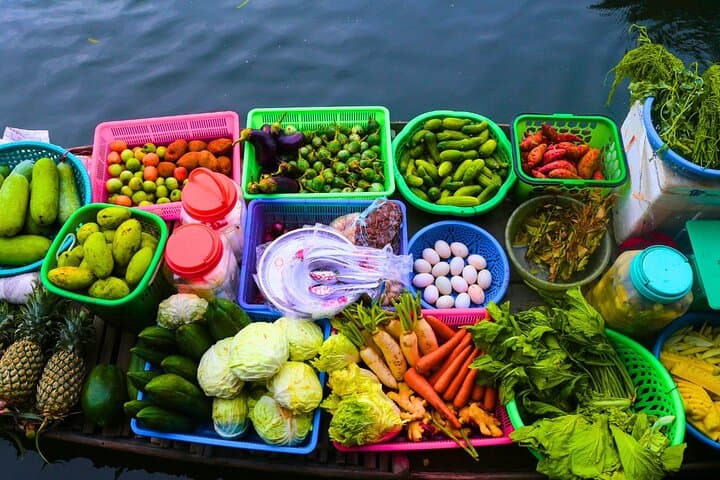
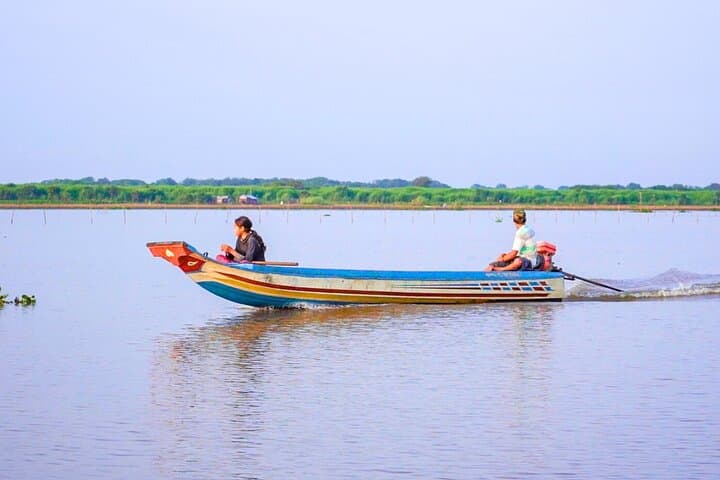
You step off Siem Reap’s tuk‑tuk onto a low wooden jetty and the lake immediately claims the sound—lapping boards, calling birds, the soft clack of oars. A longtail boat slips from the shore and takes you across Tonle Sap’s broad, changeable surface toward Chong Kneas, a settlement where homes, schools and markets rise and fall with the seasons.
You step off Siem Reap’s tuk‑tuk onto a low wooden jetty and the lake immediately claims the sound—lapping boards, calling birds, the soft clack of oars. A longtail boat slips from the shore and takes you across Tonle Sap’s broad, changeable surface toward Chong Kneas, a settlement where homes, schools and markets rise and fall with the seasons.
Tonle Sap is Southeast Asia’s largest freshwater lake, shaped by dramatic monsoon pulses that reverse the flow of rivers and expand wetlands for miles. That hydrology has defined the culture here: villagers build on stilts or floating platforms, and fishing techniques have evolved to match the lake’s rhythm. Geologically simple but ecologically rich, the lake supports large populations of migratory and resident birds; Prek Toal, upriver, is one of the region’s important bird sanctuaries.
Your guide will outline the village’s contemporary challenges—seasonal flooding, dwindling fish stocks, and economic shifts—while pointing out local trades, floating schools, and birdlife. Conversations with residents reveal practical adaptations rather than romantic myths: nets, pumps, and boats are daily technology.
Practical guidance: travel in the morning for calmer water and better light, bring sun protection and a light rain layer during the wet season, and keep interactions respectful—ask before photographing people’s homes. The half‑day private tour typically runs three hours and uses small boats and short walking on uneven docks; it’s accessible for most fitness levels. Expect wildlife glimpses, hands‑on cultural moments, and a clear picture of how humans and water coexist here.