THE ADVENTURE COLLECTIVE® · Independent discovery and booking for outdoor travel

A full‑day private drive from Siem Reap into Battambang’s rural heart: rice paddies, an 11th‑century temple, a rickety bamboo train and a bat‑filled sunset at Phnom Sampeau. Practical, immersive and ideal for travelers who want history and local life in one day.
A full‑day private drive from Siem Reap into Battambang’s rural heart: rice paddies, an 11th‑century temple, a rickety bamboo train and a bat‑filled sunset at Phnom Sampeau. Practical, immersive and ideal for travelers who want history and local life in one day.
Morning light slices through rice stalks as your SUV rolls west from Siem Reap, the road unspooling villages, water buffalo and patchwork paddies. The rhythm is slow—three hours of Cambodia’s countryside—punctuated by an 11th‑century temple, a noisy riverside market and the improbable rattle of the bamboo ‘norry’ as it leaps across a narrow track.
Verified experiences and guided adventures in the surrounding area.
Operated by Around Cambodia Travel · Battambang, Battambang Province
Morning light slices through rice stalks as your SUV rolls west from Siem Reap, the road unspooling villages, water buffalo and patchwork paddies. The rhythm is slow—three hours of Cambodia’s countryside—punctuated by an 11th‑century temple, a noisy riverside market and the improbable rattle of the bamboo ‘norry’ as it leaps across a narrow track.
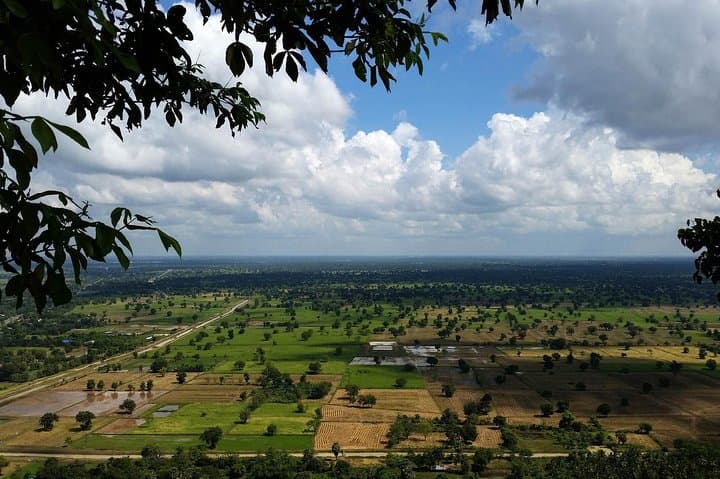
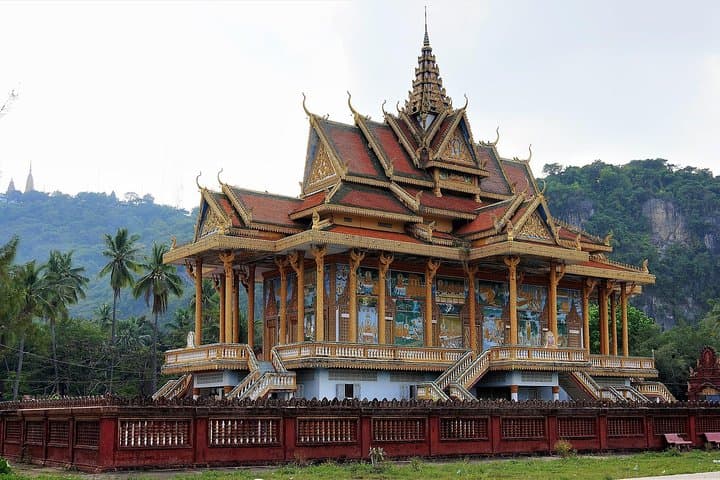
Battambang wears its history plainly: French colonial facades along the river, Khmer temples with laterite blocks and hilltop shrines where millions of bats gather at dusk. Geologically the region is lowland floodplain—silted soils fed by the Tonlé Sap system—so expect flat stretches broken by limestone outcrops at Phnom Banan and Phnom Sampeau.
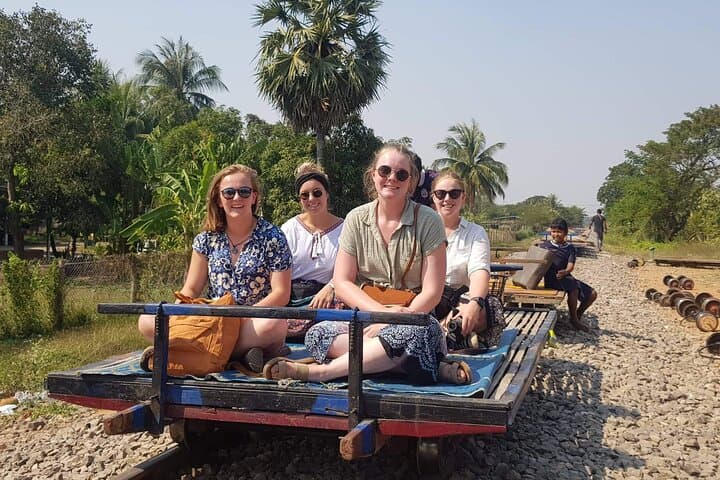
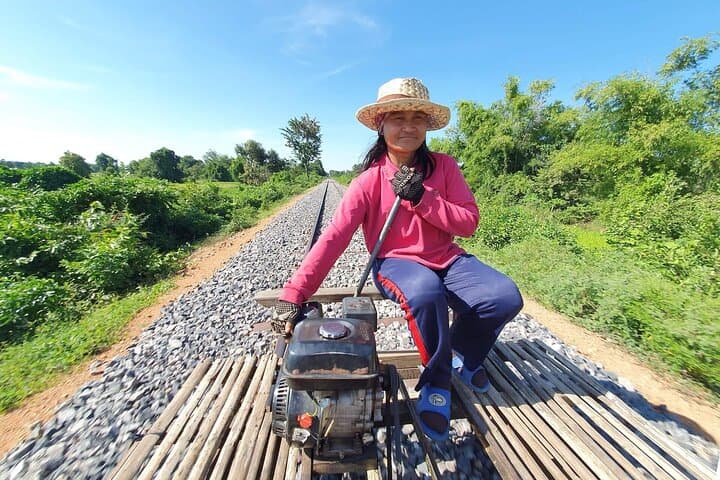
Culturally the day is both agricultural and artisanal. Markets are where the local pulse is fastest: fresh fish, fermented prahok pastes and grilled snacks. The bamboo train (norry) is a pragmatic invention that became a tourist ritual—simple, loud and oddly thrilling.
Practicalities: this private tour runs about 8–9 hours door‑to‑door with hotel pickup in Siem Reap; stops include Ek Phnom temple, Psa Nat market, waterfront colonial architecture, the bamboo train, a fishing village and Phnom Sampeau for the bat flight at sunset. Bring cash for snacks and incidental entry fees, wear good walking shoes for uneven temple stones, and time the day to reach Phnom Sampeau before dusk to watch bats pour from the cave.
Expect a full day of straightforward travel, layered history and memorable contrasts between rural life and riverfront colonial charm.
moderate.
8–9 hours.
Suitable for travelers with moderate fitness who can handle several short walks and a full day of travel
Expect about three hours each way depending on traffic and road conditions, making this an 8–9 hour round trip with stops.
The bamboo train is a low‑tech ride with open platforms—children should be supervised and remain seated; operators typically manage safety locally.
The tour price covers entry fees, water and cool towels; meals are not included so bring cash for lunch or buy food at market stops when offered.
This tour involves uneven surfaces and some steps at temples and viewpoints; it’s not recommended for travelers with significant mobility or spinal issues.
Battambang combines Khmer temple remains and 20th‑century French colonial architecture, reflecting periods of regional trade and administrative importance.
These lowland floodplains rely on seasonal water cycles; avoid littering at riverfronts and support local vendors to help sustain community livelihoods.
Around Cambodia Travel operates guided outdoor trips and adventures with an emphasis on safety, stewardship, and memorable experiences.
Morning light slices through rice stalks as your SUV rolls west from Siem Reap, the road unspooling villages, water buffalo and patchwork paddies. The rhythm is slow—three hours of Cambodia’s countryside—punctuated by an 11th‑century temple, a noisy riverside market and the improbable rattle of the bamboo ‘norry’ as it leaps across a narrow track.
Morning light slices through rice stalks as your SUV rolls west from Siem Reap, the road unspooling villages, water buffalo and patchwork paddies. The rhythm is slow—three hours of Cambodia’s countryside—punctuated by an 11th‑century temple, a noisy riverside market and the improbable rattle of the bamboo ‘norry’ as it leaps across a narrow track.
Battambang wears its history plainly: French colonial facades along the river, Khmer temples with laterite blocks and hilltop shrines where millions of bats gather at dusk. Geologically the region is lowland floodplain—silted soils fed by the Tonlé Sap system—so expect flat stretches broken by limestone outcrops at Phnom Banan and Phnom Sampeau.
Culturally the day is both agricultural and artisanal. Markets are where the local pulse is fastest: fresh fish, fermented prahok pastes and grilled snacks. The bamboo train (norry) is a pragmatic invention that became a tourist ritual—simple, loud and oddly thrilling.
Practicalities: this private tour runs about 8–9 hours door‑to‑door with hotel pickup in Siem Reap; stops include Ek Phnom temple, Psa Nat market, waterfront colonial architecture, the bamboo train, a fishing village and Phnom Sampeau for the bat flight at sunset. Bring cash for snacks and incidental entry fees, wear good walking shoes for uneven temple stones, and time the day to reach Phnom Sampeau before dusk to watch bats pour from the cave.
Expect a full day of straightforward travel, layered history and memorable contrasts between rural life and riverfront colonial charm.