THE ADVENTURE COLLECTIVE® · Independent discovery and booking for outdoor travel

Explore Angkor’s great temples, the waterfalls and sacred sites of Phnom Kulen, and the floating communities of Tonle Sap on a focused three-day tour. Expect early sunrises, uneven temple walks, and cultural insights from licensed guides.
Explore Angkor’s great temples, the waterfalls and sacred sites of Phnom Kulen, and the floating communities of Tonle Sap on a focused three-day tour. Expect early sunrises, uneven temple walks, and cultural insights from licensed guides.
Dawn arrives cool and humid on the plains around Siem Reap, and the silhouette of Angkor Wat cuts a steady line across the lotus-studded moat. On this three-day loop you move from shadowed causeways and carved stone faces to a sacred mountain where waterfalls push travelers toward clear pools, then down to a living lake where houses, schools and markets float.
Verified experiences and guided adventures in the surrounding area.
Operated by Peacock Asia Tours · Siem Reap, Siem Reap Province
Dawn arrives cool and humid on the plains around Siem Reap, and the silhouette of Angkor Wat cuts a steady line across the lotus-studded moat. On this three-day loop you move from shadowed causeways and carved stone faces to a sacred mountain where waterfalls push travelers toward clear pools, then down to a living lake where houses, schools and markets float.
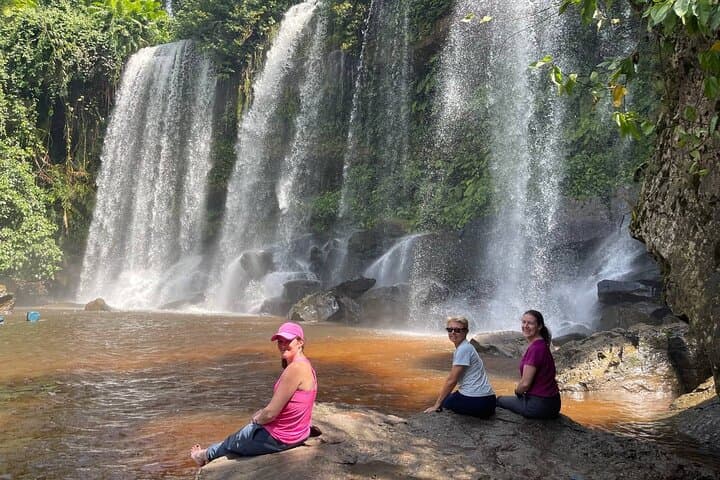
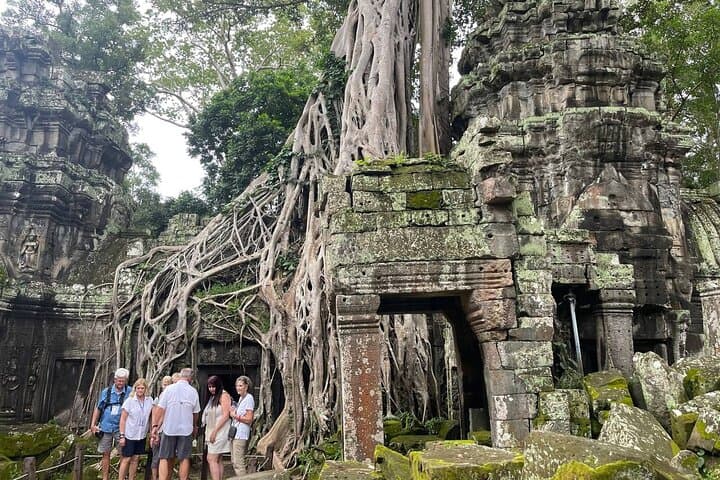
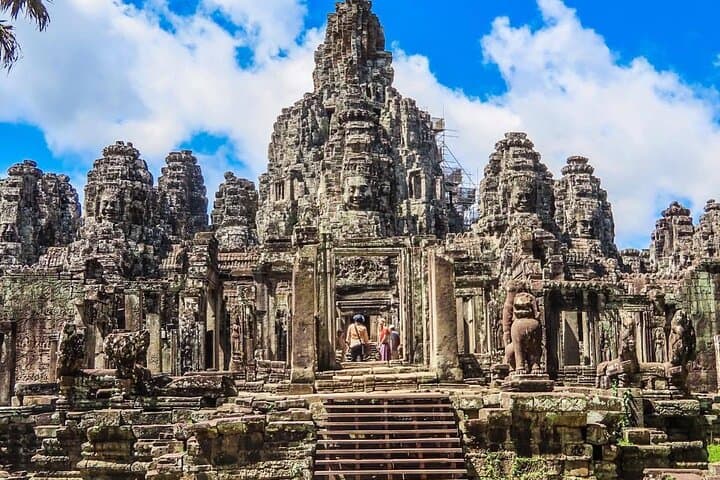
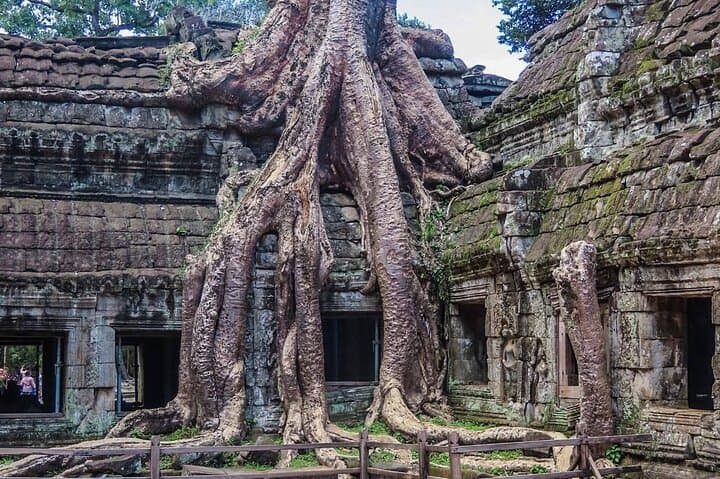
The itinerary threads together Khmer history and natural geology: Angkor Wat and Angkor Thom speak to the 12th-century zenith of the Khmer Empire, their sandstone blocks shaped by monsoon cycles. Phnom Kulen, an uplifted ridge at roughly 480 m, offers teak forest, reclining Buddhas carved into bedrock and the River of a Thousand Lingas—a deliberate blend of geology and devotion. Tonle Sap’s seasonal pulse swells with rain, reshaping life on floating villages.
Culture is immediate: licensed guides decode bas-reliefs, village visits reveal rice-season rhythms, and markets underscore how the lake sustains livelihoods. Practicalities steer the experience—Arrive for sunrise, carry the Angkor pass (USD 37 single day), and respect temple dress codes: knees and shoulders covered.
Expect mostly easy to moderate walking over uneven stone and forest paths, early mornings to catch light, and one to two short drives between sites. Bring breathable layers for heat, a small daypack for water and snacks, sturdy shoes for roots and steps, and a lightweight rain shell in wet months. With thoughtful pacing, this route balances the scale of Angkor’s monuments with quieter natural corners for a rounded picture of Cambodia’s cultural landscape.
moderate.
3 days.
Suitable for people who can walk 3–5 miles a day on uneven ground and climb temple stairs; ready for early mornings.
The Angkor pass is typically not included in this tour price; a single-day ticket is about USD 37 and should be purchased before entry.
Yes—private hotel pickup and drop-off in Siem Reap are included; confirm your pickup point when booking.
The tour is family-friendly but involves uneven terrain, stairs and early starts; those with limited mobility should consult the operator about specific site accessibility.
Yes—the itinerary includes a boat visit to a floating village and market; water levels and village access can vary seasonally.
These sites reflect the Khmer Empire’s architectural and hydraulic mastery between the 9th and 13th centuries, with Angkor Wat completed in the early 12th century.
Angkor Archaeological Park is managed to protect ruins and limit erosion; visitors are urged to follow paths, avoid climbing unrestored structures and support local guides to boost sustainable tourism.
Peacock Asia Tours operates guided outdoor trips and adventures with an emphasis on safety, stewardship, and memorable experiences.
Dawn arrives cool and humid on the plains around Siem Reap, and the silhouette of Angkor Wat cuts a steady line across the lotus-studded moat. On this three-day loop you move from shadowed causeways and carved stone faces to a sacred mountain where waterfalls push travelers toward clear pools, then down to a living lake where houses, schools and markets float.
Dawn arrives cool and humid on the plains around Siem Reap, and the silhouette of Angkor Wat cuts a steady line across the lotus-studded moat. On this three-day loop you move from shadowed causeways and carved stone faces to a sacred mountain where waterfalls push travelers toward clear pools, then down to a living lake where houses, schools and markets float.
The itinerary threads together Khmer history and natural geology: Angkor Wat and Angkor Thom speak to the 12th-century zenith of the Khmer Empire, their sandstone blocks shaped by monsoon cycles. Phnom Kulen, an uplifted ridge at roughly 480 m, offers teak forest, reclining Buddhas carved into bedrock and the River of a Thousand Lingas—a deliberate blend of geology and devotion. Tonle Sap’s seasonal pulse swells with rain, reshaping life on floating villages.
Culture is immediate: licensed guides decode bas-reliefs, village visits reveal rice-season rhythms, and markets underscore how the lake sustains livelihoods. Practicalities steer the experience—Arrive for sunrise, carry the Angkor pass (USD 37 single day), and respect temple dress codes: knees and shoulders covered.
Expect mostly easy to moderate walking over uneven stone and forest paths, early mornings to catch light, and one to two short drives between sites. Bring breathable layers for heat, a small daypack for water and snacks, sturdy shoes for roots and steps, and a lightweight rain shell in wet months. With thoughtful pacing, this route balances the scale of Angkor’s monuments with quieter natural corners for a rounded picture of Cambodia’s cultural landscape.