THE ADVENTURE COLLECTIVE® · Independent discovery and booking for outdoor travel

Watch Angkor Wat light up at dawn, then spend a private day exploring Angkor Thom, Ta Prohm, and the quieter Banteay Kdei with a local guide. This tour blends cultural history with practical logistics for a full-day temple experience.
Watch Angkor Wat light up at dawn, then spend a private day exploring Angkor Thom, Ta Prohm, and the quieter Banteay Kdei with a local guide. This tour blends cultural history with practical logistics for a full-day temple experience.
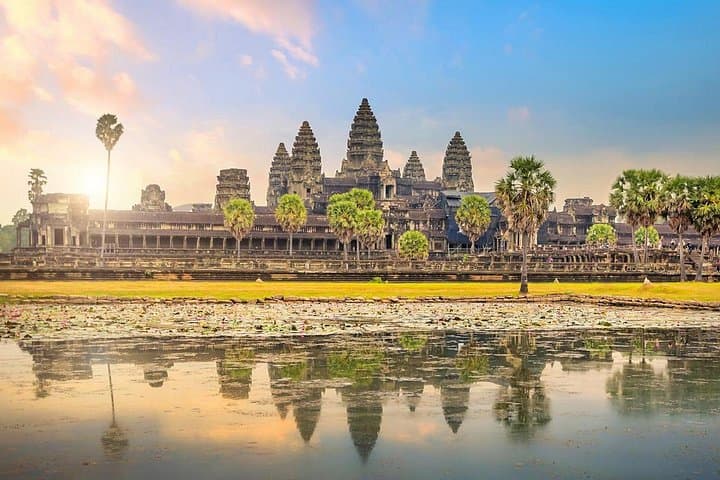
You arrive before dawn at the moat and reflection pools; the first pale light slides across the lotus-studded water and throws Angkor Wat’s central towers into silhouette. The air is humid and the stones smell faintly of moss. As the sun climbs, shadows reveal bas-reliefs and corridors where centuries of pilgrims have passed.
Verified experiences and guided adventures in the surrounding area.
Operated by Siemreapian Tourguide · Siem Reap, Siem Reap Province
You arrive before dawn at the moat and reflection pools; the first pale light slides across the lotus-studded water and throws Angkor Wat’s central towers into silhouette. The air is humid and the stones smell faintly of moss. As the sun climbs, shadows reveal bas-reliefs and corridors where centuries of pilgrims have passed.
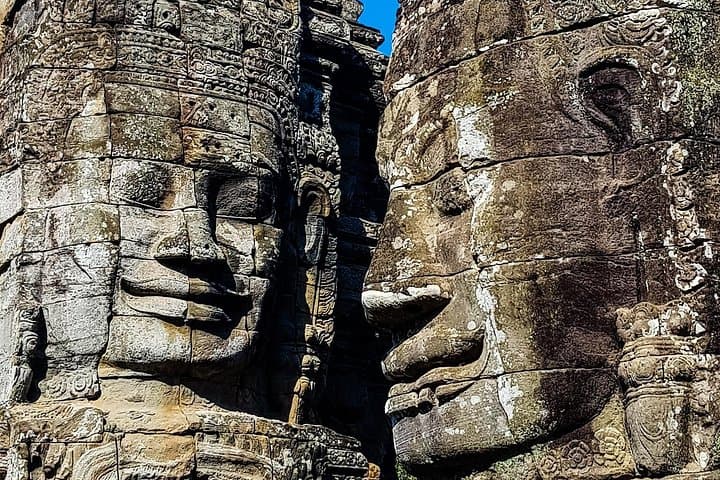
This full-day private tour moves from Angkor Wat to Angkor Thom’s Bayon, then through Ta Prohm’s root-locked galleries and onto the quieter Banteay Kdei. Angkor Wat was raised in the 12th century by Suryavarman II as a Hindu state temple and later became a Buddhist site; Angkor Thom and the Bayon are later Jayavarman VII-era works, known for carved faces and elephant terraces. The temples are built from sandstone and laterite; many blocks bear fine bas-reliefs that narrate Khmer cosmology and daily life.
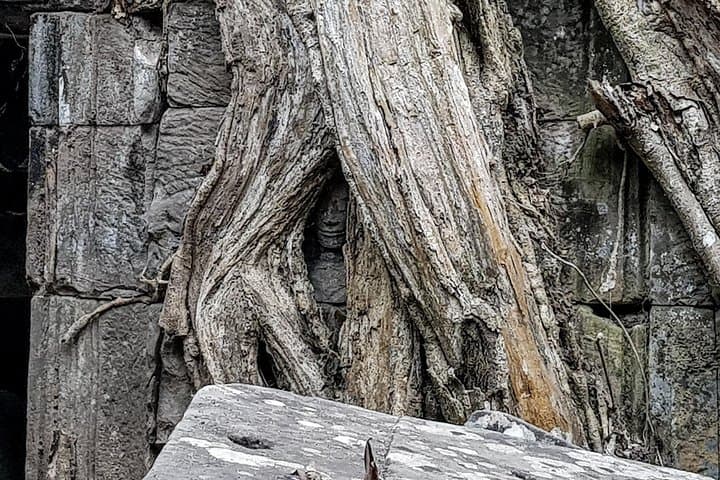
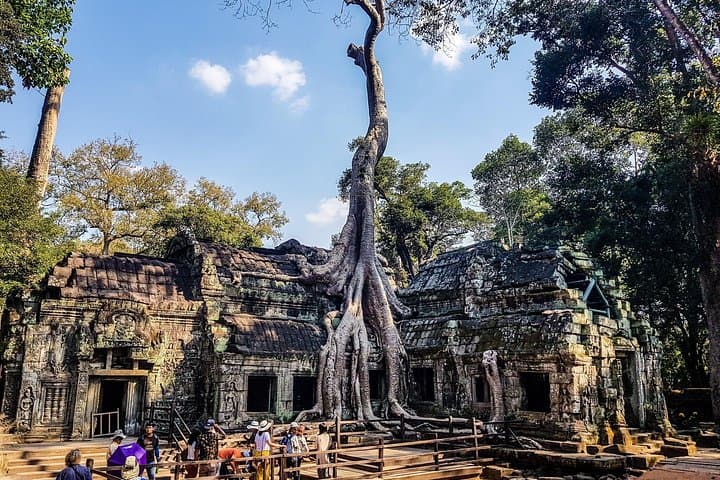
Locals still observe Buddhist rites at certain shrines, and early mornings are ideal for a monk blessing or a quieter photo. Expect uneven steps, long corridors, and pockets of jungle that push roots through stone; Ta Prohm keeps its arboreal character intentionally.
Practical guide: the Angkor pass is not included—buy at the ticket center. Wear clothing that covers shoulders and knees for temple entry, bring a refillable water bottle, and choose sturdy closed-toe shoes for uneven sandstone. Tours typically include AC transport, bottled water, and an English-speaking guide; plan for an 8-hour day with breaks and a midday lunch stop. Start before sunrise to avoid heat and crowds and keep small local currency for donations and snacks.
moderate.
8 hours.
Suitable for travelers who can walk 3–6 miles over uneven ground and climb steep temple steps intermittently.
No—entrance is not included. Purchase the Angkor pass at the official ticket center; options include 1-day, 3-day, or 7-day passes.
Yes—an English-speaking guide typically provides context on bas-reliefs, Khmer history, and temple architecture throughout the day.
Yes—there are public restrooms near main sites and restaurants around the complex; lunch is usually at your expense with local and tourist options available.
Generally yes—physical demands are light but involve walking on uneven surfaces and climbing stairs; inform the operator of mobility needs when booking.
Angkor was the political and religious heart of the Khmer Empire (9th–15th centuries); Angkor Wat was built in the early 12th century by Suryavarman II and later took on Buddhist significance.
Visitor numbers and humidity accelerate stone erosion; stick to marked paths, avoid touching bas-reliefs, and follow guide instructions to protect the structures.
Siemreapian Tourguide operates guided outdoor trips and adventures with an emphasis on safety, stewardship, and memorable experiences.
You arrive before dawn at the moat and reflection pools; the first pale light slides across the lotus-studded water and throws Angkor Wat’s central towers into silhouette. The air is humid and the stones smell faintly of moss. As the sun climbs, shadows reveal bas-reliefs and corridors where centuries of pilgrims have passed.
You arrive before dawn at the moat and reflection pools; the first pale light slides across the lotus-studded water and throws Angkor Wat’s central towers into silhouette. The air is humid and the stones smell faintly of moss. As the sun climbs, shadows reveal bas-reliefs and corridors where centuries of pilgrims have passed.
This full-day private tour moves from Angkor Wat to Angkor Thom’s Bayon, then through Ta Prohm’s root-locked galleries and onto the quieter Banteay Kdei. Angkor Wat was raised in the 12th century by Suryavarman II as a Hindu state temple and later became a Buddhist site; Angkor Thom and the Bayon are later Jayavarman VII-era works, known for carved faces and elephant terraces. The temples are built from sandstone and laterite; many blocks bear fine bas-reliefs that narrate Khmer cosmology and daily life.
Locals still observe Buddhist rites at certain shrines, and early mornings are ideal for a monk blessing or a quieter photo. Expect uneven steps, long corridors, and pockets of jungle that push roots through stone; Ta Prohm keeps its arboreal character intentionally.
Practical guide: the Angkor pass is not included—buy at the ticket center. Wear clothing that covers shoulders and knees for temple entry, bring a refillable water bottle, and choose sturdy closed-toe shoes for uneven sandstone. Tours typically include AC transport, bottled water, and an English-speaking guide; plan for an 8-hour day with breaks and a midday lunch stop. Start before sunrise to avoid heat and crowds and keep small local currency for donations and snacks.