THE ADVENTURE COLLECTIVE® · Independent discovery and booking for outdoor travel

Start before dawn to watch Angkor Wat emerge from shadow, then spend a private day exploring Angkor Thom, Bayon and Ta Prohm with an English-speaking guide. Expect uneven stone paths, a modest dress code, and an immersive cultural history delivered across 6–8 hours.
Start before dawn to watch Angkor Wat emerge from shadow, then spend a private day exploring Angkor Thom, Bayon and Ta Prohm with an English-speaking guide. Expect uneven stone paths, a modest dress code, and an immersive cultural history delivered across 6–8 hours.
You leave Siem Reap in the predawn hush, the van cutting through humidity and rice paddies while the silhouette of Angkor Wat remains a dark, distant promise. Arriving at the seldom-used eastern approach, you step off into shadow and follow a narrow, jungle-fringed path to the ancient north pool. The first light draws a thin gold line across the temple’s towers, and the stone slowly unravels into relief and detail.
Verified experiences and guided adventures in the surrounding area.
Operated by Journey2 Angkor · Siem Reap, Siem Reap
You leave Siem Reap in the predawn hush, the van cutting through humidity and rice paddies while the silhouette of Angkor Wat remains a dark, distant promise. Arriving at the seldom-used eastern approach, you step off into shadow and follow a narrow, jungle-fringed path to the ancient north pool. The first light draws a thin gold line across the temple’s towers, and the stone slowly unravels into relief and detail.
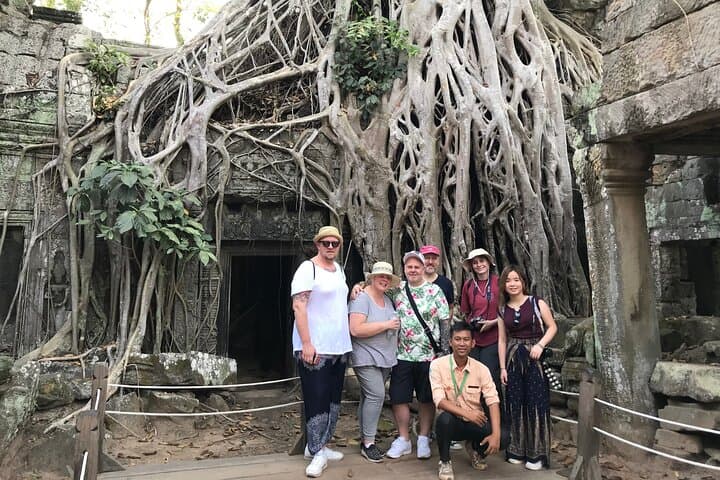
Angkor Wat was completed in the 12th century and remains the best-preserved monument of the Khmer empire. Your guide will read the bas-reliefs — a long historical scroll in stone — and explain the shift from Hindu to Buddhist use, the later city of Angkor Thom with its Bayon faces, and the jungle-entangled Ta Prohm where roots and ruins negotiate space. The region sits on sandstone and laterite foundations; seasonal water management shaped the landscape and fed the city for centuries.
Practically: expect 6–8 hours of walking over uneven temple stones, shallow stairs, and shaded paths. Wear modest clothing that covers shoulders and knees, flat shoes with good grip, and bring water, insect repellent, and a camera. The guide typically arranges an Angkor pass link in advance; booking a private tour before dawn avoids the largest crowds and the midday heat, and lets you linger in quieter corners like the north library pool or a tranquil Bayon terrace.
Respect active religious practice, do not climb on bas-reliefs, and budget time for a local breakfast or lunch at a simple Khmer eatery near the sites. Early starts reward you with light, space, and stories the stone still keeps.
easy.
6–8 hours.
Basic walking fitness required; able to handle several hours on uneven stone steps and short staircases.
No; the Angkor Pass is generally purchased separately—your guide will send a link ahead of time so you can buy it before arrival.
Dress that covers knees and shoulders is required. Lightweight, breathable fabrics and a sarong or shawl are practical in the heat.
Many temples have uneven steps and narrow walkways; while central areas are accessible, much of the complex is not fully wheelchair-friendly without assistance.
Yes; the itinerary includes a stop for breakfast or lunch at a local restaurant and toilets are available at major temple sites and the ticket center.
Angkor Wat was built in the early 12th century under King Suryavarman II; Angkor Thom and the Bayon are later 12th–13th century expressions of Jayavarman VII’s capital.
UNESCO protection highlights the need to limit visitor impact—avoid touching bas-reliefs, stay on paths, and carry out waste to help preserve the stone and surrounding forest.
Journey2 Angkor operates guided outdoor trips and adventures with an emphasis on safety, stewardship, and memorable experiences.
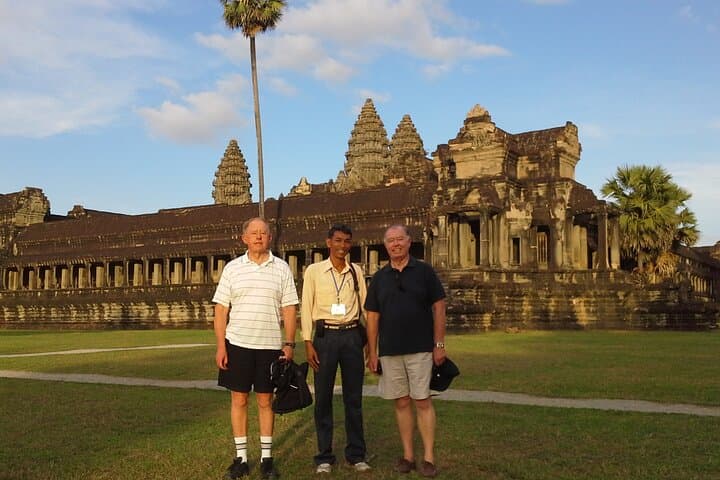

You leave Siem Reap in the predawn hush, the van cutting through humidity and rice paddies while the silhouette of Angkor Wat remains a dark, distant promise. Arriving at the seldom-used eastern approach, you step off into shadow and follow a narrow, jungle-fringed path to the ancient north pool. The first light draws a thin gold line across the temple’s towers, and the stone slowly unravels into relief and detail.
You leave Siem Reap in the predawn hush, the van cutting through humidity and rice paddies while the silhouette of Angkor Wat remains a dark, distant promise. Arriving at the seldom-used eastern approach, you step off into shadow and follow a narrow, jungle-fringed path to the ancient north pool. The first light draws a thin gold line across the temple’s towers, and the stone slowly unravels into relief and detail.
Angkor Wat was completed in the 12th century and remains the best-preserved monument of the Khmer empire. Your guide will read the bas-reliefs — a long historical scroll in stone — and explain the shift from Hindu to Buddhist use, the later city of Angkor Thom with its Bayon faces, and the jungle-entangled Ta Prohm where roots and ruins negotiate space. The region sits on sandstone and laterite foundations; seasonal water management shaped the landscape and fed the city for centuries.
Practically: expect 6–8 hours of walking over uneven temple stones, shallow stairs, and shaded paths. Wear modest clothing that covers shoulders and knees, flat shoes with good grip, and bring water, insect repellent, and a camera. The guide typically arranges an Angkor pass link in advance; booking a private tour before dawn avoids the largest crowds and the midday heat, and lets you linger in quieter corners like the north library pool or a tranquil Bayon terrace.
Respect active religious practice, do not climb on bas-reliefs, and budget time for a local breakfast or lunch at a simple Khmer eatery near the sites. Early starts reward you with light, space, and stories the stone still keeps.