THE ADVENTURE COLLECTIVE® · Independent discovery and booking for outdoor travel

Bike ancient sandstone galleries and jungle tracks around Angkor on a private full‑day tour. Expect repetitive photo stops, short walks through root‑choked gopuras, and a sunset at Pre Rup.
Bike ancient sandstone galleries and jungle tracks around Angkor on a private full‑day tour. Expect repetitive photo stops, short walks through root‑choked gopuras, and a sunset at Pre Rup.
You roll away from the ticket office with dust lifting behind your tires, early light slanting through giant figs and cracked sandstone. The track alternates between shaded jungle traces and wide dirt avenues as you thread past collapsed lintels and galleries draped in roots — each pedal stroke a short archaeology lesson set to bird calls.
Verified experiences and guided adventures in the surrounding area.
Operated by Naga Angkor Tour · Siem Reap, Siem Reap Province
You roll away from the ticket office with dust lifting behind your tires, early light slanting through giant figs and cracked sandstone. The track alternates between shaded jungle traces and wide dirt avenues as you thread past collapsed lintels and galleries draped in roots — each pedal stroke a short archaeology lesson set to bird calls.
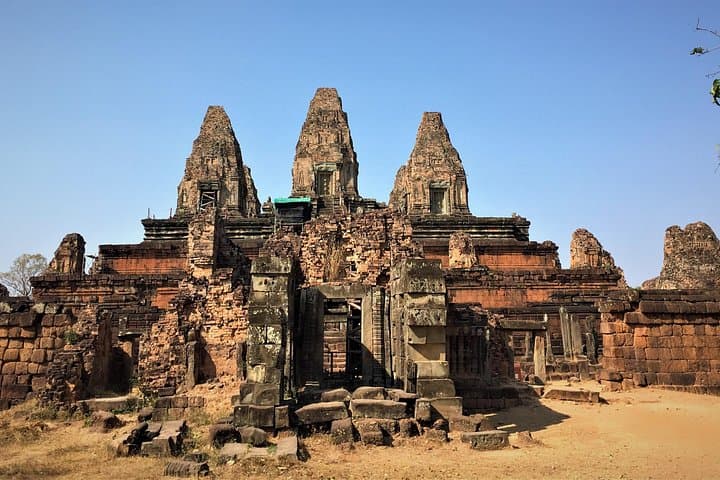
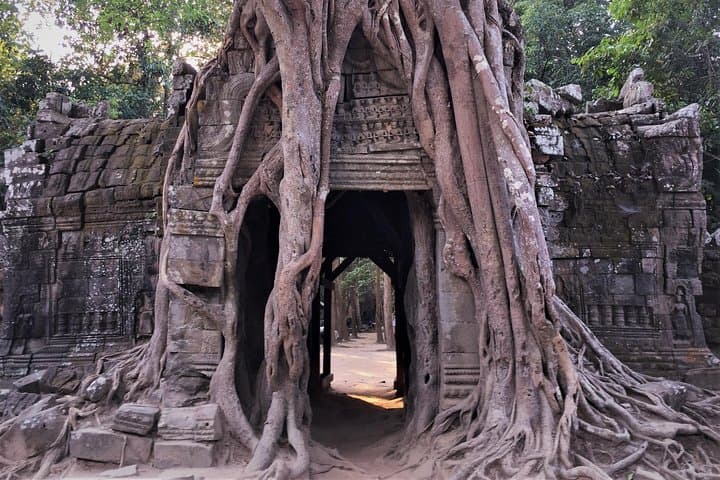
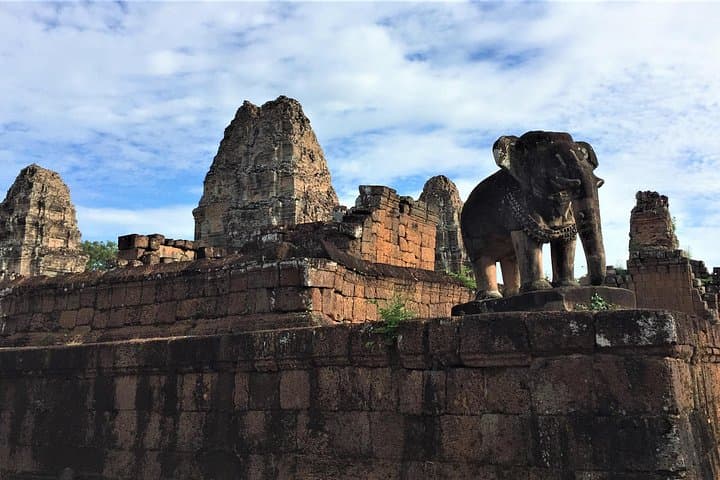
These ruins date largely to the Khmer empire of the 11th–13th centuries; many temples here are carved from sandstone and laterite quarried from the Kulen foothills and reassembled into geometric galleries, faces and pediments. The route links Preah Parilay and Preah Khan — a 12th‑century complex — then crosses the Jayatataka baray toward Neak Pean’s circular sanctuary, continues to Ta Som with its fig‑strangled gopura, and finishes at Pre Rup for a westering sunset.
Geologically flat and low‑lying, the area floods seasonally and the trail shifts from hard-packed roads to leaf‑strewn jungle tracks. Culturally, guide commentary tends to weave art history with local life — markets, rice fields and Khmer customs — giving context to the carved dancers and basin pools.
Practicalities: the full day covers roughly 20–30 km on mostly flat terrain with brief rough sections. Bring the Angkor pass and passport copy, sun protection, a refillable water bottle and light rain protection in the wet season. Expect repeated stops for photos, short walks inside ruins and pauses for cold water and fruit. The pacing is relaxed but plan for a 8–10 hour day with plenty of walking on temple grounds; comfortable shoes and steady bike handling will make the experience smooth.
moderate.
8–10 hours.
Comfortable cycling fitness for 20–30 km, able to handle light off‑road sections and repeated short walks inside ruins.
Yes — all visitors must purchase the Angkor Archaeological Park pass at the official ticket office; bring your passport and be prepared to have your photo taken.
Expect roughly 20–30 km over mostly flat terrain with occasional rougher jungle traces; riders of average fitness should be comfortable with rest stops included.
The operator usually provides tuk‑tuk support on muddy days and may alter the route to stick to main roads if needed; bring a rain jacket and confirm contingency plans with your guide.
This tour typically includes cold water and a light lunch, but Angkor pass fees are separate unless explicitly stated; verify inclusions before booking.
Many sites visited were reworked under King Jayavarman VII in the late 12th century, reflecting Buddhist and royal funerary functions alongside older Hindu layouts.
Seasonal visitor pressure and water table changes affect conservation; stick to paths, avoid climbing on fragile carvings and follow your guide’s conservation instructions.
Naga Angkor Tour operates guided outdoor trips and adventures with an emphasis on safety, stewardship, and memorable experiences.
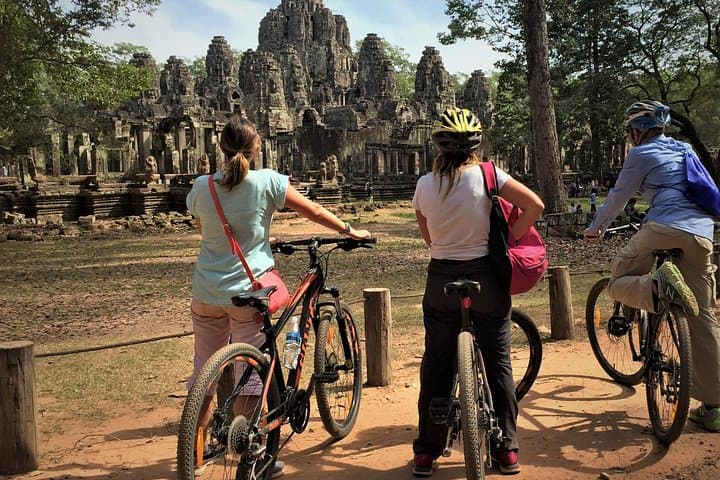
You roll away from the ticket office with dust lifting behind your tires, early light slanting through giant figs and cracked sandstone. The track alternates between shaded jungle traces and wide dirt avenues as you thread past collapsed lintels and galleries draped in roots — each pedal stroke a short archaeology lesson set to bird calls.
You roll away from the ticket office with dust lifting behind your tires, early light slanting through giant figs and cracked sandstone. The track alternates between shaded jungle traces and wide dirt avenues as you thread past collapsed lintels and galleries draped in roots — each pedal stroke a short archaeology lesson set to bird calls.
These ruins date largely to the Khmer empire of the 11th–13th centuries; many temples here are carved from sandstone and laterite quarried from the Kulen foothills and reassembled into geometric galleries, faces and pediments. The route links Preah Parilay and Preah Khan — a 12th‑century complex — then crosses the Jayatataka baray toward Neak Pean’s circular sanctuary, continues to Ta Som with its fig‑strangled gopura, and finishes at Pre Rup for a westering sunset.
Geologically flat and low‑lying, the area floods seasonally and the trail shifts from hard-packed roads to leaf‑strewn jungle tracks. Culturally, guide commentary tends to weave art history with local life — markets, rice fields and Khmer customs — giving context to the carved dancers and basin pools.
Practicalities: the full day covers roughly 20–30 km on mostly flat terrain with brief rough sections. Bring the Angkor pass and passport copy, sun protection, a refillable water bottle and light rain protection in the wet season. Expect repeated stops for photos, short walks inside ruins and pauses for cold water and fruit. The pacing is relaxed but plan for a 8–10 hour day with plenty of walking on temple grounds; comfortable shoes and steady bike handling will make the experience smooth.