THE ADVENTURE COLLECTIVE® · Independent discovery and booking for outdoor travel

Join a short, intimate water blessing at a local Siem Reap monastery where monks chant and pour blessed water in a ritual meant to confer protection and good fortune. This private visit combines cultural context with simple, hands-on ceremony—perfect for travelers seeking an authentic local experience.
Join a short, intimate water blessing at a local Siem Reap monastery where monks chant and pour blessed water in a ritual meant to confer protection and good fortune. This private visit combines cultural context with simple, hands-on ceremony—perfect for travelers seeking an authentic local experience.
You arrive at a low, ochre brick gate just outside Siem Reap and the city noise eases—only the hushed rustle of palm fronds and the distant call of vendors remain. Inside the monastery courtyard, saffron-robed monks form neat ranks; their chanting is even, a human tide that rises and falls as ritual water is held aloft and then gently poured.
Verified experiences and guided adventures in the surrounding area.
Operated by Cambodia Voluntour - Day Tours · Siem Reap, Siem Reap Province
You arrive at a low, ochre brick gate just outside Siem Reap and the city noise eases—only the hushed rustle of palm fronds and the distant call of vendors remain. Inside the monastery courtyard, saffron-robed monks form neat ranks; their chanting is even, a human tide that rises and falls as ritual water is held aloft and then gently poured.
The water blessing is an ancient Khmer practice linked to Theravada Buddhism, intended to confer protection, long life and safe travel. Siem Reap sits in the Tonle Sap–Mekong watershed; water here is not just a physical element but a seasonal force that shaped settlement patterns and the carved sandstone temples nearby. Monasteries have been community anchors for centuries—places of learning, ceremony and local governance as much as prayer.
Expect two parts: a short chant and sprinkle, then a more formal pouring where you change into a provided sarong or kroma to keep clothing dry. A red string bracelet is tied at the end as a keepsake. Guides often explain the meaning of chants and etiquette; donations support the monks’ daily needs.
Practically: allow 1–4 hours for pickup, visit and return; modest dress is required, shoulders and knees covered. Photography is usually permitted but ask before close shots of monks. Morning ceremonies avoid the heat; midday can be intense during the dry season. Mobility is easy but the experience is not recommended for people with serious back or heart conditions, or for pregnant visitors.
Bring respect, a small cash donation, and curiosity—this is a short cultural rite that connects travelers to local faith and seasonal life in Cambodia.
easy.
1–4 hours.
Minimal physical exertion; suitable for most travelers but those with spine or heart issues should skip.
A ritual in which monks chant and sprinkle or pour blessed water to convey protection, well-being, and good fortune; it’s a short ceremony open to visitors.
Yes, but infants must sit on an adult’s lap and the group recommends discretion; the ritual is gentle and suitable for all ages.
Photography is generally allowed, but always ask the monk or guide first and avoid intruding during close-up ritual moments.
Not recommended for those with serious back, heart conditions, or pregnant visitors; the supplier lists these precautions for safety.
Monasteries in the Siem Reap region have long been spiritual and communal centers since Angkorian times, evolving into modern hubs for education and ritual under Theravada Buddhism.
Respect temple grounds by avoiding single-use plastics and leaving no offerings that harm local flora; donations help maintain the site and support monk-led community programs.
Cambodia Voluntour - Day Tours operates guided outdoor trips and adventures with an emphasis on safety, stewardship, and memorable experiences.
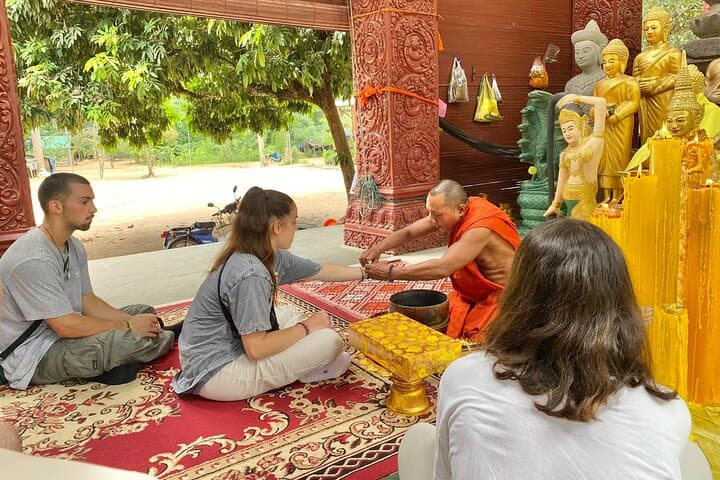
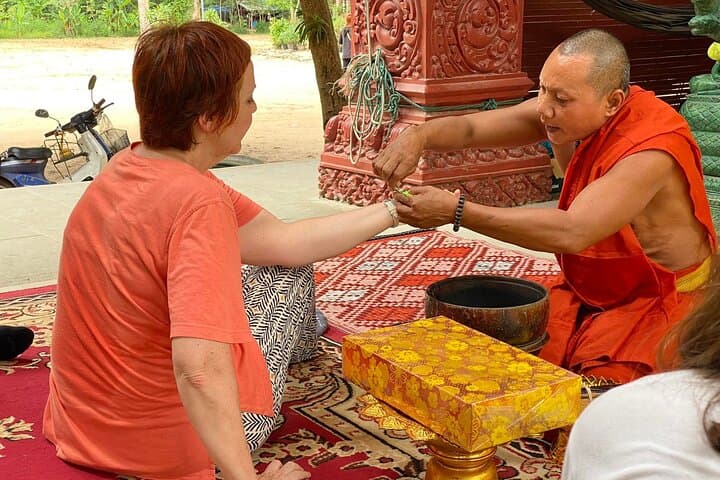
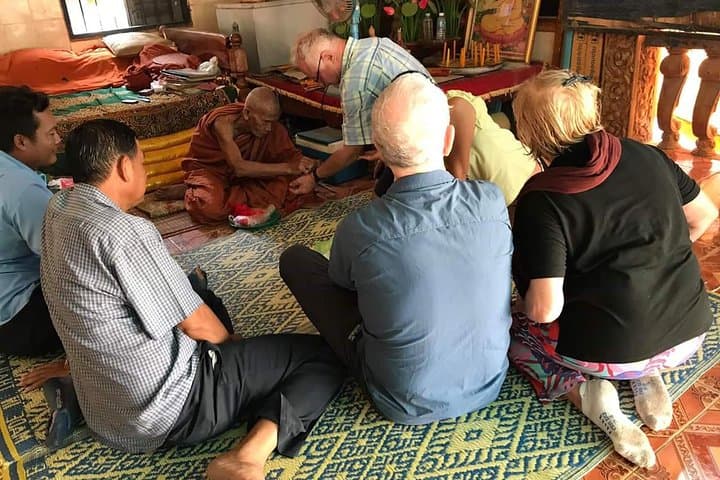
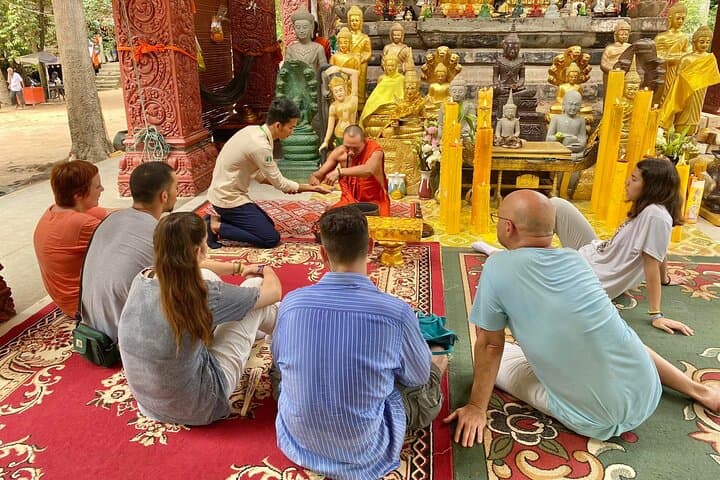
You arrive at a low, ochre brick gate just outside Siem Reap and the city noise eases—only the hushed rustle of palm fronds and the distant call of vendors remain. Inside the monastery courtyard, saffron-robed monks form neat ranks; their chanting is even, a human tide that rises and falls as ritual water is held aloft and then gently poured.
You arrive at a low, ochre brick gate just outside Siem Reap and the city noise eases—only the hushed rustle of palm fronds and the distant call of vendors remain. Inside the monastery courtyard, saffron-robed monks form neat ranks; their chanting is even, a human tide that rises and falls as ritual water is held aloft and then gently poured.
The water blessing is an ancient Khmer practice linked to Theravada Buddhism, intended to confer protection, long life and safe travel. Siem Reap sits in the Tonle Sap–Mekong watershed; water here is not just a physical element but a seasonal force that shaped settlement patterns and the carved sandstone temples nearby. Monasteries have been community anchors for centuries—places of learning, ceremony and local governance as much as prayer.
Expect two parts: a short chant and sprinkle, then a more formal pouring where you change into a provided sarong or kroma to keep clothing dry. A red string bracelet is tied at the end as a keepsake. Guides often explain the meaning of chants and etiquette; donations support the monks’ daily needs.
Practically: allow 1–4 hours for pickup, visit and return; modest dress is required, shoulders and knees covered. Photography is usually permitted but ask before close shots of monks. Morning ceremonies avoid the heat; midday can be intense during the dry season. Mobility is easy but the experience is not recommended for people with serious back or heart conditions, or for pregnant visitors.
Bring respect, a small cash donation, and curiosity—this is a short cultural rite that connects travelers to local faith and seasonal life in Cambodia.