THE ADVENTURE COLLECTIVE® · Independent discovery and booking for outdoor travel

Glide past Buddhist lotuses on a wooden boat, watch fibers pulled from stems, then make three heirloom items using ancient Khmer techniques. This 2.5-hour tour pairs a calm lake trip with hands-on workshops and supports a UNESCO-recognized social enterprise.
Glide past Buddhist lotuses on a wooden boat, watch fibers pulled from stems, then make three heirloom items using ancient Khmer techniques. This 2.5-hour tour pairs a calm lake trip with hands-on workshops and supports a UNESCO-recognized social enterprise.
Early morning light slants across a shallow lake; lotus pads ride a mute current while wooden boats part the blooms and a guide points to a cluster of white flowers bending like small lanterns.
Verified experiences and guided adventures in the surrounding area.
Operated by Lotus Silk Farm · Siem Reap, Siem Reap Province
Early morning light slants across a shallow lake; lotus pads ride a mute current while wooden boats part the blooms and a guide points to a cluster of white flowers bending like small lanterns.
This 2.5-hour immersion begins at a social enterprise that revived a 1,000-year-old Khmer textile: lotus silk. Recognized by UNESCO for cultural preservation, the project has rebuilt craft chains and supports more than 150 women artisans. Geologically the area is lowland floodplain—sediment-rich flats that feed Tonle Sap and create the shallow wetlands where lotus thrives. Culturally, the lotus carries Buddhist symbolism of purity and renewal; here, its stems are raw material, seeds become jewelry, and petals steep into tea.
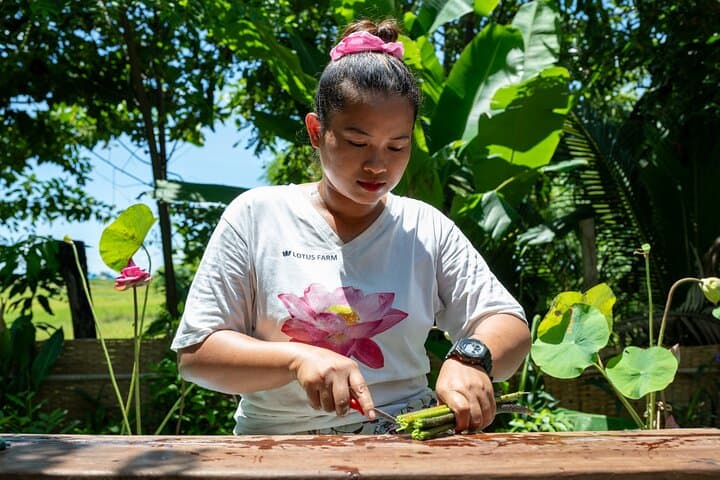
Expect a 30-minute production tour to watch fibers extracted from stems, a calm 30-minute boat glide through dense lotus fields with chances to disembark at shallow banks, and an hour of guided workshops where you make paper, spin fiber into yarn, and craft a seed bracelet. A short tea ceremony closes the visit.
Practical notes: plan on light walking and occasional low-boarding boats; the site provides shade but bring sun protection and insect repellent. The operation runs multiple daily shuttles from downtown Siem Reap—arrive five minutes early. Workshops are hands-on and accessible to most ages, but wear shoes that can get damp and carry a small dry bag for valuables. Purchases directly support the artisans and a circular, zero-waste production model—leave with both a handmade keepsake and a better sense of how rare lotus silk reaches luxury houses.
easy.
2–3 hours.
Suitable for most fitness levels; requires short, easy walks and stable boat boarding.
Round-trip shuttle from Biolab Café in downtown Siem Reap is included; arrive five minutes before your scheduled departure.
Yes — the site notes wheelchair accessibility, though assistance may be needed for boat boarding.
Yes; workshops are family-friendly but younger children may need help with delicate tasks like spinning and paper pressing.
Yes — a boutique sells lotus silk textiles, jewelry, and paper produced by the artisan collective.
The farm revived a nearly lost Khmer technique for spinning lotus fiber and received a UNESCO award in 2012 for cultural preservation.
The enterprise practices full-plant utilization and zero-waste production while providing stable income for local women artisans, reducing pressures for extractive livelihoods.
Lotus Silk Farm operates guided outdoor trips and adventures with an emphasis on safety, stewardship, and memorable experiences.
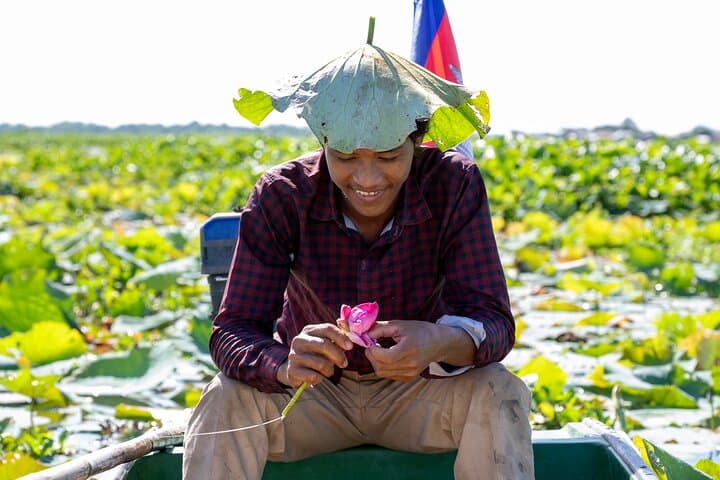
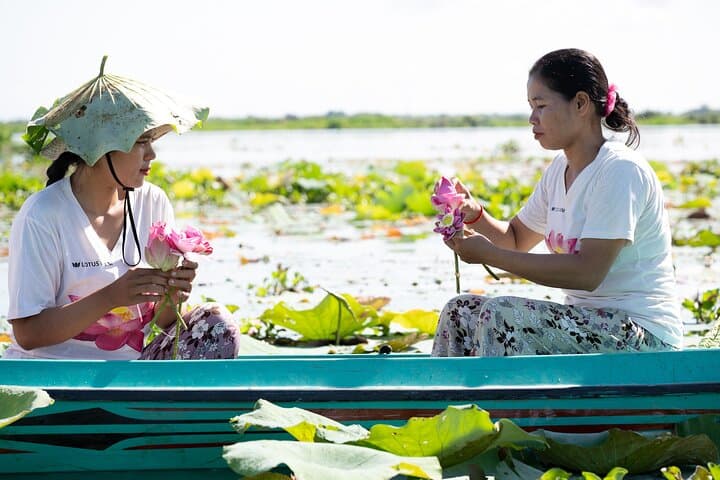
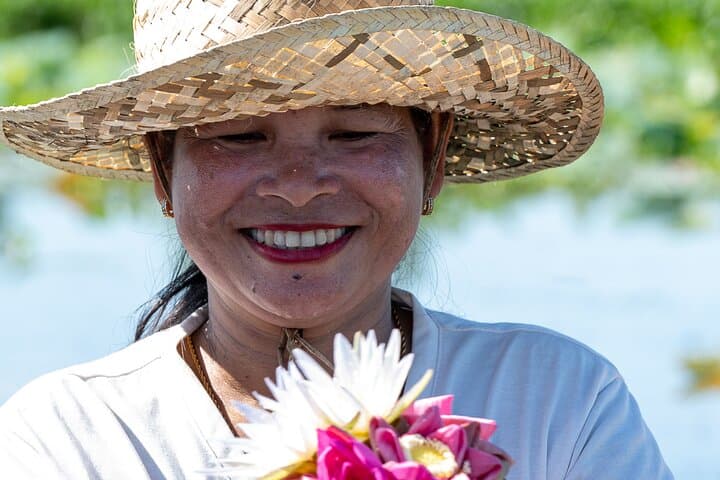
Early morning light slants across a shallow lake; lotus pads ride a mute current while wooden boats part the blooms and a guide points to a cluster of white flowers bending like small lanterns.
Early morning light slants across a shallow lake; lotus pads ride a mute current while wooden boats part the blooms and a guide points to a cluster of white flowers bending like small lanterns.
This 2.5-hour immersion begins at a social enterprise that revived a 1,000-year-old Khmer textile: lotus silk. Recognized by UNESCO for cultural preservation, the project has rebuilt craft chains and supports more than 150 women artisans. Geologically the area is lowland floodplain—sediment-rich flats that feed Tonle Sap and create the shallow wetlands where lotus thrives. Culturally, the lotus carries Buddhist symbolism of purity and renewal; here, its stems are raw material, seeds become jewelry, and petals steep into tea.
Expect a 30-minute production tour to watch fibers extracted from stems, a calm 30-minute boat glide through dense lotus fields with chances to disembark at shallow banks, and an hour of guided workshops where you make paper, spin fiber into yarn, and craft a seed bracelet. A short tea ceremony closes the visit.
Practical notes: plan on light walking and occasional low-boarding boats; the site provides shade but bring sun protection and insect repellent. The operation runs multiple daily shuttles from downtown Siem Reap—arrive five minutes early. Workshops are hands-on and accessible to most ages, but wear shoes that can get damp and carry a small dry bag for valuables. Purchases directly support the artisans and a circular, zero-waste production model—leave with both a handmade keepsake and a better sense of how rare lotus silk reaches luxury houses.