THE ADVENTURE COLLECTIVE® · Independent discovery and booking for outdoor travel

A long day from Siem Reap takes you to two remote Khmer sites: cliff‑top Preah Vihear and the pyramid complex of Koh Ker. Expect dusty roads, carved stone, and an immersive look at a restless chapter of the Khmer Empire.
A long day from Siem Reap takes you to two remote Khmer sites: cliff‑top Preah Vihear and the pyramid complex of Koh Ker. Expect dusty roads, carved stone, and an immersive look at a restless chapter of the Khmer Empire.
You stand at dawn on the two-lane road leaving Siem Reap, the highway unspooling toward the Dângrêk Mountains. The truck climbs, and palms and scrub give way to sandstone cliffs; the air sharpens with dust and distant chanting from village pagodas. Atop a 525‑meter escarpment, Preah Vihear’s tiers rise like a cluster of carved stones daring you to step closer.
Verified experiences and guided adventures in the surrounding area.
Operated by Day Trip Cambodia · Siem Reap, Siem Reap Province
You stand at dawn on the two-lane road leaving Siem Reap, the highway unspooling toward the Dângrêk Mountains. The truck climbs, and palms and scrub give way to sandstone cliffs; the air sharpens with dust and distant chanting from village pagodas. Atop a 525‑meter escarpment, Preah Vihear’s tiers rise like a cluster of carved stones daring you to step closer.
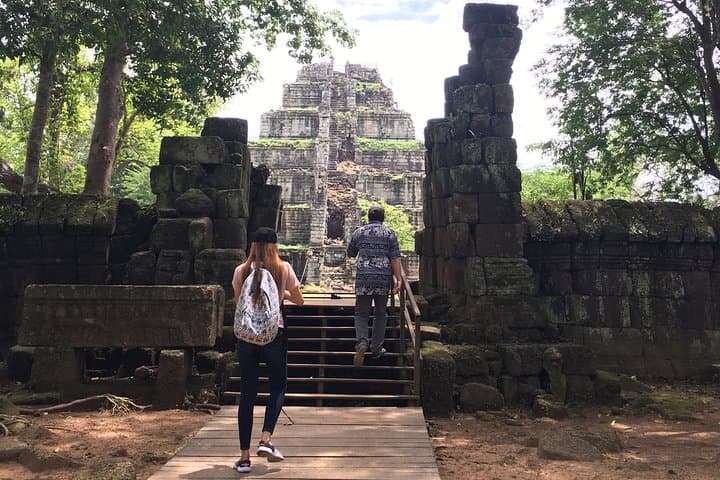
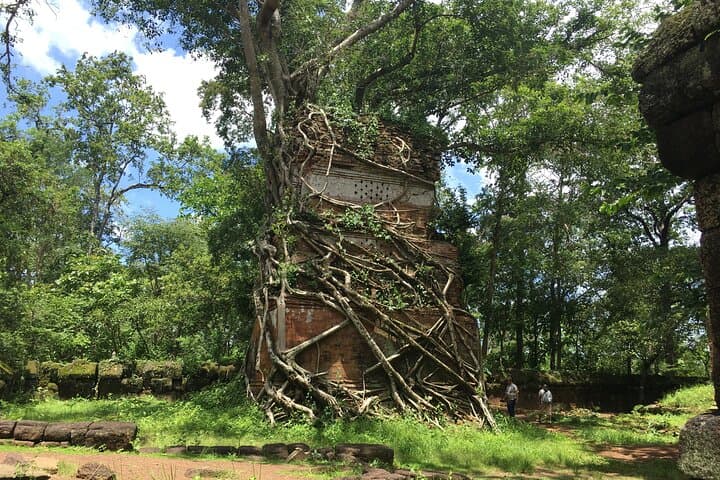
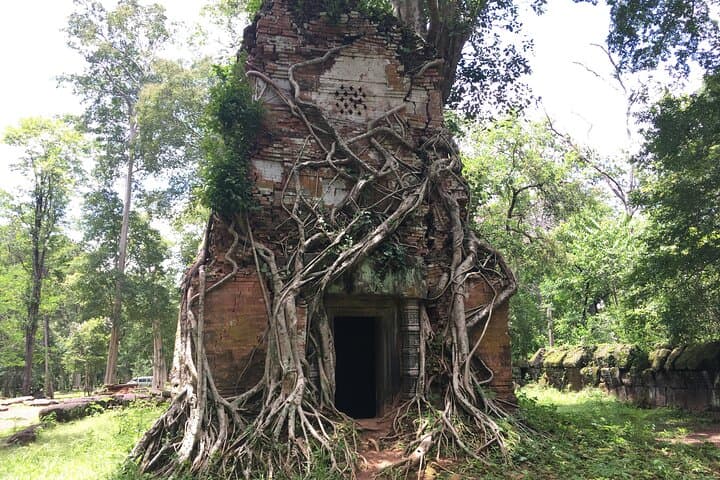
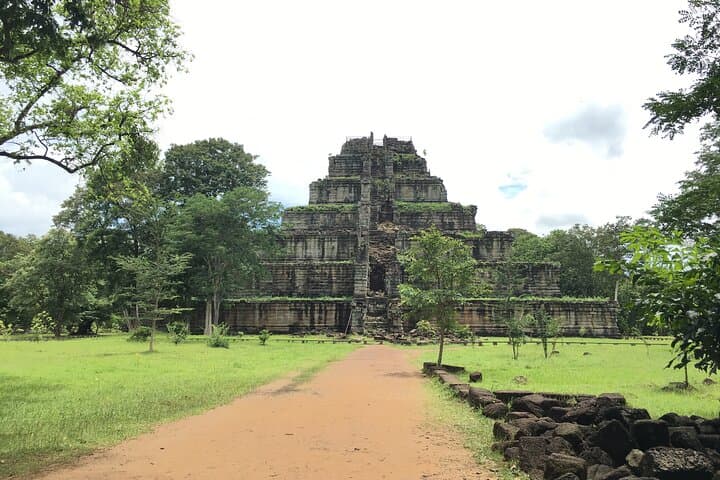
Both sites are chapters in the Khmer Empire’s restless century of building. Preah Vihear, perched on a border ridge, was shaped by politics and pilgrimage — stone lintels still record ritual life and territorial claims. Koh Ker, briefly the empire’s capital after 928 CE under Jayavarman IV, surprises with a seven‑tiered pyramid (Prasat Thom) and spread‑out ruins that read like a city plan frozen in jungle bloom.
Geology here is straightforward: hard sandstone beds split into platforms, steps and steep approaches; erosion and tropical growth expose carved faces and laterite foundations. Local culture is present in small shrines, roadside markets, and the practiced efficiency of guides who handle permits and truck transfers.
Practicalities: expect a long day (9–12 hours) leaving Siem Reap early. Tickets for Preah Vihear are purchased at the base; an open‑back truck or short hike gains the summit. Wear sturdy shoes for uneven stone and hot sun, bring cash for entrance fees and snacks, and carry ID—border checkpoints are nearby. Water, sun protection, and patience for rural roads make the difference between a rushed visit and a full, quiet day among one of Cambodia’s more remote sets of monuments.
moderate.
9–12 hours.
Comfortable with long car transfers and short hikes on uneven, stepped terrain; able to climb several dozen stone steps.
No—this operator notes admission is not included; tickets for Preah Vihear are purchased at the ticket booth near the access road.
Plan for roughly 2–3 hours to Preah Vihear’s ticket booth depending on traffic and road conditions, plus additional drive time to Koh Ker; the full tour is 9–12 hours.
The tour is marketed as suitable for all fitness levels, but temple platforms and steep approaches can be challenging for limited mobility; vehicles and short hikes are used to reduce exertion.
Bring your passport for border‑area checkpoints; visas for Cambodia should be arranged beforehand if required by your nationality.
Koh Ker served briefly as the Khmer capital under Jayavarman IV in 928 CE; Preah Vihear’s hilltop temples reflect centuries of religious and territorial significance along the Dângrêk frontier.
These sandstone monuments are vulnerable to erosion and visitor wear; follow marked paths, avoid touching carvings, and carry out litter to reduce impact.
Day Trip Cambodia operates guided outdoor trips and adventures with an emphasis on safety, stewardship, and memorable experiences.
You stand at dawn on the two-lane road leaving Siem Reap, the highway unspooling toward the Dângrêk Mountains. The truck climbs, and palms and scrub give way to sandstone cliffs; the air sharpens with dust and distant chanting from village pagodas. Atop a 525‑meter escarpment, Preah Vihear’s tiers rise like a cluster of carved stones daring you to step closer.
You stand at dawn on the two-lane road leaving Siem Reap, the highway unspooling toward the Dângrêk Mountains. The truck climbs, and palms and scrub give way to sandstone cliffs; the air sharpens with dust and distant chanting from village pagodas. Atop a 525‑meter escarpment, Preah Vihear’s tiers rise like a cluster of carved stones daring you to step closer.
Both sites are chapters in the Khmer Empire’s restless century of building. Preah Vihear, perched on a border ridge, was shaped by politics and pilgrimage — stone lintels still record ritual life and territorial claims. Koh Ker, briefly the empire’s capital after 928 CE under Jayavarman IV, surprises with a seven‑tiered pyramid (Prasat Thom) and spread‑out ruins that read like a city plan frozen in jungle bloom.
Geology here is straightforward: hard sandstone beds split into platforms, steps and steep approaches; erosion and tropical growth expose carved faces and laterite foundations. Local culture is present in small shrines, roadside markets, and the practiced efficiency of guides who handle permits and truck transfers.
Practicalities: expect a long day (9–12 hours) leaving Siem Reap early. Tickets for Preah Vihear are purchased at the base; an open‑back truck or short hike gains the summit. Wear sturdy shoes for uneven stone and hot sun, bring cash for entrance fees and snacks, and carry ID—border checkpoints are nearby. Water, sun protection, and patience for rural roads make the difference between a rushed visit and a full, quiet day among one of Cambodia’s more remote sets of monuments.