THE ADVENTURE COLLECTIVE® · Independent discovery and booking for outdoor travel

Spend a day between Tonle Sap’s floating village and the solemn grounds of Wat Thmey, then close with an Apsara dance and dinner. This full‑day tour combines living culture, recent history, and hands-on artisan visits for a compact view of Siem Reap beyond the temples.
Spend a day between Tonle Sap’s floating village and the solemn grounds of Wat Thmey, then close with an Apsara dance and dinner. This full‑day tour combines living culture, recent history, and hands-on artisan visits for a compact view of Siem Reap beyond the temples.
Morning light skims the shallow brown of Tonle Sap as a longtail slips away from Siem Reap’s riverbank — wooden houses drift on bamboo stilts, children wave from narrow decks, and the lake itself seems to breathe. The day unfolds between two very different faces of Cambodia: the living, waterborne communities of Chong Kneas and the quiet, stark memorials at Wat Thmey.
Verified experiences and guided adventures in the surrounding area.
Operated by Bayon Tabi Tour · Siem Reap, Siem Reap Province
Morning light skims the shallow brown of Tonle Sap as a longtail slips away from Siem Reap’s riverbank — wooden houses drift on bamboo stilts, children wave from narrow decks, and the lake itself seems to breathe. The day unfolds between two very different faces of Cambodia: the living, waterborne communities of Chong Kneas and the quiet, stark memorials at Wat Thmey.
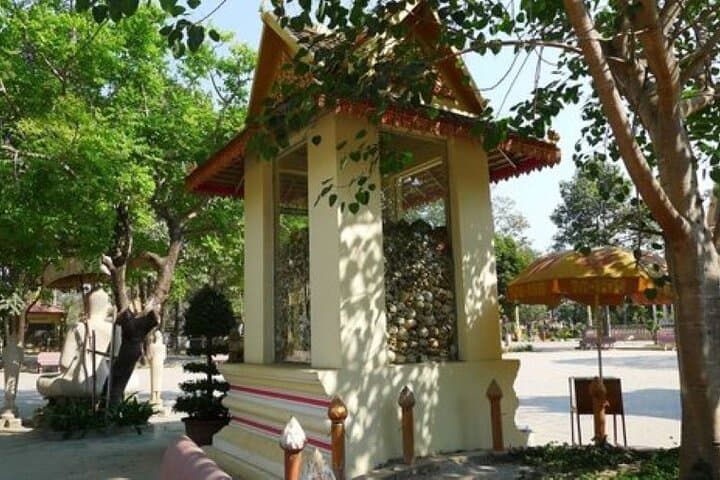
History is close to the surface here. Wat Thmey (the Killing Field) is a somber stop that documents the Khmer Rouge’s recent trauma; nearby, Chong Kneas demonstrates how the lake’s seasonal pulse shapes livelihoods. Geologically Tonle Sap is unique in Southeast Asia — a shallow inland sea that expands tenfold in the wet season and forces houses, markets, and rice fields to adapt.
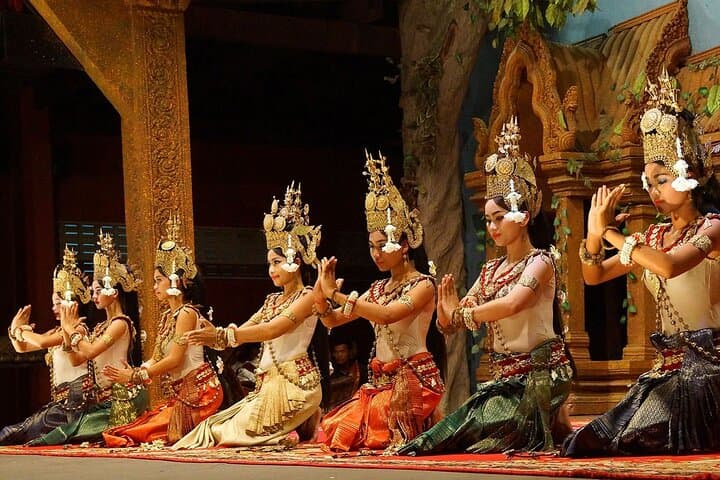
Culture threads through the itinerary: SATCHA workshops revive traditional crafts, local markets hum with traded spices and textiles, and an evening Apsara dance pairs classical choreography with a dinner that frames myth and court ritual.
Practical guidance: plan for long stretches in open sun and occasionally bumpy boat rides; respect memorial etiquette at Wat Thmey (quiet, no flash photography in sensitive areas), carry potable water, and keep small bills for entrance fees and local purchases. Timing matters — a dry-season visit gives easier boat access and clearer pathways, while the wet season reveals the lake’s full scale and floating markets.
This full-day loop is straightforward but emotionally varied: expect reflective moments at the memorial, lively exchanges at the floating village, hands-on craft demonstrations, and a ceremonial close with Apsara performance.
easy.
6–8 hours.
Suitable for most fitness levels — involves short walks, boat rides, and standing during market stops.
Operators use stable longtail boats; children should wear life jackets when provided and be supervised, especially near narrow docks.
The site is a serious historical memorial with graphic content; parents should assess suitability for young children and follow guide guidance.
Most tours can accommodate common restrictions with advance notice; indicate allergies or preferences at booking.
Walking is light — short strolls at the floating village, flat paths at SATCHA, and paved/short paths at Wat Thmey — but expect standing during visits and transfers.
Tonle Sap’s seasonal flood pulse shaped centuries of Cambodian settlement; Wat Thmey marks one of the region’s poignant modern tragedies from the Khmer Rouge era.
Tourism impacts fragile lake ecology and floating communities; support local artisans, avoid single‑use plastics, and follow guides’ rules to minimize disturbance.
Bayon Tabi Tour operates guided outdoor trips and adventures with an emphasis on safety, stewardship, and memorable experiences.
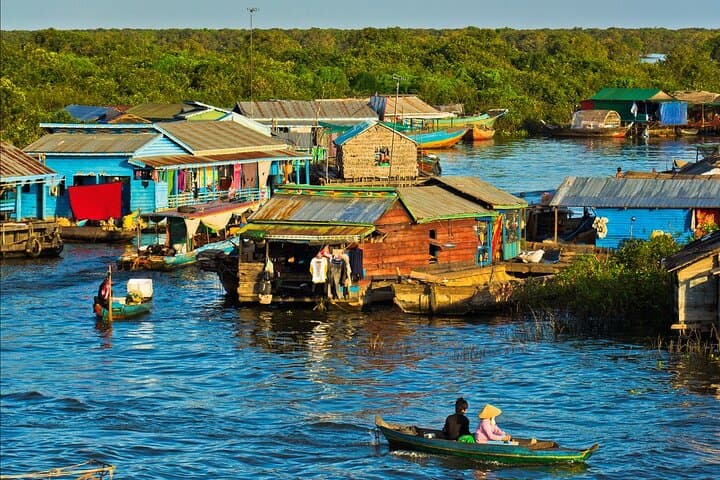
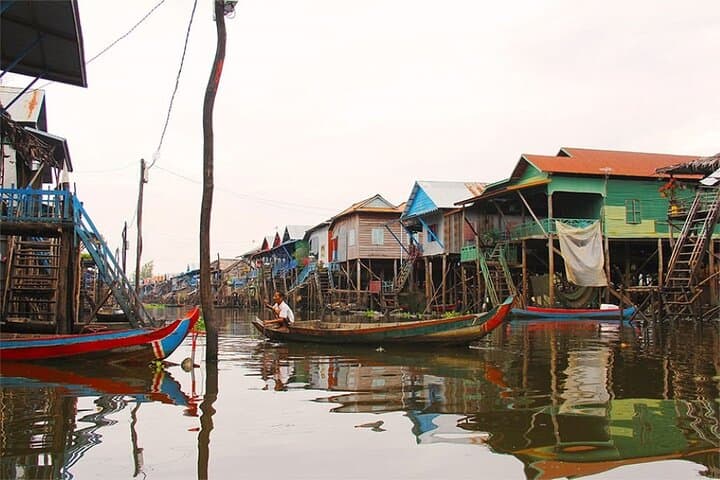
Morning light skims the shallow brown of Tonle Sap as a longtail slips away from Siem Reap’s riverbank — wooden houses drift on bamboo stilts, children wave from narrow decks, and the lake itself seems to breathe. The day unfolds between two very different faces of Cambodia: the living, waterborne communities of Chong Kneas and the quiet, stark memorials at Wat Thmey.
Morning light skims the shallow brown of Tonle Sap as a longtail slips away from Siem Reap’s riverbank — wooden houses drift on bamboo stilts, children wave from narrow decks, and the lake itself seems to breathe. The day unfolds between two very different faces of Cambodia: the living, waterborne communities of Chong Kneas and the quiet, stark memorials at Wat Thmey.
History is close to the surface here. Wat Thmey (the Killing Field) is a somber stop that documents the Khmer Rouge’s recent trauma; nearby, Chong Kneas demonstrates how the lake’s seasonal pulse shapes livelihoods. Geologically Tonle Sap is unique in Southeast Asia — a shallow inland sea that expands tenfold in the wet season and forces houses, markets, and rice fields to adapt.
Culture threads through the itinerary: SATCHA workshops revive traditional crafts, local markets hum with traded spices and textiles, and an evening Apsara dance pairs classical choreography with a dinner that frames myth and court ritual.
Practical guidance: plan for long stretches in open sun and occasionally bumpy boat rides; respect memorial etiquette at Wat Thmey (quiet, no flash photography in sensitive areas), carry potable water, and keep small bills for entrance fees and local purchases. Timing matters — a dry-season visit gives easier boat access and clearer pathways, while the wet season reveals the lake’s full scale and floating markets.
This full-day loop is straightforward but emotionally varied: expect reflective moments at the memorial, lively exchanges at the floating village, hands-on craft demonstrations, and a ceremonial close with Apsara performance.