THE ADVENTURE COLLECTIVE® · Independent discovery and booking for outdoor travel

Trade Angkor’s crowds for the living rhythms of Tonle Sap and the vine-choked corridors of Beng Mealea. This full-day private tour combines village boat rides, local culture, and an overgrown temple sweep for a grounded, adventurous look at rural Cambodia.
Trade Angkor’s crowds for the living rhythms of Tonle Sap and the vine-choked corridors of Beng Mealea. This full-day private tour combines village boat rides, local culture, and an overgrown temple sweep for a grounded, adventurous look at rural Cambodia.
Morning light slices across the Great Lake as a small motorboat parts fingered reeds and the first stilt houses come into view. The air smells faintly of fish and river mud; boats call back and forth and children wave from narrow planks. This day tour pulls you out of Siem Reap’s temple circuit and into two very different rhythms of the Khmer countryside: the seasonal waters and working lake of Kampong Khleang, and the vine-slashed stone corridors of Beng Mealea.
Verified experiences and guided adventures in the surrounding area.
Operated by Siem Reap Guide · Siem Reap, Siem Reap Province
Morning light slices across the Great Lake as a small motorboat parts fingered reeds and the first stilt houses come into view. The air smells faintly of fish and river mud; boats call back and forth and children wave from narrow planks. This day tour pulls you out of Siem Reap’s temple circuit and into two very different rhythms of the Khmer countryside: the seasonal waters and working lake of Kampong Khleang, and the vine-slashed stone corridors of Beng Mealea.
Kampong Khleang sits on the Tonle Sap’s eastern fringe, its economy and architecture shaped by annual floods that lift homes and roads. Tonle Sap itself is Southeast Asia’s largest freshwater system—its flood pulse has sustained communities and rice fields for centuries. A short drive east delivers you to Beng Mealea, a 12th-century Angkorian ruin where collapsed galleries and tree-root tangles resemble a cinematic jungle adventure rather than a curated park.
Expect boat transfers across shallow channels, short village walks on raised walkways, and uneven stonebeds beneath dense canopy at the temple. Local guides explain fishing techniques, seasonal trade, and rice farming practices you won’t see in central Angkor.
Practical guidance: pack sun protection and insect repellent, bring waterproof footwear for wet-season mud, and allow 6–8 hours including transport. Photography is rewarding at low sun angles and quieter lanes; be respectful of households and ask before photographing people. The route is accessible for most fitness levels but includes uneven terrain and boat boarding—ideal for travelers seeking cultural immersion and off-grid ruins without technical climbing.
easy.
6–8 hours.
Suitable for most travelers in normal health; involves short walks, boat transfers, and uneven temple stones.
Yes—this private tour includes the boat ticket and transfers required to reach the floating village as listed in the tour inclusions.
The tour runs about 6–8 hours (360–480 minutes) and includes hotel pickup and drop-off within Siem Reap city limits.
Beng Mealea involves uneven, collapsed stone and some climbing over ruins but no technical climbing gear; reasonable mobility and caution are sufficient.
Yes—tour information notes it is suitable for all fitness levels, but infants must sit on laps in boats; supervise children around water and uneven temple stones.
Beng Mealea dates to the 12th century and shares architectural links with Angkor’s classical period; Kampong Khleang’s stilted village reflects centuries of adaptation to Tonle Sap’s flood pulse.
Tonle Sap is ecologically sensitive—avoid littering, don’t feed wildlife, and support local guides who follow sustainable practices to protect fisheries and habitat.
Siem Reap Guide operates guided outdoor trips and adventures with an emphasis on safety, stewardship, and memorable experiences.


Morning light slices across the Great Lake as a small motorboat parts fingered reeds and the first stilt houses come into view. The air smells faintly of fish and river mud; boats call back and forth and children wave from narrow planks. This day tour pulls you out of Siem Reap’s temple circuit and into two very different rhythms of the Khmer countryside: the seasonal waters and working lake of Kampong Khleang, and the vine-slashed stone corridors of Beng Mealea.
Morning light slices across the Great Lake as a small motorboat parts fingered reeds and the first stilt houses come into view. The air smells faintly of fish and river mud; boats call back and forth and children wave from narrow planks. This day tour pulls you out of Siem Reap’s temple circuit and into two very different rhythms of the Khmer countryside: the seasonal waters and working lake of Kampong Khleang, and the vine-slashed stone corridors of Beng Mealea.
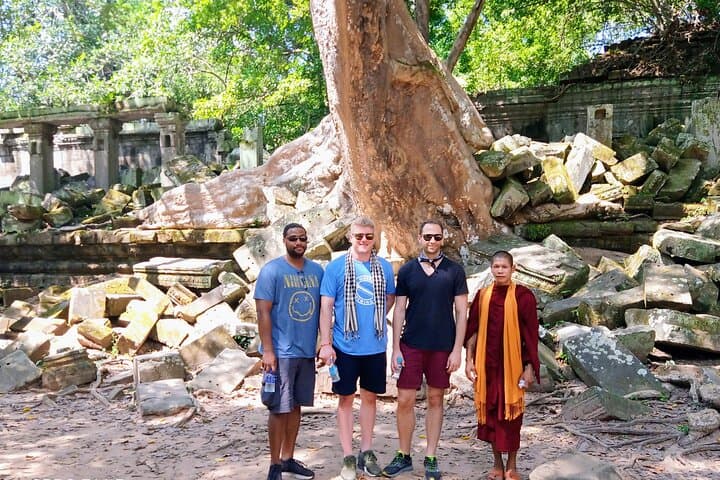
Kampong Khleang sits on the Tonle Sap’s eastern fringe, its economy and architecture shaped by annual floods that lift homes and roads. Tonle Sap itself is Southeast Asia’s largest freshwater system—its flood pulse has sustained communities and rice fields for centuries. A short drive east delivers you to Beng Mealea, a 12th-century Angkorian ruin where collapsed galleries and tree-root tangles resemble a cinematic jungle adventure rather than a curated park.
Expect boat transfers across shallow channels, short village walks on raised walkways, and uneven stonebeds beneath dense canopy at the temple. Local guides explain fishing techniques, seasonal trade, and rice farming practices you won’t see in central Angkor.
Practical guidance: pack sun protection and insect repellent, bring waterproof footwear for wet-season mud, and allow 6–8 hours including transport. Photography is rewarding at low sun angles and quieter lanes; be respectful of households and ask before photographing people. The route is accessible for most fitness levels but includes uneven terrain and boat boarding—ideal for travelers seeking cultural immersion and off-grid ruins without technical climbing.