THE ADVENTURE COLLECTIVE® · Independent discovery and booking for outdoor travel

Watch Angkor Wat ignite at sunrise, then spend a second day moving through Bayon, Ta Prohm and Banteay Srei. This practical two-day small-group tour covers the highlights with a local English-speaking guide, transfers and a two-day temple pass.
Watch Angkor Wat ignite at sunrise, then spend a second day moving through Bayon, Ta Prohm and Banteay Srei. This practical two-day small-group tour covers the highlights with a local English-speaking guide, transfers and a two-day temple pass.
You leave the town lights behind before dawn and feel the air change as the Angkor plain opens up. By 4:30 a.m. the silhouettes of Angkor Wat rise from misty moats; the eastern causeway, temple pools and long bas-relief galleries come alive as the sun pushes color across carved sandstone.
Verified experiences and guided adventures in the surrounding area.
Operated by Angkor Dynasty Travel · Siem Reap, Siem Reap Province
You leave the town lights behind before dawn and feel the air change as the Angkor plain opens up. By 4:30 a.m. the silhouettes of Angkor Wat rise from misty moats; the eastern causeway, temple pools and long bas-relief galleries come alive as the sun pushes color across carved sandstone.
This two-day small-group itinerary condenses the Angkor complex into focused, walkable segments: an early, in-depth visit to Angkor Wat (two hours inside the galleries), the sculpted faces of Bayon within Angkor Thom, and the root-entwined chambers of Ta Prohm on day one. Day two covers the Grand Circuit—Preah Khan, Neak Pean, the finely carved pink sandstone of Banteay Srei and the temple-mountain of Pre Rup. The tour averages ~8 hours each day and includes temple entrance (2-day pass USD62), an air-conditioned vehicle, licensed English-speaking guide and hotel transfers.
Geology is visible everywhere: laterite cores and soft sandstone façades weather differently, producing deep reliefs and fragile lintels that require careful foot traffic. Culturally, these temples map the Khmer Empire’s shift from Hindu cosmology to Mahayana Buddhism and later Theravada influence; inscriptions and reliefs are primary records of that arc.
Practical tips: expect flat but uneven stone floors and steps, intermittent shade and long stretches between sites. Carry water, wear sturdy shoes and a sun layer, and plan photography for sunrise and late afternoon light. Respect restricted areas, follow your guide, and allow time to simply stand and read the carvings—this is where history still speaks.
moderate.
2 days (approx. 8 hours per day).
Light-to-moderate fitness—comfortable walking for several hours with short climbs and uneven stone steps.
Yes—the tour includes the 2-day Angkor pass (USD62) which covers entry to the listed temples across both days.
Pickup is typically around 4:00–4:30 a.m. to reach Angkor Wat in time for dawn and photography.
No meals are included; the itinerary notes breakfast after sunrise on day one and breaks where you can buy food locally.
The tour is listed as physically easy but involves long days and uneven surfaces; families and older travelers should assess stamina and mobility.
Angkor was the heart of the Khmer Empire (9th–15th centuries); the temples record shifts between Hindu and Buddhist royal patronage.
High visitor numbers and humidity accelerate stone erosion—stick to marked paths, avoid touching carvings and support licensed guides who promote responsible access.
Angkor Dynasty Travel operates guided outdoor trips and adventures with an emphasis on safety, stewardship, and memorable experiences.
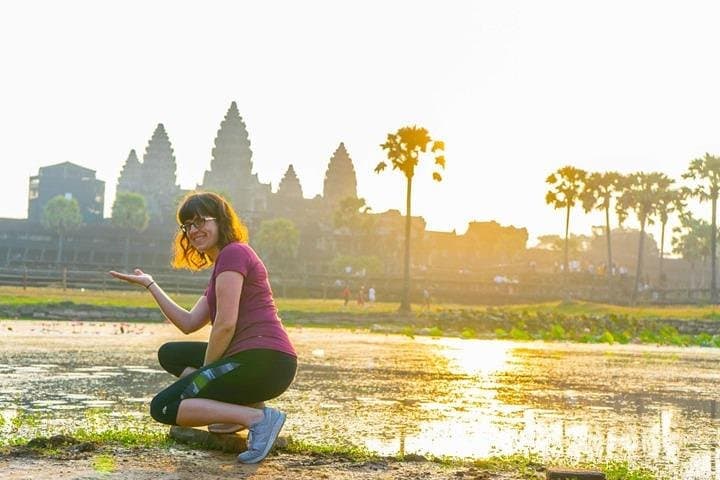
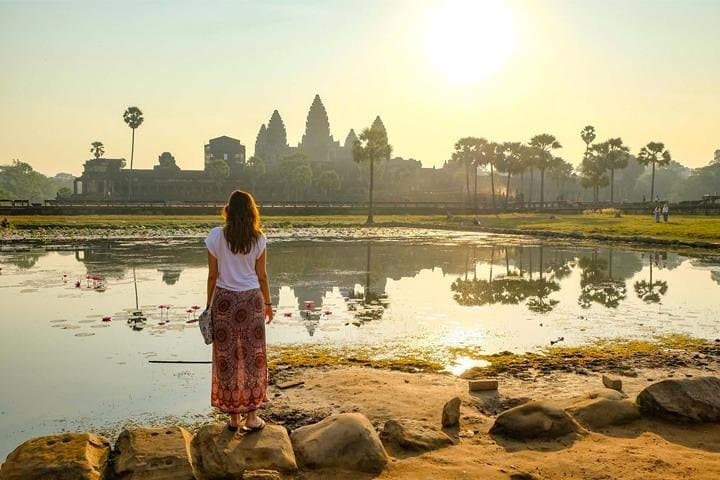
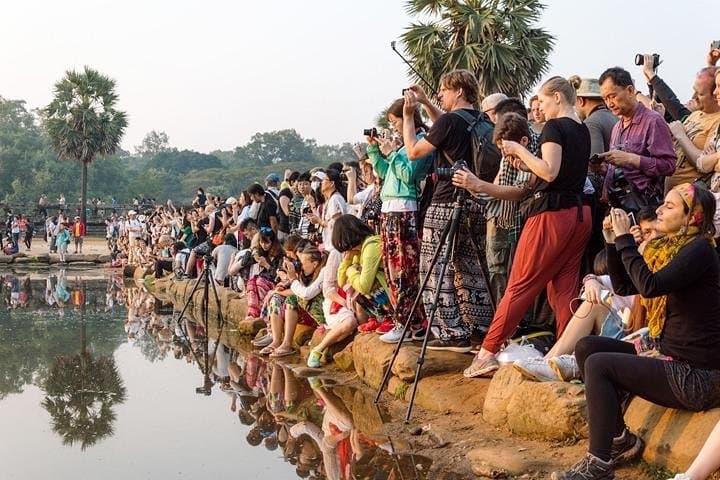
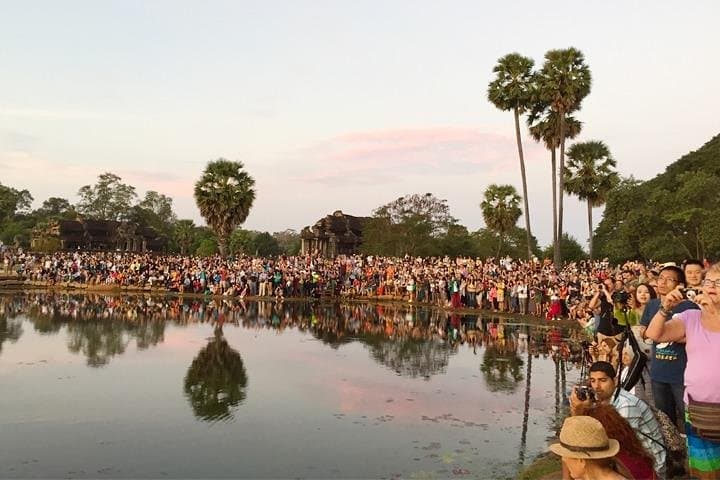
You leave the town lights behind before dawn and feel the air change as the Angkor plain opens up. By 4:30 a.m. the silhouettes of Angkor Wat rise from misty moats; the eastern causeway, temple pools and long bas-relief galleries come alive as the sun pushes color across carved sandstone.
You leave the town lights behind before dawn and feel the air change as the Angkor plain opens up. By 4:30 a.m. the silhouettes of Angkor Wat rise from misty moats; the eastern causeway, temple pools and long bas-relief galleries come alive as the sun pushes color across carved sandstone.
This two-day small-group itinerary condenses the Angkor complex into focused, walkable segments: an early, in-depth visit to Angkor Wat (two hours inside the galleries), the sculpted faces of Bayon within Angkor Thom, and the root-entwined chambers of Ta Prohm on day one. Day two covers the Grand Circuit—Preah Khan, Neak Pean, the finely carved pink sandstone of Banteay Srei and the temple-mountain of Pre Rup. The tour averages ~8 hours each day and includes temple entrance (2-day pass USD62), an air-conditioned vehicle, licensed English-speaking guide and hotel transfers.
Geology is visible everywhere: laterite cores and soft sandstone façades weather differently, producing deep reliefs and fragile lintels that require careful foot traffic. Culturally, these temples map the Khmer Empire’s shift from Hindu cosmology to Mahayana Buddhism and later Theravada influence; inscriptions and reliefs are primary records of that arc.
Practical tips: expect flat but uneven stone floors and steps, intermittent shade and long stretches between sites. Carry water, wear sturdy shoes and a sun layer, and plan photography for sunrise and late afternoon light. Respect restricted areas, follow your guide, and allow time to simply stand and read the carvings—this is where history still speaks.