THE ADVENTURE COLLECTIVE® · Independent discovery and booking for outdoor travel

Walk through Shutka’s lively streets with a local guide, taste burek and Turkish-style coffee, then visit the ruined arches of the Justinian Aqueduct. This 2.5–3 hour urban cultural tour blends neighborhood life, history and local flavors.
Walk through Shutka’s lively streets with a local guide, taste burek and Turkish-style coffee, then visit the ruined arches of the Justinian Aqueduct. This 2.5–3 hour urban cultural tour blends neighborhood life, history and local flavors.
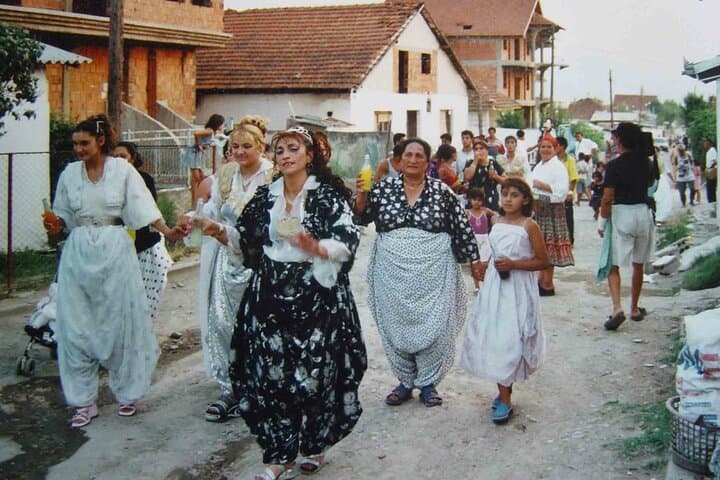
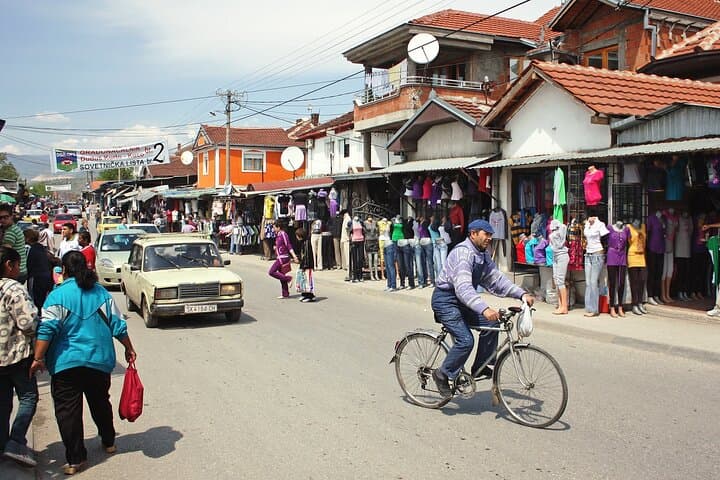
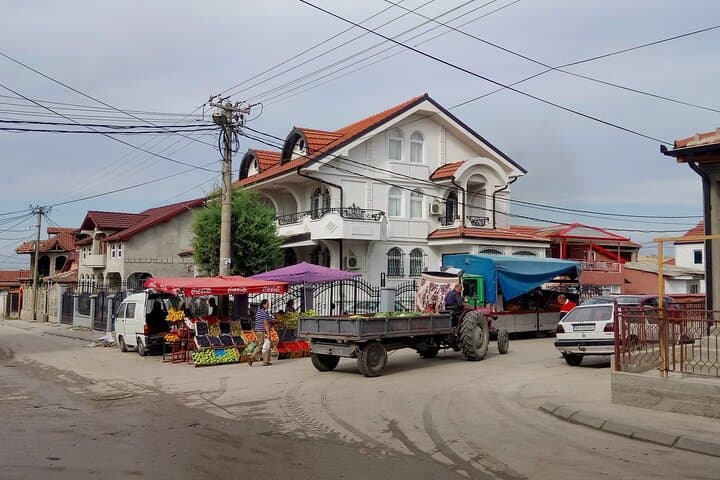
A narrow alley opens onto a sunlit square where children run between parked cars and an old radio plays somewhere behind curtains — this is Shutka, Skopje’s Roma municipality, vivid in motion.
Verified experiences and guided adventures in the surrounding area.
Operated by Guide Vojo · Skopje, Skopje
A narrow alley opens onto a sunlit square where children run between parked cars and an old radio plays somewhere behind curtains — this is Shutka, Skopje’s Roma municipality, vivid in motion.
The walking tour threads through streets named for Walt Disney, Che Guevara and García Lorca, where household stalls sell Turkish-import tracksuits and the air often smells of fresh pastry and strong coffee. Guides give context: Shutka is Europe’s largest Roma neighborhood, a place of tight social life and visible resilience. The tour ends at the ruined arc of the Justinian Aqueduct, its stone ribs recalling Roman and Byzantine water engineering and the shifting layers of this city’s long history.
Geology here is urban-alluvial: the Vardar River shapes the valley and the city’s scarred terraces house settlements that grew from Ottoman and Yugoslav eras into the present. Cultural notes surface naturally — Romani is an official local language in the municipality, and local bazaars function as social hubs as much as markets. Expect dogs and cats to share pavements along with traders and goats in occasional yards; shutters, colorful murals, and the hum of daily life are part of the attraction.
Practical guidance: wear comfortable walking shoes for uneven pavements, carry small bills for bazaar purchases, and bring a water bottle. Photography is welcome but ask before close portraits. The guide’s coffee-and-burek inclusion is an ideal pause to sample local flavors and hear neighborhood stories. The full experience runs about 2.5–3 hours and is suitable for most fitness levels; it’s an urban cultural walk rather than a strenuous hike.
easy.
2–3 hours.
Light walking on mostly flat urban streets; suitable for most fitness levels
The tour runs about 2.5–3 hours, including stops through Shutka and a short visit to the Justinian Aqueduct.
The route is family-friendly but some streets are narrow and uneven; a sturdy stroller may be difficult in parts.
There is no formal admission for the aqueduct; the tour includes guided access and local interpretation.
Guides typically arrange local coffee and burek; inform the operator in advance for alternatives or vegetarian options.
Shutka (Shuto Orizari) became notable for asserting Romani language and culture in municipal life; the Justinian Aqueduct dates to late Roman/early Byzantine periods and marks ancient waterworks in the Vardar valley.
Visitors are encouraged to respect private property and reduce waste; buying from local vendors supports small businesses and community livelihoods.
Guide Vojo operates guided outdoor trips and adventures with an emphasis on safety, stewardship, and memorable experiences.

A narrow alley opens onto a sunlit square where children run between parked cars and an old radio plays somewhere behind curtains — this is Shutka, Skopje’s Roma municipality, vivid in motion.
A narrow alley opens onto a sunlit square where children run between parked cars and an old radio plays somewhere behind curtains — this is Shutka, Skopje’s Roma municipality, vivid in motion.
The walking tour threads through streets named for Walt Disney, Che Guevara and García Lorca, where household stalls sell Turkish-import tracksuits and the air often smells of fresh pastry and strong coffee. Guides give context: Shutka is Europe’s largest Roma neighborhood, a place of tight social life and visible resilience. The tour ends at the ruined arc of the Justinian Aqueduct, its stone ribs recalling Roman and Byzantine water engineering and the shifting layers of this city’s long history.
Geology here is urban-alluvial: the Vardar River shapes the valley and the city’s scarred terraces house settlements that grew from Ottoman and Yugoslav eras into the present. Cultural notes surface naturally — Romani is an official local language in the municipality, and local bazaars function as social hubs as much as markets. Expect dogs and cats to share pavements along with traders and goats in occasional yards; shutters, colorful murals, and the hum of daily life are part of the attraction.
Practical guidance: wear comfortable walking shoes for uneven pavements, carry small bills for bazaar purchases, and bring a water bottle. Photography is welcome but ask before close portraits. The guide’s coffee-and-burek inclusion is an ideal pause to sample local flavors and hear neighborhood stories. The full experience runs about 2.5–3 hours and is suitable for most fitness levels; it’s an urban cultural walk rather than a strenuous hike.