THE ADVENTURE COLLECTIVE® · Independent discovery and booking for outdoor travel

A compact, four-day trek from Kathmandu to Poon Hill that delivers a Himalayan sunrise without a long commitment. Expect stepped trails, tea-house nights, and panoramic views of Annapurna and Dhaulagiri.
A compact, four-day trek from Kathmandu to Poon Hill that delivers a Himalayan sunrise without a long commitment. Expect stepped trails, tea-house nights, and panoramic views of Annapurna and Dhaulagiri.
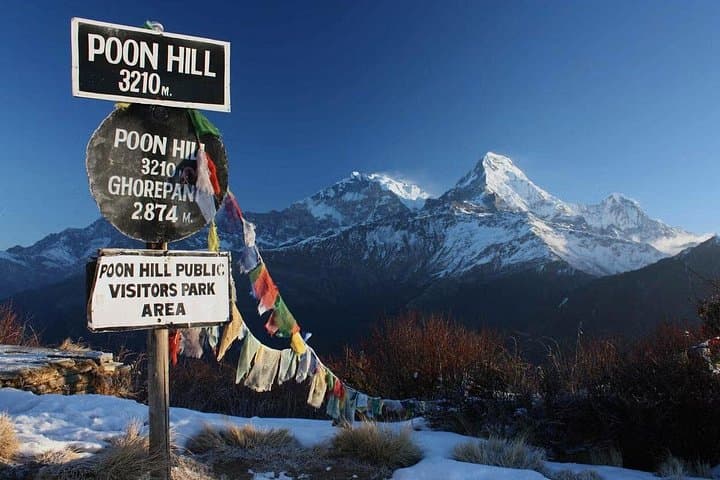
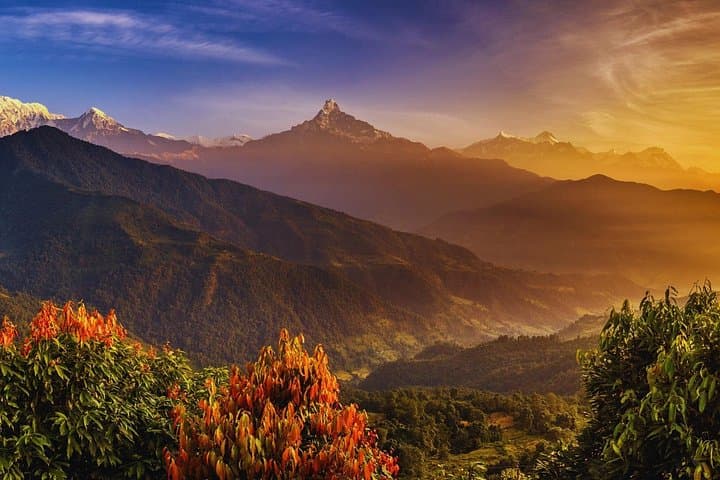
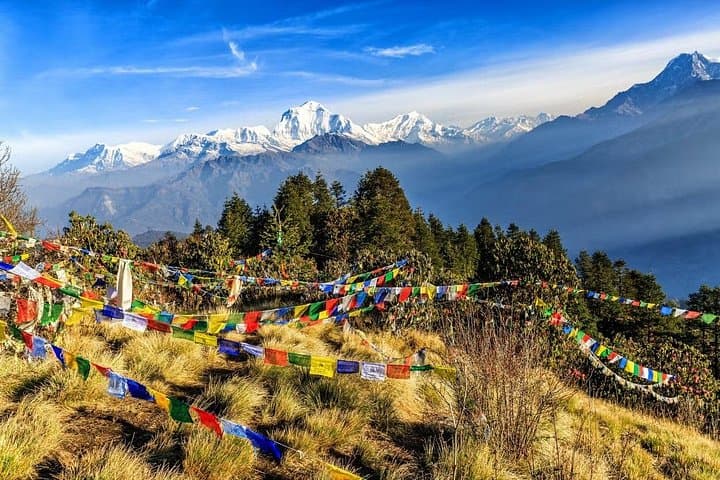
Dawn arrives cold and sharp as you climb the stone steps out of Ghorepani toward Poon Hill, headlamp fading as the sky lightens and the mass of Annapurna and Dhaulagiri reveal themselves in cold, clear light.
Verified experiences and guided adventures in the surrounding area.
Operated by Liberty Holidays · Ghorepani, Gandaki Province
Dawn arrives cold and sharp as you climb the stone steps out of Ghorepani toward Poon Hill, headlamp fading as the sky lightens and the mass of Annapurna and Dhaulagiri reveal themselves in cold, clear light.
This four-day itinerary compresses a classic Annapurna foothills experience: a tourist-bus transfer to Pokhara, a drive to Ulleri, ridge and forest trails threaded with rhododendron and oak, and the short predawn push to Poon Hill (≈3,210 m) for the sunrise panorama. Geologically you’re walking the young Himalaya—folded strata rising from river-cut valleys—while culturally you pass Gurung and Magar villages where stone chortens, mani walls, and terraced farms mark an agrarian rhythm that’s changed little in decades.
Expect narrow stepped trails, occasional jeep tracks, and tea-house culture each night—simple lodges, warm dal bhat, and the hum of other trekkers. Permits (TIMS and ACAP) regulate access and support conservation; the Annapurna Conservation Area Authority manages waste and trail maintenance.
Practical guidance: plan on 4 days, with 4–6 hours walking on the long days and up to 300–400 m of short steep ascent to the viewpoint; bring layered clothing for cold mornings, a waterproof shell for monsoon-season rain, and a headlamp for predawn starts. Fitness needs are moderate: steady hill walking on uneven stone steps. Porters or an optional domestic flight and private transfers can reduce strain if you prefer a less taxing schedule.
The route rewards with Himalayan skyline views, close cultural encounters, and a compact, attainable trek that suits first-time trekkers who want a fast, scenic Himalayan experience.
moderate.
4 days.
Suitable for trekkers with basic cardio fitness able to hike 4–6 hours on uneven, stepped terrain.
Yes — you need TIMS and an ACAP (Annapurna Conservation Area) permit; guides or operators typically handle permits before departure.
This is one of the more accessible Annapurna treks: moderate effort with daily hikes of 4–6 hours, but expect many stone steps and short steep sections.
Yes — local guides are standard, and porter service is available to carry luggage or reduce load for a fee.
Clear, cold mornings are common outside monsoon; the monsoon (summer) brings heavy rains and limited views, while late autumn and spring offer the most stable conditions.
The Ghorepani–Poon Hill route evolved from local mule tracks used for trade; tea houses became common as trekking tourism grew in the late 20th century.
The Annapurna Conservation Area uses permit fees to fund trail maintenance, waste management, and community projects—pack out waste where possible and avoid single-use plastics.
Liberty Holidays operates guided outdoor trips and adventures with an emphasis on safety, stewardship, and memorable experiences.
Dawn arrives cold and sharp as you climb the stone steps out of Ghorepani toward Poon Hill, headlamp fading as the sky lightens and the mass of Annapurna and Dhaulagiri reveal themselves in cold, clear light.
Dawn arrives cold and sharp as you climb the stone steps out of Ghorepani toward Poon Hill, headlamp fading as the sky lightens and the mass of Annapurna and Dhaulagiri reveal themselves in cold, clear light.
This four-day itinerary compresses a classic Annapurna foothills experience: a tourist-bus transfer to Pokhara, a drive to Ulleri, ridge and forest trails threaded with rhododendron and oak, and the short predawn push to Poon Hill (≈3,210 m) for the sunrise panorama. Geologically you’re walking the young Himalaya—folded strata rising from river-cut valleys—while culturally you pass Gurung and Magar villages where stone chortens, mani walls, and terraced farms mark an agrarian rhythm that’s changed little in decades.
Expect narrow stepped trails, occasional jeep tracks, and tea-house culture each night—simple lodges, warm dal bhat, and the hum of other trekkers. Permits (TIMS and ACAP) regulate access and support conservation; the Annapurna Conservation Area Authority manages waste and trail maintenance.
Practical guidance: plan on 4 days, with 4–6 hours walking on the long days and up to 300–400 m of short steep ascent to the viewpoint; bring layered clothing for cold mornings, a waterproof shell for monsoon-season rain, and a headlamp for predawn starts. Fitness needs are moderate: steady hill walking on uneven stone steps. Porters or an optional domestic flight and private transfers can reduce strain if you prefer a less taxing schedule.
The route rewards with Himalayan skyline views, close cultural encounters, and a compact, attainable trek that suits first-time trekkers who want a fast, scenic Himalayan experience.