THE ADVENTURE COLLECTIVE® · Independent discovery and booking for outdoor travel

Combine a scenic expedition train with a concentrated day on the iconic Inca Trail: hike through Wiñay Wayna, crest the Sun Gate, then spend sunrise exploring Machu Picchu. This private 2-day itinerary pairs comfort with a front-row view of Inca engineering and Andean geology.
Combine a scenic expedition train with a concentrated day on the iconic Inca Trail: hike through Wiñay Wayna, crest the Sun Gate, then spend sunrise exploring Machu Picchu. This private 2-day itinerary pairs comfort with a front-row view of Inca engineering and Andean geology.
You step off the expedition train at kilometer 104 and the mountains take charge: cloud-fringed ridges press close, stone steps curve through green terraces, and the trail climbs with steady, insistent purpose. Air thins, birds call out like punctuation, and by late morning Wiñay Wayna appears—ancient stone rooms perched on the slope—an unexpected chapter before the Sun Gate offers your first sweep of Machu Picchu below.
Verified experiences and guided adventures in the surrounding area.
Operated by Valencia Travel Agency S.a.c. · Aguas Calientes, Cusco Region
You step off the expedition train at kilometer 104 and the mountains take charge: cloud-fringed ridges press close, stone steps curve through green terraces, and the trail climbs with steady, insistent purpose. Air thins, birds call out like punctuation, and by late morning Wiñay Wayna appears—ancient stone rooms perched on the slope—an unexpected chapter before the Sun Gate offers your first sweep of Machu Picchu below.
The route follows a fragment of the longer Inca Trail, built by engineers who set paths to connect settlements and temples through challenging Andean topography. Geology here is volcanic and metamorphic, carved by rivers into narrow valleys; terraces and footholds reveal the Inca skill at working steep ground. Culturally, the valley remains tied to Quechua communities; llamas on the lower slopes and local guides keep stories of irrigation and ritual alive.
Practically, the short trek compresses the best views into a single full day of walking and a second day at the citadel. Expect roughly four hours of uphill trail to Wiñay Wayna, then a gradual march to Inti Punku (Sun Gate) with panoramic exposure to wind and sun. You’ll stay overnight in Aguas Calientes and return to Machu Picchu at dawn for a guided tour.
Plan ahead: permits for Huayna Picchu sell out and train times define your schedule. Acclimatize in Cusco 24–48 hours, carry rain protection and layered clothing, and pace your ascent to manage altitude. The trail is compact but rewarding—equal parts engineering history and high-mountain scenery—made manageable by the mix of train comfort and a guided, focused walk.
moderate.
2 days.
Good cardiovascular fitness for sustained uphill walking and stair climbing at altitude; ability to carry a daypack.
Expect about 4 hours of uphill hiking with uneven stone steps; moderate fitness and steady pacing make the route approachable for regular walkers.
Yes—access to the Inca Trail corridor and Machu Picchu requires permits and entry tickets; your operator arranges these but book early.
Huayna Picchu permits are limited and have fixed entry slots; you must request these well in advance and they can affect your guided tour timing.
Altitude affects people differently; acclimatize in Cusco, stay hydrated, ascend slowly, and speak to your guide or physician about acetazolamide if you have prior issues.
The Inca Trail formed part of a vast pre-Columbian road network linking Cusco with religious centers; Machu Picchu likely functioned as a royal estate and ceremonial hub in the 15th century.
Machu Picchu and adjacent trails are managed with visitor limits and permit systems; follow Leave No Trace, avoid single-use plastics, and respect local communities to reduce impact.
Valencia Travel Agency S.a.c. operates guided outdoor trips and adventures with an emphasis on safety, stewardship, and memorable experiences.


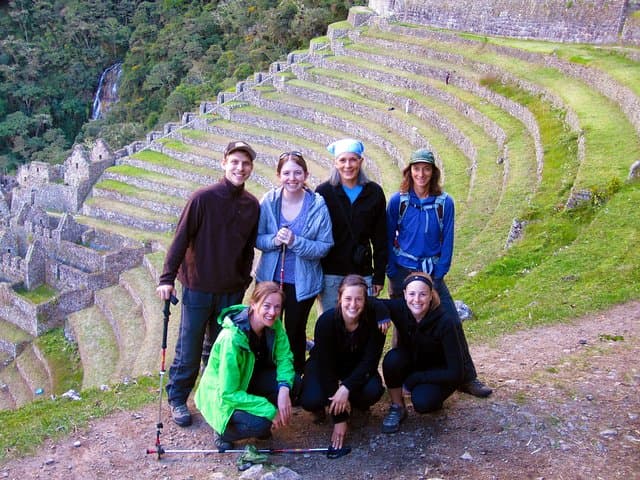

You step off the expedition train at kilometer 104 and the mountains take charge: cloud-fringed ridges press close, stone steps curve through green terraces, and the trail climbs with steady, insistent purpose. Air thins, birds call out like punctuation, and by late morning Wiñay Wayna appears—ancient stone rooms perched on the slope—an unexpected chapter before the Sun Gate offers your first sweep of Machu Picchu below.
You step off the expedition train at kilometer 104 and the mountains take charge: cloud-fringed ridges press close, stone steps curve through green terraces, and the trail climbs with steady, insistent purpose. Air thins, birds call out like punctuation, and by late morning Wiñay Wayna appears—ancient stone rooms perched on the slope—an unexpected chapter before the Sun Gate offers your first sweep of Machu Picchu below.
The route follows a fragment of the longer Inca Trail, built by engineers who set paths to connect settlements and temples through challenging Andean topography. Geology here is volcanic and metamorphic, carved by rivers into narrow valleys; terraces and footholds reveal the Inca skill at working steep ground. Culturally, the valley remains tied to Quechua communities; llamas on the lower slopes and local guides keep stories of irrigation and ritual alive.
Practically, the short trek compresses the best views into a single full day of walking and a second day at the citadel. Expect roughly four hours of uphill trail to Wiñay Wayna, then a gradual march to Inti Punku (Sun Gate) with panoramic exposure to wind and sun. You’ll stay overnight in Aguas Calientes and return to Machu Picchu at dawn for a guided tour.
Plan ahead: permits for Huayna Picchu sell out and train times define your schedule. Acclimatize in Cusco 24–48 hours, carry rain protection and layered clothing, and pace your ascent to manage altitude. The trail is compact but rewarding—equal parts engineering history and high-mountain scenery—made manageable by the mix of train comfort and a guided, focused walk.