THE ADVENTURE COLLECTIVE® · Independent discovery and booking for outdoor travel

Covering ancient Inca paths and cloud-forest steps, the Short Inca Trail condenses the best of the Sacred Valley into two days. Hike past Chachabamba and Wiñay Wayna, catch sunrise at the Sun Gate, then explore Machu Picchu with a local guide.
Covering ancient Inca paths and cloud-forest steps, the Short Inca Trail condenses the best of the Sacred Valley into two days. Hike past Chachabamba and Wiñay Wayna, catch sunrise at the Sun Gate, then explore Machu Picchu with a local guide.
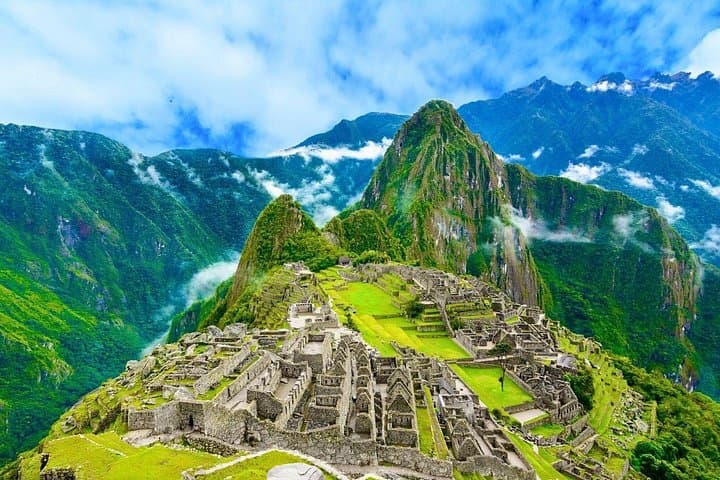
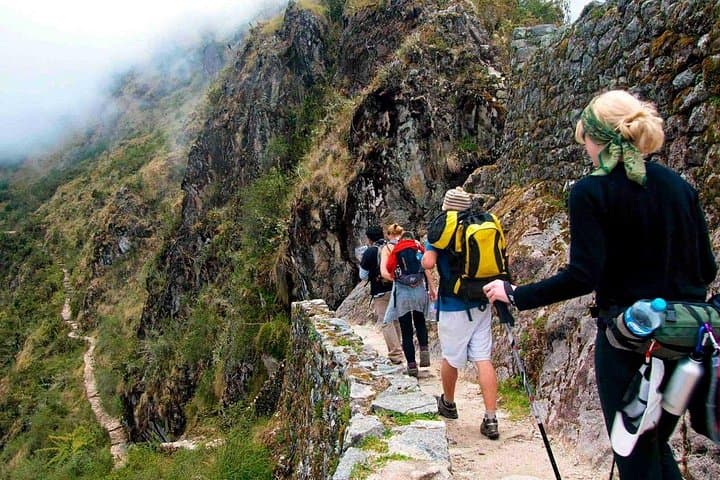
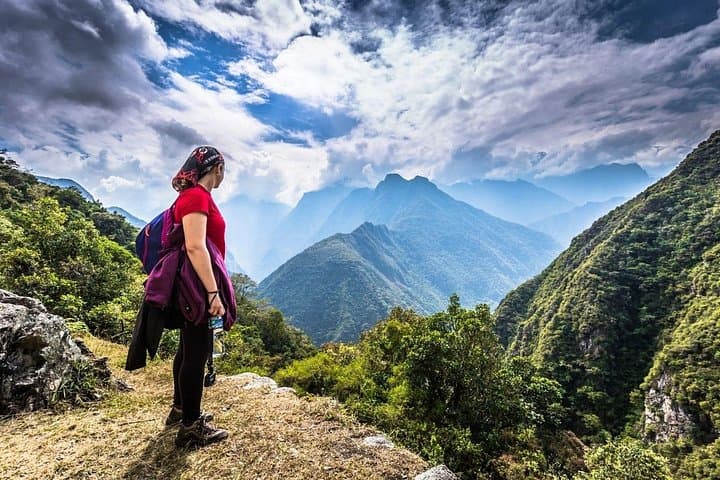
A high-altitude dawn arrives as your train threads the Sacred Valley and the mountains press in close — wet stone, cloud forest and the distant silhouette of Huayna Picchu. On day one the Short Inca Trail unfolds: 12 km of original stone paths, a steady climb through Chachabamba’s ceremonial fountains, and the orchid-rich slopes toward Wiñay Wayna’s terraces. The trail hums with birds and the occasional chatter of local porters; at Intipunku (the Sun Gate) the citadel of Machu Picchu appears like a living plan, terraces and temples etched into the mountain’s face.
Verified experiences and guided adventures in the surrounding area.
Operated by Xplor Machu Picchu · Aguas Calientes, Cusco
A high-altitude dawn arrives as your train threads the Sacred Valley and the mountains press in close — wet stone, cloud forest and the distant silhouette of Huayna Picchu. On day one the Short Inca Trail unfolds: 12 km of original stone paths, a steady climb through Chachabamba’s ceremonial fountains, and the orchid-rich slopes toward Wiñay Wayna’s terraces. The trail hums with birds and the occasional chatter of local porters; at Intipunku (the Sun Gate) the citadel of Machu Picchu appears like a living plan, terraces and temples etched into the mountain’s face.
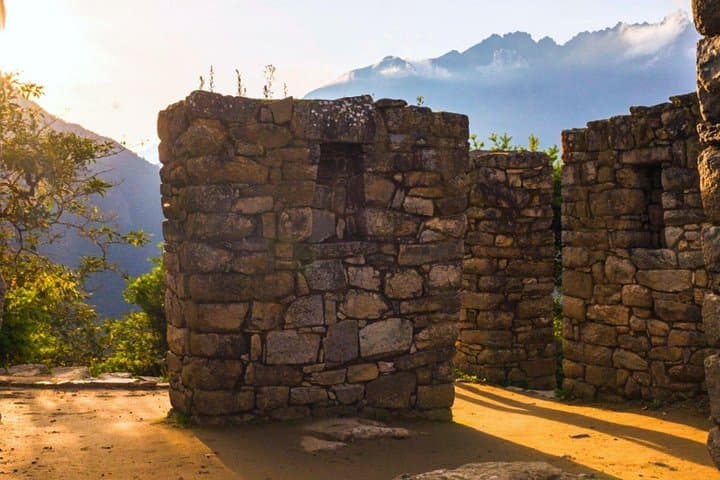
Archaeologically, the Inca built the site in the 15th century; their mastery of fitted stone, gravity-fed water systems and agricultural staircases reflects a society tuned to steep Andean geology. The surrounding cloud forest is geologically young volcanic and sedimentary rock, carved by rivers that keep the valley green and demanding of careful trail stewardship. Local Quechua culture remains present in markets, textiles and guides who explain astronomical and agricultural meanings embedded in the stonework.
Practically, this private two-day itinerary pairs a scenic train from Ollantaytambo with a guided trek and an overnight in Aguas Calientes. Expect moderate exertion at altitude, variable weather, and narrow stone steps. Bring a headlamp for pre-dawn starts, layers for quick temperature swings, and enough water and electrolytes for sustained uphill sections. Plan extra time in Cusco beforehand to acclimatize; moving slowly on the trail rewards steady breathing and sharper views.
moderate.
2 days (approx. 8–10 hours hiking total).
Ideal for travelers with regular cardio and leg strength who can manage sustained uphill walking at 2,000–2,700 m elevation.
Yes — treks to Machu Picchu via the Inca Trail require permits; this tour includes the Short Inca Trail entry and Machu Picchu site ticket.
The 12 km Short Inca Trail is moderately challenging with sustained uphill sections and stone steps; prior aerobic conditioning helps.
The tour includes one night in Aguas Calientes at a local hotel with breakfast provided.
This itinerary is not recommended for pregnant travelers and requires discretion for young children due to altitude and physical demands.
Machu Picchu was developed by the Inca in the 15th century and served religious, agricultural and astronomical functions before Spanish contact.
Visitor numbers are regulated and guided access is enforced to protect fragile Inca stonework and cloud-forest habitat; stick to designated paths and pack out waste.
Xplor Machu Picchu operates guided outdoor trips and adventures with an emphasis on safety, stewardship, and memorable experiences.
A high-altitude dawn arrives as your train threads the Sacred Valley and the mountains press in close — wet stone, cloud forest and the distant silhouette of Huayna Picchu. On day one the Short Inca Trail unfolds: 12 km of original stone paths, a steady climb through Chachabamba’s ceremonial fountains, and the orchid-rich slopes toward Wiñay Wayna’s terraces. The trail hums with birds and the occasional chatter of local porters; at Intipunku (the Sun Gate) the citadel of Machu Picchu appears like a living plan, terraces and temples etched into the mountain’s face.
A high-altitude dawn arrives as your train threads the Sacred Valley and the mountains press in close — wet stone, cloud forest and the distant silhouette of Huayna Picchu. On day one the Short Inca Trail unfolds: 12 km of original stone paths, a steady climb through Chachabamba’s ceremonial fountains, and the orchid-rich slopes toward Wiñay Wayna’s terraces. The trail hums with birds and the occasional chatter of local porters; at Intipunku (the Sun Gate) the citadel of Machu Picchu appears like a living plan, terraces and temples etched into the mountain’s face.
Archaeologically, the Inca built the site in the 15th century; their mastery of fitted stone, gravity-fed water systems and agricultural staircases reflects a society tuned to steep Andean geology. The surrounding cloud forest is geologically young volcanic and sedimentary rock, carved by rivers that keep the valley green and demanding of careful trail stewardship. Local Quechua culture remains present in markets, textiles and guides who explain astronomical and agricultural meanings embedded in the stonework.
Practically, this private two-day itinerary pairs a scenic train from Ollantaytambo with a guided trek and an overnight in Aguas Calientes. Expect moderate exertion at altitude, variable weather, and narrow stone steps. Bring a headlamp for pre-dawn starts, layers for quick temperature swings, and enough water and electrolytes for sustained uphill sections. Plan extra time in Cusco beforehand to acclimatize; moving slowly on the trail rewards steady breathing and sharper views.