THE ADVENTURE COLLECTIVE® · Independent discovery and booking for outdoor travel

Cover the essential Inca Trail sights in two days: KM 104 start, terraces at Wiñay Wayna, the Sun Gate sunrise and a guided tour of Machu Picchu. This express itinerary balances history, cloud-forest walking and practical prep for a high-altitude hike.
Cover the essential Inca Trail sights in two days: KM 104 start, terraces at Wiñay Wayna, the Sun Gate sunrise and a guided tour of Machu Picchu. This express itinerary balances history, cloud-forest walking and practical prep for a high-altitude hike.
Before dawn at KM 104 the railway mist parts and the trail begins — a ribbon of ancient stone threading the steep rim of the Urubamba Gorge.
Verified experiences and guided adventures in the surrounding area.
Operated by Salkantay Trekking · Aguas Calientes, Cusco
Before dawn at KM 104 the railway mist parts and the trail begins — a ribbon of ancient stone threading the steep rim of the Urubamba Gorge.
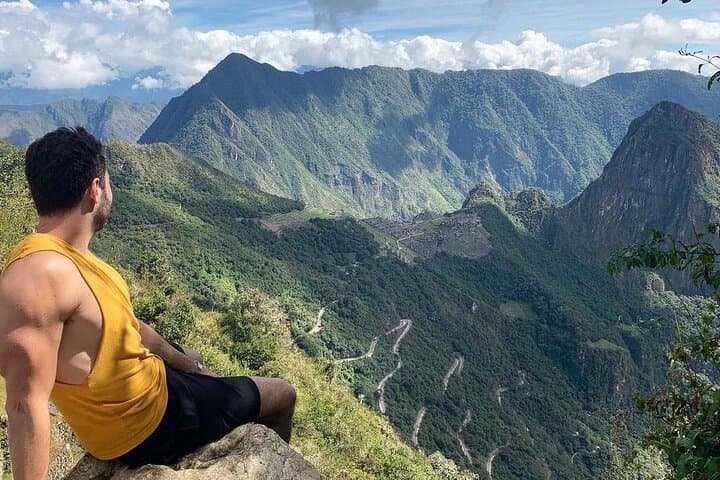
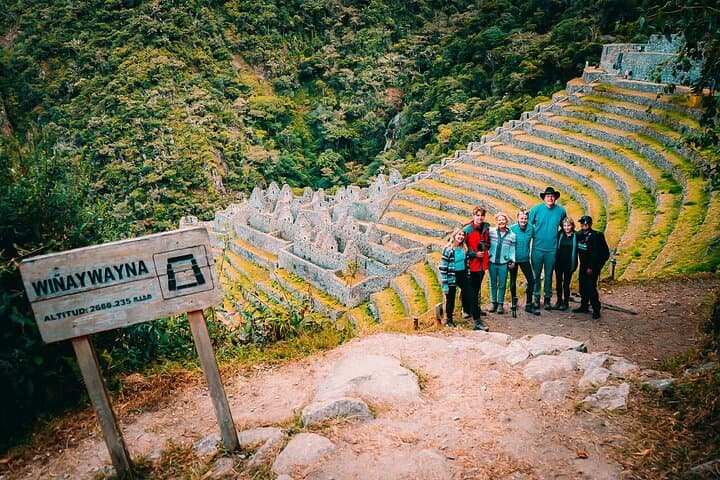
This compact Inca Trail packs the essential moments into one long day of hiking and a sunrise visit to Machu Picchu the next. You move from riverside Inca ruins at Chachabamba through cloud-forest steps to the dramatic terraces of Wiñay Wayna, then up to Inti Punku (the Sun Gate) where Machu Picchu first spills into view. The citadel itself sits at about 2,430 m, framed by steep, forested ridges and the abrupt spine of Huayna Picchu.
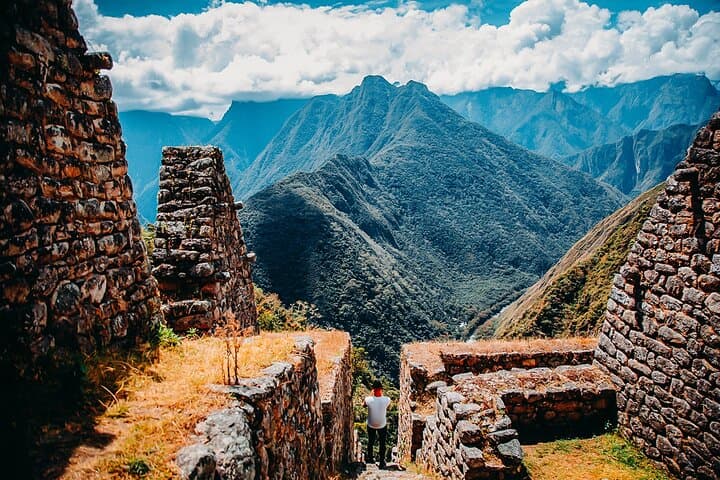
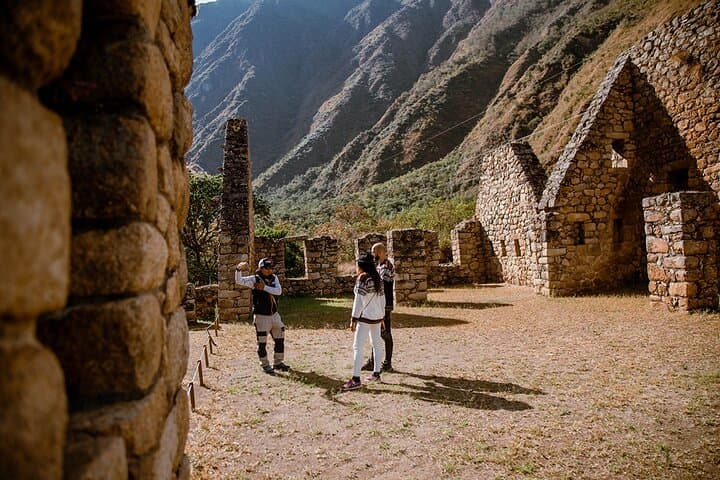
The route traces Inca engineering — cut rock stairways, drainage channels and agricultural terraces — a direct line into 15th-century history. Geologically, you’ll notice volcanic and metamorphic bedrock exposed on the canyon walls and a rich upper-rainforest ecology where orchids and hummingbirds animate the air.
Practically: expect roughly 11–12 km of walking on mixed trail and stone steps with cumulative ascent in the hundreds of meters and a net descent into Machu Picchu. Terrain alternates packed earth, steep stone flights and exposed viewpoints; rain is common outside the dry months.
Plan for early starts, a steady pace, and altitude awareness — many guides recommend arriving in Cusco 48 hours beforehand. Permits for the Inca Trail sell out months in advance, so book early. Bring layered clothing, a waterproof shell, solid hiking shoes, water and snacks, and be ready to trade the ache of the climb for one of the world’s most singular archaeological vistas.
moderate.
2 days.
Good cardiovascular fitness and comfort with sustained uphill/downhill hiking; several hours on stone steps.
Yes — permits and Machu Picchu entry tickets are required and are included with this tour; they sell out, so book well in advance.
Not ideal. Travelers should arrive in Cusco 48 hours beforehand to acclimatize; the tour recommends moderate fitness and no serious cardiopulmonary conditions.
Yes, but Huayna Picchu requires a separate ticket and limited slots; arrange this option ahead of time if available.
Expect packed earth, maintained Inca stone stairways and occasional muddy or slick sections; trekking poles can help on steep descents.
Machu Picchu is a 15th-century Inca citadel attributed to Pachacuti; the Inca Trail follows parts of original stone infrastructure linking sacred and agricultural sites.
Visitor numbers and permit systems limit impact; stick to marked paths, avoid single-use plastics and follow guide instructions to protect fragile ruins and cloud-forest habitat.
Salkantay Trekking operates guided outdoor trips and adventures with an emphasis on safety, stewardship, and memorable experiences.
Before dawn at KM 104 the railway mist parts and the trail begins — a ribbon of ancient stone threading the steep rim of the Urubamba Gorge.
Before dawn at KM 104 the railway mist parts and the trail begins — a ribbon of ancient stone threading the steep rim of the Urubamba Gorge.
This compact Inca Trail packs the essential moments into one long day of hiking and a sunrise visit to Machu Picchu the next. You move from riverside Inca ruins at Chachabamba through cloud-forest steps to the dramatic terraces of Wiñay Wayna, then up to Inti Punku (the Sun Gate) where Machu Picchu first spills into view. The citadel itself sits at about 2,430 m, framed by steep, forested ridges and the abrupt spine of Huayna Picchu.
The route traces Inca engineering — cut rock stairways, drainage channels and agricultural terraces — a direct line into 15th-century history. Geologically, you’ll notice volcanic and metamorphic bedrock exposed on the canyon walls and a rich upper-rainforest ecology where orchids and hummingbirds animate the air.
Practically: expect roughly 11–12 km of walking on mixed trail and stone steps with cumulative ascent in the hundreds of meters and a net descent into Machu Picchu. Terrain alternates packed earth, steep stone flights and exposed viewpoints; rain is common outside the dry months.
Plan for early starts, a steady pace, and altitude awareness — many guides recommend arriving in Cusco 48 hours beforehand. Permits for the Inca Trail sell out months in advance, so book early. Bring layered clothing, a waterproof shell, solid hiking shoes, water and snacks, and be ready to trade the ache of the climb for one of the world’s most singular archaeological vistas.