THE ADVENTURE COLLECTIVE® · Independent discovery and booking for outdoor travel

Ride an early train to km104, walk the compacted stones of the Short Inca Trail to Machu Picchu, then finish with the high-altitude spectacle of Rainbow Mountain. This four-day loop mixes Inca engineering, Andean culture and dramatic alpine terrain.
Ride an early train to km104, walk the compacted stones of the Short Inca Trail to Machu Picchu, then finish with the high-altitude spectacle of Rainbow Mountain. This four-day loop mixes Inca engineering, Andean culture and dramatic alpine terrain.
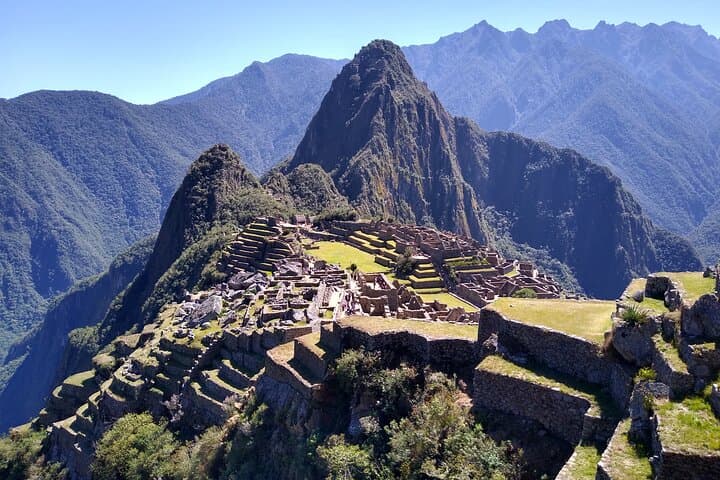
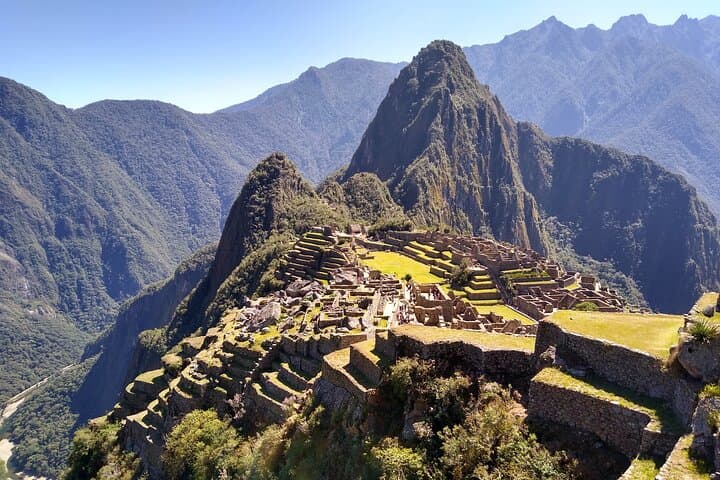
A cold, predawn platform in Ollantaytambo is where this trip begins — the two-hour Expedition train slips into the Urubamba Canyon and deposits you at km104. From there the trail climbs on ancient stone steps and packed earth, threading terraced slopes and exposed ridgelines toward Wiñayhuayna and the Sun Gate where Machu Picchu first appears like a carved silhouette against the valley.
Verified experiences and guided adventures in the surrounding area.
Operated by Terres des Incas · Cusco, Cusco Region
A cold, predawn platform in Ollantaytambo is where this trip begins — the two-hour Expedition train slips into the Urubamba Canyon and deposits you at km104. From there the trail climbs on ancient stone steps and packed earth, threading terraced slopes and exposed ridgelines toward Wiñayhuayna and the Sun Gate where Machu Picchu first appears like a carved silhouette against the valley.
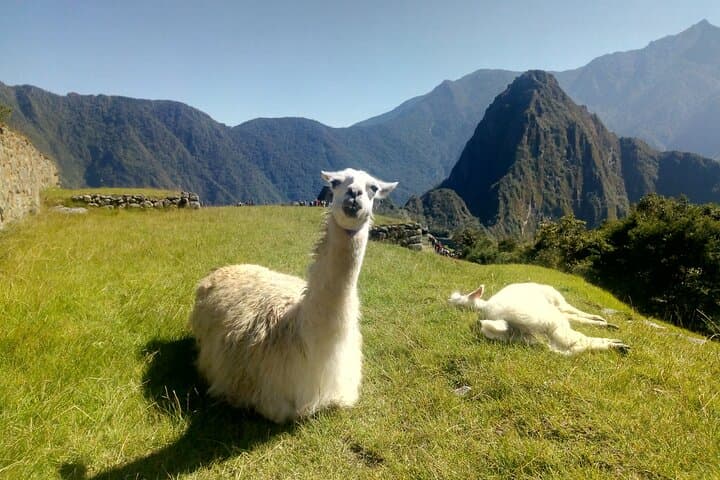
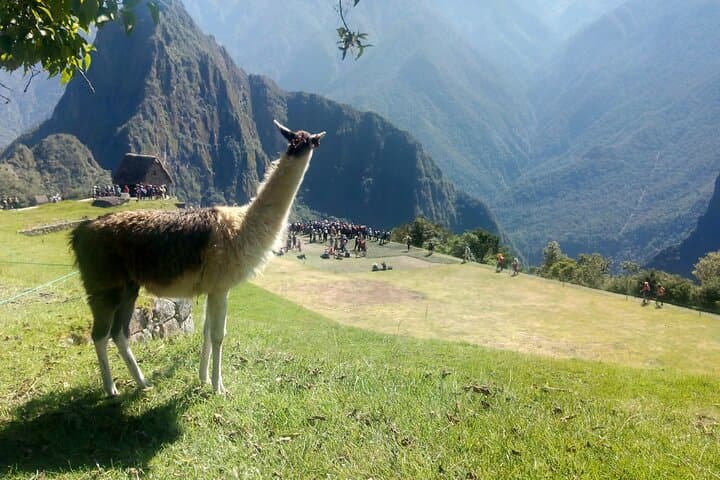
Over four days you trade valley floors for high puna: Pisac’s farming terraces, Moray’s concentric agricultural lab, the salt pans of Maras, then the razor-bright sky and glacial baselines around Rainbow Mountain (Vinicunca). Rainbow Mountain sits at roughly 5,020 m (16,466 ft); the common trailhead at Quesiuno starts near 4,326 m (14,189 ft), so expect ~600–700 m of net elevation gain on that day. Terrain varies from smooth Inca stonework and compacted trail to loose scree, rocky switchbacks and high-altitude meadows dotted with alpacas and vicuñas that move like living weather.
History here is physical: terraces and irrigation channels are living examples of Inca agronomy, and Machu Picchu — a 15th-century citadel — crowns the route.
Practical guidance: acclimatize in Cusco 48–72 hours, carry a daypack with 2–3 L water, layered windproof clothing, high-SPF sun protection, and trekking poles for steep descents. Bring your original passport for park checkpoints and allow for train and bus timing when planning connections. Pace yourself on high-altitude sections; short rests keep breathing steady and the views earned.
challenging.
4 days.
Moderate to high cardiovascular fitness recommended; comfortable with sustained uphill hiking and thin air.
Yes — entry to the Inca Trail sectors and Machu Picchu requires permits; the tour operator handles primary permits, and you must present your original passport at checkpoints.
Acclimatize in Cusco for 48–72 hours, hydrate, avoid alcohol, eat lightly, and consider acetazolamide only after consulting a doctor; descend immediately if symptoms worsen.
Yes, but these require separate, limited permits booked months in advance and often require additional fees — book early through the operator if you want these hikes.
Local horse rentals are often available at the Rainbow Mountain trailhead for the ascent, but quality and safety standards vary; bring cash and confirm condition and price before mounting.
The route links Inca agricultural experiments (Moray), pre-Columbian salt extraction (Maras) and the 15th-century citadel of Machu Picchu—all central to Andean pre-Hispanic life.
Visitor numbers are regulated at Machu Picchu and on the Inca Trail; stick to trails, avoid single-use plastics, and follow guide instructions to limit erosion and wildlife disturbance.
Terres des Incas operates guided outdoor trips and adventures with an emphasis on safety, stewardship, and memorable experiences.
A cold, predawn platform in Ollantaytambo is where this trip begins — the two-hour Expedition train slips into the Urubamba Canyon and deposits you at km104. From there the trail climbs on ancient stone steps and packed earth, threading terraced slopes and exposed ridgelines toward Wiñayhuayna and the Sun Gate where Machu Picchu first appears like a carved silhouette against the valley.
A cold, predawn platform in Ollantaytambo is where this trip begins — the two-hour Expedition train slips into the Urubamba Canyon and deposits you at km104. From there the trail climbs on ancient stone steps and packed earth, threading terraced slopes and exposed ridgelines toward Wiñayhuayna and the Sun Gate where Machu Picchu first appears like a carved silhouette against the valley.
Over four days you trade valley floors for high puna: Pisac’s farming terraces, Moray’s concentric agricultural lab, the salt pans of Maras, then the razor-bright sky and glacial baselines around Rainbow Mountain (Vinicunca). Rainbow Mountain sits at roughly 5,020 m (16,466 ft); the common trailhead at Quesiuno starts near 4,326 m (14,189 ft), so expect ~600–700 m of net elevation gain on that day. Terrain varies from smooth Inca stonework and compacted trail to loose scree, rocky switchbacks and high-altitude meadows dotted with alpacas and vicuñas that move like living weather.
History here is physical: terraces and irrigation channels are living examples of Inca agronomy, and Machu Picchu — a 15th-century citadel — crowns the route.
Practical guidance: acclimatize in Cusco 48–72 hours, carry a daypack with 2–3 L water, layered windproof clothing, high-SPF sun protection, and trekking poles for steep descents. Bring your original passport for park checkpoints and allow for train and bus timing when planning connections. Pace yourself on high-altitude sections; short rests keep breathing steady and the views earned.