THE ADVENTURE COLLECTIVE® · Independent discovery and booking for outdoor travel

Walk a condensed section of the legendary Inca Trail over two days, passing Wiñay Wayna and the Sun Gate before your first view of Machu Picchu. This 12 km route combines cloud forest, Inca archaeology and a single-night stay in Aguas Calientes.
Walk a condensed section of the legendary Inca Trail over two days, passing Wiñay Wayna and the Sun Gate before your first view of Machu Picchu. This 12 km route combines cloud forest, Inca archaeology and a single-night stay in Aguas Calientes.
Dawn breaks over the Sacred Valley as the bus threads terraces and river canyons toward Ollantaytambo, and the Vilcanota River dares you onward with a constant, restless murmur.
Verified experiences and guided adventures in the surrounding area.
Operated by Peru Andes Top · Aguas Calientes, Cusco
Dawn breaks over the Sacred Valley as the bus threads terraces and river canyons toward Ollantaytambo, and the Vilcanota River dares you onward with a constant, restless murmur.
From km 104 the ancient stones take over: a highland footpath hewn by Inca hands that skirts cloud forest, crosses streams and climbs staircases where moss and lichen hold centuries of footsteps. By midday you reach Wiñay Wayna—stone houses and terraces clinging to the slope—before the trail delivers its prize: the Inti Punku viewpoint and the first unforgettable sweep of Machu Picchu laid out on its green plateau.
The route threads distinctive Andean geology—granite outcrops softened by cloud forest soil—and follows a corridor once critical to the Inca road network that connected the Sacred Valley to ceremonial centers.
Culturally the trail is compact history: terraces, water channels and finely cut masonry that reveal Inca engineering and landscape management.
Practically: the trek is about 12 km on day one with uneven stone steps and 200–700 m of intermittent elevation shifts; expect 4–6 hours walking that day, then a guided 2-hour circuit of Machu Picchu the next morning. Acclimatize in Cusco (3,400 m) for 24–48 hours if possible, carry a waterproof layer, and bring your passport—entry checks are strict. Trains and buses are scheduled; book permits and seats early in high season (May–September). Move deliberately on stone steps, leave no trace, and allow time to linger at Wiñay Wayna: the quiet there often outshines the citadel's crowds.
moderate.
2 days (total).
Moderate cardio fitness and comfort on uneven terrain; able to hike 4–6 hours with breaks.
Yes—entry to the Inca Trail corridor and Machu Picchu is limited; operators handle permits, so book early, especially May–September.
The short hike covers ~12 km with many stone steps and some elevation change; it’s moderate but requires steadiness on uneven terrain and basic fitness.
There are no shops on the trail; carry enough water and snacks for day one—lunch is provided as a boxed meal by the operator.
Acclimatize in Cusco if possible, stay hydrated, avoid alcohol before hiking, and consult a doctor about medication if you’re prone to symptoms.
The Inca Trail was part of a vast road network linking administrative and ceremonial centers; stonework and terraces along the route reflect sophisticated land use and engineering.
Machu Picchu and the Inca Trail operate under strict permit limits and site-preservation rules—stay on designated paths, pack out waste and follow guide instructions to minimize impact.
Peru Andes Top operates guided outdoor trips and adventures with an emphasis on safety, stewardship, and memorable experiences.

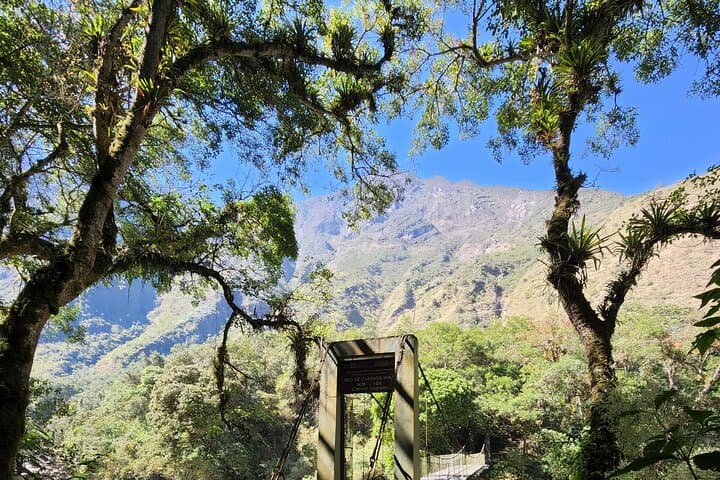


Dawn breaks over the Sacred Valley as the bus threads terraces and river canyons toward Ollantaytambo, and the Vilcanota River dares you onward with a constant, restless murmur.
Dawn breaks over the Sacred Valley as the bus threads terraces and river canyons toward Ollantaytambo, and the Vilcanota River dares you onward with a constant, restless murmur.
From km 104 the ancient stones take over: a highland footpath hewn by Inca hands that skirts cloud forest, crosses streams and climbs staircases where moss and lichen hold centuries of footsteps. By midday you reach Wiñay Wayna—stone houses and terraces clinging to the slope—before the trail delivers its prize: the Inti Punku viewpoint and the first unforgettable sweep of Machu Picchu laid out on its green plateau.
The route threads distinctive Andean geology—granite outcrops softened by cloud forest soil—and follows a corridor once critical to the Inca road network that connected the Sacred Valley to ceremonial centers.
Culturally the trail is compact history: terraces, water channels and finely cut masonry that reveal Inca engineering and landscape management.
Practically: the trek is about 12 km on day one with uneven stone steps and 200–700 m of intermittent elevation shifts; expect 4–6 hours walking that day, then a guided 2-hour circuit of Machu Picchu the next morning. Acclimatize in Cusco (3,400 m) for 24–48 hours if possible, carry a waterproof layer, and bring your passport—entry checks are strict. Trains and buses are scheduled; book permits and seats early in high season (May–September). Move deliberately on stone steps, leave no trace, and allow time to linger at Wiñay Wayna: the quiet there often outshines the citadel's crowds.