THE ADVENTURE COLLECTIVE® · Independent discovery and booking for outdoor travel

Short on time but aiming for Everest: this 10-day Lukla-to-Everest Base Camp trek covers Sherpa villages, Khumbu Glacier views and the high ridgelines that define the world’s tallest peak. Practical advice on altitude, terrain and seasonal timing helps you plan smart.
Short on time but aiming for Everest: this 10-day Lukla-to-Everest Base Camp trek covers Sherpa villages, Khumbu Glacier views and the high ridgelines that define the world’s tallest peak. Practical advice on altitude, terrain and seasonal timing helps you plan smart.
You feel the plane dip and the air thin before you see the runway — Lukla’s short strip clings to a slope like a fingernail on rock. From that first nervous step, the trail climbs through rhododendron forests, slides into Sherpa villages and then opens onto the grey sweep of the Khumbu valley, where Mount Everest looms above and the Khumbu Glacier grinds quietly below.
Verified experiences and guided adventures in the surrounding area.
Operated by Eco Holidays Nepal · Lukla, Province No. 1
You feel the plane dip and the air thin before you see the runway — Lukla’s short strip clings to a slope like a fingernail on rock. From that first nervous step, the trail climbs through rhododendron forests, slides into Sherpa villages and then opens onto the grey sweep of the Khumbu valley, where Mount Everest looms above and the Khumbu Glacier grinds quietly below.
This ten-day itinerary threads living culture and hard geology. The Himalaya exist because the Indian Plate still pushes north into Eurasia; the raw uplift gives you jagged ridgelines and active glaciers such as Khumbu, whose icefall guards Everest’s western approach. Tyangboche (Tengboche) Monastery, with its prayer flags snapping like conversation, is a cultural waypoint — a centuries-old spiritual hub for Sherpa communities centered at Namche Bazaar.
Expect roughly 60–70 km round trip from Lukla with cumulative elevation gain near 2,500 m to reach Everest Base Camp at about 5,364 m. Terrain alternates packed dirt, stone staircases and moraine; the high sections are exposed and wind-steeped. Tea-house accommodation simplifies logistics, but altitude and weather are the defining variables: plan acclimatization days, keep hydration and calories high, and be ready for flight delays into Lukla.
Practical tips: use stiff, broken-in hiking boots and layered insulation, bring a -15 to -20°C sleeping bag if sleeping in higher teahouses, and schedule travel in spring or autumn for the most stable weather. The trek is physically demanding but non-technical — your pace and acclimatization determine success more than nautical miles or pack weight.
challenging.
9–11 days.
Good aerobic fitness with experience on multi-day hikes; ability to carry a 8–12 kg daypack and tolerate long days at altitude.
No technical climbing is required for the standard EBC trek — trails are steep and rugged but non-technical; however, good fitness and proper acclimatization are essential.
Spring (March–May) and autumn (September–November) offer the most stable weather, clearer views and warmer daytime conditions; monsoon brings clouds and winter brings extreme cold and limited services.
Hiking segments usually range from 4–8 hours daily, with some longer acclimatization or transfer days; pace is conservative to prioritize altitude adaptation.
Flights are short but weather-sensitive; book morning seats if possible and allow buffer days in Kathmandu for potential cancellations or reschedules.
The Khumbu region is the homeland of the Sherpa people, whose trade and mountaineering history grew alongside British-era Himalayan exploration in the early 20th century.
Trail impacts and waste at teahouses are ongoing concerns; pack-out practices, using established routes and supporting locally run lodges helps reduce strain on fragile alpine environments.
Eco Holidays Nepal operates guided outdoor trips and adventures with an emphasis on safety, stewardship, and memorable experiences.
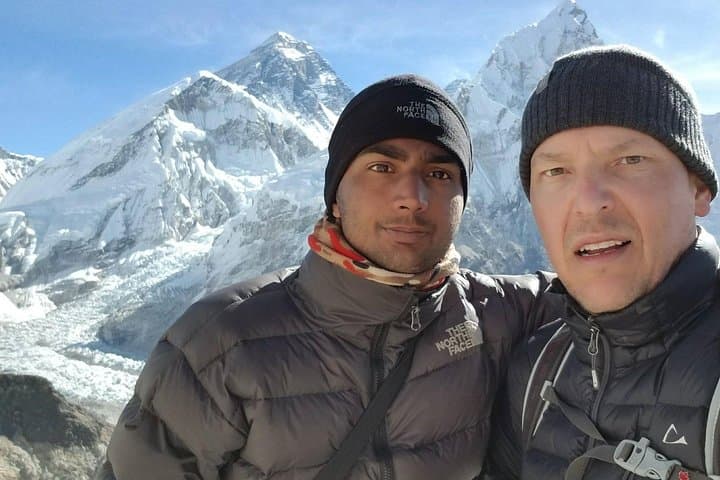


You feel the plane dip and the air thin before you see the runway — Lukla’s short strip clings to a slope like a fingernail on rock. From that first nervous step, the trail climbs through rhododendron forests, slides into Sherpa villages and then opens onto the grey sweep of the Khumbu valley, where Mount Everest looms above and the Khumbu Glacier grinds quietly below.
You feel the plane dip and the air thin before you see the runway — Lukla’s short strip clings to a slope like a fingernail on rock. From that first nervous step, the trail climbs through rhododendron forests, slides into Sherpa villages and then opens onto the grey sweep of the Khumbu valley, where Mount Everest looms above and the Khumbu Glacier grinds quietly below.
This ten-day itinerary threads living culture and hard geology. The Himalaya exist because the Indian Plate still pushes north into Eurasia; the raw uplift gives you jagged ridgelines and active glaciers such as Khumbu, whose icefall guards Everest’s western approach. Tyangboche (Tengboche) Monastery, with its prayer flags snapping like conversation, is a cultural waypoint — a centuries-old spiritual hub for Sherpa communities centered at Namche Bazaar.
Expect roughly 60–70 km round trip from Lukla with cumulative elevation gain near 2,500 m to reach Everest Base Camp at about 5,364 m. Terrain alternates packed dirt, stone staircases and moraine; the high sections are exposed and wind-steeped. Tea-house accommodation simplifies logistics, but altitude and weather are the defining variables: plan acclimatization days, keep hydration and calories high, and be ready for flight delays into Lukla.
Practical tips: use stiff, broken-in hiking boots and layered insulation, bring a -15 to -20°C sleeping bag if sleeping in higher teahouses, and schedule travel in spring or autumn for the most stable weather. The trek is physically demanding but non-technical — your pace and acclimatization determine success more than nautical miles or pack weight.